







LOCK, Walter Henry
| Service Number: | 2599 |
|---|---|
| Enlisted: | 16 September 1916 |
| Last Rank: | Private |
| Last Unit: | 39th Infantry Battalion |
| Born: | London, England, May 1893 |
| Home Town: | Leichhardt, Leichhardt, New South Wales |
| Schooling: | Not yet discovered |
| Occupation: | Electrical assistant |
| Died: | Carcinoma of the lung, Concord Repatriation Hospital, New South Wales, Australia, 5 June 1955 |
| Cemetery: |
Lutwyche Cemetery, Brisbane, Qld Monumental General Portion 3 |
| Memorials: |
World War 1 Service
| 16 Sep 1916: | Enlisted AIF WW1, Private, 2599, 37th Infantry Battalion | |
|---|---|---|
| 9 Nov 1916: | Involvement Private, 2599, 37th Infantry Battalion, --- :embarkation_roll: roll_number: '17' embarkation_place: Sydney embarkation_ship: HMAT Benalla embarkation_ship_number: A24 public_note: '' | |
| 9 Nov 1916: | Embarked Private, 2599, 37th Infantry Battalion, HMAT Benalla, Sydney | |
| 21 Feb 1920: | Discharged AIF WW1, Private, 2599, 39th Infantry Battalion, 1st MD |
Help us honour Walter Henry Lock's service by contributing information, stories, and images so that they can be preserved for future generations.
Add my storyBiography contributed by Evan Evans
From Australian Remembrance Army
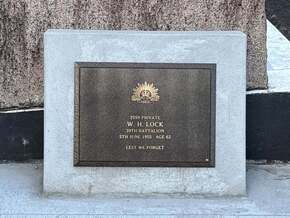
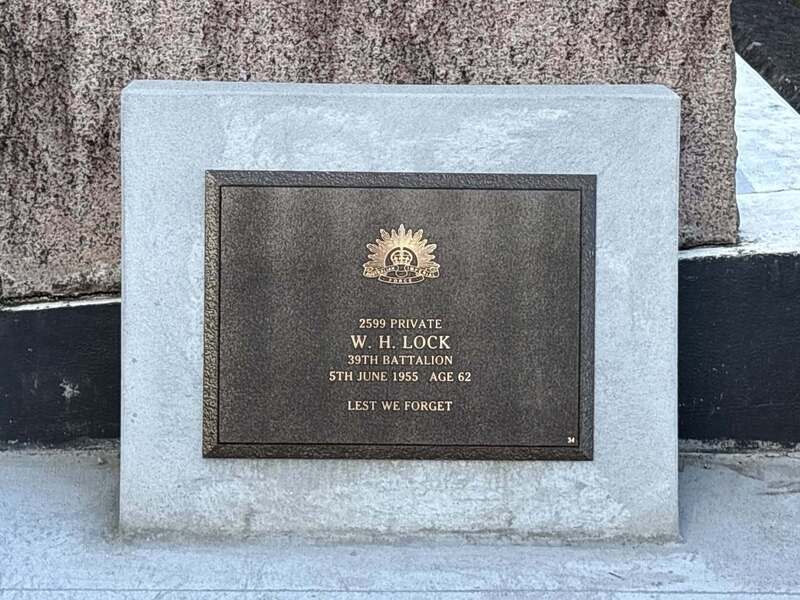
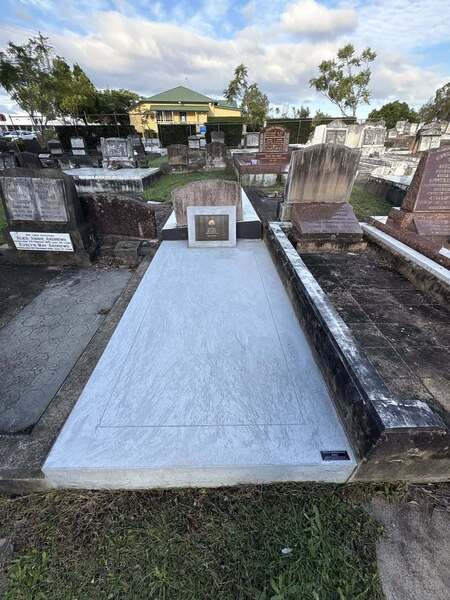
Australian World War One veteran Private Walter Henry Lock (Service No. 2599), is one of the previously unmarked WWI veterans’ graves in Lutwyche Cemetery that has been accepted as an Official Commemoration by the Office of Australian War Graves.
We unveiled his plaque in Lutwyche Cemetery on 16 May 2026, along with a further 185 plaques on the previously unmarked graves of Australian World War One veterans:
See Australian Remembrance Army Facebook page
OAWG Official Commemoration: https://connect.dva.gov.au/.../viewCommemoration.html...
Walter Henry Lock was born in London, England, and later lived at 489 Parramatta Road, Leichhardt, New South Wales. He enlisted in the Australian Imperial Force on 16 September 1916. He was single, employed as an electrical assistant, and his next of kin was recorded as his father, William Lock. He embarked from Sydney on 9 November 1916 aboard HMAT Benalla.
During service in France, Walter was wounded in action in June 1917 by a gunshot wound to the right ankle. He was admitted to the 11th Casualty Clearing Station, then to the 11th Stationary Hospital at Rouen. On 15 June 1917 he was transferred to England from Havre, and on 16 June was admitted to the Military Hospital at Bethnal Green. In July 1917, he was transferred to the 3rd Auxiliary Hospital, discharged to the depot at Weymouth, and rejoined his unit in France on 20 October 1917.
On 17 November 1917 Walter was again sent to hospital sick, and in December 1917 was transferred to England suffering from trench feet. He was admitted to the War Hospital at Carlisle, transferred to the 1st Australian Auxiliary Hospital at Harefield, and discharged to No. 3 Command Depot on 22 March 1918.
Walter returned to France in June 1918. On 8 August 1918 he was admitted to the 12th Field Ambulance with sore feet, but returned to duty two days later. Two weeks later he was wounded in action for a second time, recorded as gas shell exposure. He was admitted to hospital at Rouen, moved through convalescent depots at Rouen and Buchy, and discharged to duty on 3 November 1918.
After the Armistice, Walter was again hospitalised. On 12 March 1919 he was admitted to the 3rd Australian General Hospital in France with bronchitis. He was transferred to England on 21 March 1919, discharged to furlough on 26 March, and returned to Australia aboard Runic on 27 April 1919.
After the war, Walter’s repatriation and pension records referred to his wartime gunshot wound, trench feet, gas exposure, bronchitis, and ongoing health issues. He later married Alice Mary Lock. His post-war medical records included continuing chest and lung problems, as well as the earlier injuries and illnesses recorded during his service.
Walter Henry Lock died on 5 June 1955, aged 62, while receiving treatment at Concord Repatriation Hospital in Sydney. His condition at the time included carcinoma of the lung. He was buried in Monumental General Portion 3, Lutwyche Cemetery, Brisbane.
Following Walter’s death, his widow, Alice Mary Lock, made a claim for a war widow’s pension. She stated that Walter had suffered since his return from service and that his health had been affected by his war injuries and illness, particularly his chest troubles. Alice also sought assistance with expenses while the matter was being considered.
The Repatriation Commission rejected the claim that Walter’s death was due to war service. Alice appealed to the War Pensions Entitlement Appeal Tribunal, which heard the appeal in Brisbane on 5 September 1956. The Tribunal considered his accepted war-service disabilities and the medical evidence concerning his later lung disease, but determined that his death was not accepted as due to war service. Alice’s appeal was disallowed.
In September 2024, sixty-nine years after his death, we received notification that our application for Walter Henry Lock’s official war graves commemoration had been accepted for War Graves purposes.
After seven decades in an unmarked grave, his final resting place is now an official war grave.
His identity and dignity have now been restored.
Lest We Forget
ARA notes
War graves, and their protection, are important because they help future generations understand the human cost and lasting consequences of conflict.
Over the past six years we have submitted the service records and causes of death of hundreds of veterans to the Office of Australian War Graves for assessment for official commemoration. To date, more than 100 of these veterans interred at Lutwyche Cemetery have been accepted as Official Commemorations, and their graves are now being formally marked and will be maintained in perpetuity by the Office of Australian War Graves.
Many Australians are unaware that, unless specific eligibility criteria are met, returned service personnel are not automatically entitled to an official government-issued headstone or plaque at their place of interment. As a result, tens of thousands of Australian veterans lie in unmarked graves across the country.
Eligibility for official commemoration in Australia must satisfy one of the criteria outlined by:
• Commonwealth War Graves Commission (CWGC) – Criteria and qualifying service dates:
https://www.cwgc.org/.../what-are-commonwealth-war-graves/
• Department of Veterans’ Affairs (DVA) / Office of Australian War Graves (OAWG) – Additional war grave eligibility criteria:
https://www.dva.gov.au/.../commemo.../official-commemoration
Click images to start slideshow.