




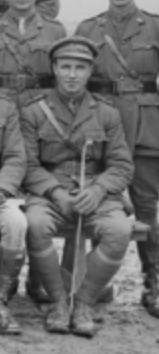
DAVIDSON, James
| Service Number: | 853 |
|---|---|
| Enlisted: | 30 August 1914 |
| Last Rank: | Captain |
| Last Unit: | 10th Infantry Battalion |
| Born: | Albert Park, Victoria, Australia, 22 April 1884 |
| Home Town: | Not yet discovered |
| Schooling: | Geelong College, Victoria, Australia |
| Occupation: | Labourer |
| Died: | Hilton, South Australia, 11 November 1941, aged 57 years, cause of death not yet discovered |
| Cemetery: |
West Terrace Cemetery (AIF Section) Light Oval, Row AS, Aspect C, Site 2 |
| Memorials: |
World War 1 Service
| 30 Aug 1914: | Enlisted AIF WW1, Private, 853, 10th Infantry Battalion | |
|---|---|---|
| 20 Oct 1914: | Involvement Lance Corporal, 853, 10th Infantry Battalion, --- :embarkation_roll: roll_number: '10' embarkation_place: Adelaide embarkation_ship: HMAT Ascanius embarkation_ship_number: A11 public_note: '' | |
| 20 Oct 1914: | Embarked Lance Corporal, 853, 10th Infantry Battalion, HMAT Ascanius, Adelaide | |
| 23 Sep 1918: | Promoted AIF WW1, Captain, 10th Infantry Battalion, Appointed Temporary Captain | |
| 1 Jan 1919: | Honoured Military Cross, "During the period under review from 25th February to 16th September 1918, Lieut. J. Davidson has carried out the duties of platoon officer and later as Quartermaster in a most efficient and praiseworthy manner. On two occasions within this period, he has been called upon to carry out the duties of Quartermaster at very short notice and his work both in and out of the line has been all that could be desired. He rendered very valuable service in the capacity of Quartermaster during the recent fighting on the Somme from 8th August to the present date. He personally conducted the ration parties to the forward area each night and always delivered the food to the men, often in spite of heavy hostile shelling and machine gun fire. His untiring energy and ability in feeding, clothing and equipping the personnel of the Battalion has been a marked feature of his most excellent service. His devotion to duty at all times is deserving of the highest praise." | |
| Date unknown: | Wounded 853, 10th Infantry Battalion |
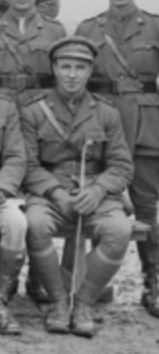
The Mystery of James Davidson's Military Cross
My Grandpa, James Smythe, (969) had, amongst his possessions, the medals and paperwork originally belonging to a James Davidson (“Davidson”). One of the medals was the Military Cross, which was awarded to him in the New Year’s Honours list for January 1919 for service during the war. I did not know why Grandpa had Davidson’s medals but I tried to find out more about Davidson so that I could give the medals back to his family.
It was easy to find Davidson’s service record (853), and this shows that he and Grandpa joined the Australian Imperial Force (“AIF”) in Adelaide at around the same time, were both in the ANZAC 10th Battalion, and sailed out to Gallipoli via the Mediterranean on the same ship (HMAT Ascanius A11). Davidson quickly rose through the ranks, becoming Regimental Quartermaster Sergeant, and then Captain.
My initial attempts to find any descendants led nowhere until I discovered that, although he signed up as James Davidson, this was not his birthname. Eventually, I came across a burial record for Davidson on the Find a Grave website. This page had been compiled by a relative and identified that Davidson was “born Andrew William Dougall, 2nd son to parents William Dougall and Mary née Mitchell, and their first to be born in Australia (at Albert Park, Victoria)”.
I contacted the relative through the website and she told me that Davidson was her great-grandfather's brother. Based on the information she provided, I carried out more research independently to find out if Davidson had any offspring. After much checking, I concluded that, despite marrying twice (under his birthname), he had no offspring of his own. As there were no closer relatives alive, I offered her the medals and she was very excited to accept.
My research unfortunately failed to shed any light on why Grandpa would have had the medals and documents. It is possible that Davidson had asked Grandpa to collect them on his behalf, with a view to picking them up later. However, Grandpa left Australia in 1924, never to return, and the medals were never collected. Thanks to the combined efforts of the Royal Mail and Australia Post, the medals are now back home in Australia.
Submitted 5 November 2025 by Steve Smythe
Click images to start slideshow.