








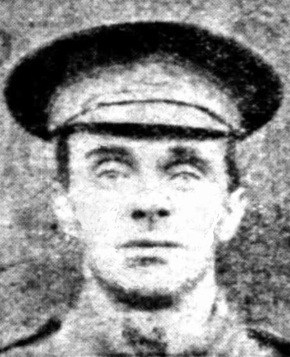
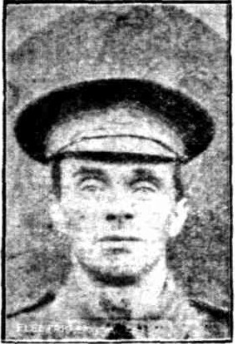
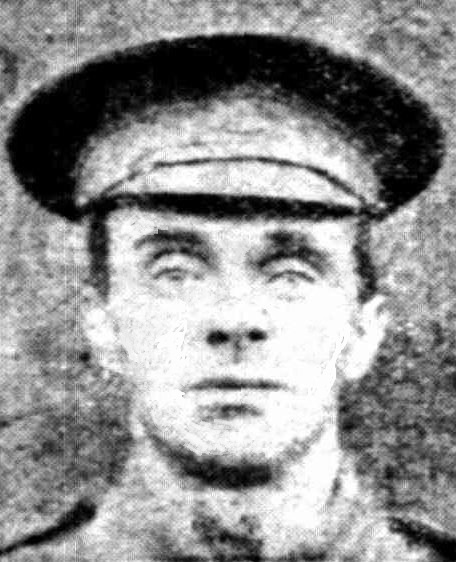
OWLER, Nicol Abercrombie
| Service Number: | 3354 |
|---|---|
| Enlisted: | 14 March 1916 |
| Last Rank: | Private |
| Last Unit: | 32nd Infantry Battalion |
| Born: | Kilkcaldy, Scotland , 1887 |
| Home Town: | Mile End, City of West Torrens, South Australia |
| Schooling: | Kemback Pulic School, Fifeshire, Scotland |
| Occupation: | Labourer |
| Died: | Killed in Action, France, 9 December 1916 |
| Cemetery: |
No known grave - "Known Unto God" |
| Memorials: | Australian War Memorial Roll of Honour, The South Australian National War Memorial, Villers-Bretonneux Memorial |
World War 1 Service
| 14 Mar 1916: | Enlisted AIF WW1 | |
|---|---|---|
| 27 Jun 1916: | Involvement AIF WW1, Private, 3354, 32nd Infantry Battalion, --- :embarkation_roll: roll_number: '17' embarkation_place: Adelaide embarkation_ship: HMAT Malakuta embarkation_ship_number: A57 public_note: '' | |
| 27 Jun 1916: | Embarked AIF WW1, Private, 3354, 32nd Infantry Battalion, HMAT Malakuta, Adelaide |
Great Grandaughter
Scottie, Nicol Owler: Memory Across Distance.
Some journeys begin with roads, maps, and packed bags. Others begin with a name.
This story starts with Nicol Owler, my Great Great Uncle—a man I never met, yet one whose story changed the direction of my life. What began as family history research in 2012 became something much larger: a pilgrimage across countries, memorials, archives, and emotions I did not yet understand.
It took me from my hometown of Adelaide to Canberra, and across the world to Scotland. It led me into archaeology, writing, travel, and ultimately the publication of a book based on his life.
Sometimes history is not buried in the ground. Sometimes it lives quietly inside a family, waiting to be found.
Who Was Nicol Owler?
Nicol Abercrombie Owler (Service number 3354) served in the 32nd Infantry Battalion during the First World War. He fought on the Somme in France and was killed in action in late 1916.
In 2026, it will be 110 years since his death. He was only 29 years old.
Before the First World War, Nicol’s journey had already crossed oceans. Born in Scotland, he later migrated to Australia, spending time in Western Australia before eventually settling in South Australia. From there, he enlisted and joined one of the defining tragedies of the twentieth century.
For many years, Nicol was simply a name in the family tree. Then to me, he became much more.
The Poppy as a Trace of Memory.
In Australia, as in many Commonwealth countries, the red poppy became a symbol of remembrance after the First World War.
At each memorial I visited, I placed a poppy beside Nicol’s name, as a small gesture, but an important one.
A way of saying to my Ancestor:
You are still remembered.
You still belong to this world.
Your story did not end in 1916.
Kemback Church War Memorial, Fife.
One of the most meaningful places I visited was the war memorial at Kemback Church.
Nicol had lived in nearby Cupar and attended church in the small village of Kemback. Seeing his name there, carved into stone so far from where he died, moved me deeply.
His memorial inscription included the acronym “AEF,” likely intended to read AIF—the Australian Imperial Force. A small error, perhaps, but one that somehow made the memorial feel even more human.
It made my archaeological brain wonder:
Did his family request his name be added?
Did those who carved it know him?
Did he stand beside some of the other men listed on ordinary Sundays, never imagining what was to come?
I visited the memorial with my Scottish cousin and it was one of those moments where history stops feeling distant. History feels connected and close.
The church was closed the day we visited and so I left a note beneath a rock, beside the memorial, along with a poppy. I explained who I was and how far I had travelled.
I never received a reply.
But perhaps the act of leaving it was enough.
Adelaide War Memorial.
I grew up in Adelaide, and one of my earliest memories of remembrance was a school visit to the National War Memorial on North Terrace.
Students searched for family surnames carved into the bronze plates hung high in the darkened space.
I searched for mine and found nothing.
As a teenager during this visit, I felt an odd disappointment. As though I had somehow failed to belong to the story being commemorated. I did not yet understand how incomplete records, changing surnames, migration, and hidden branches of family history shape what we think we know.
Years later, I discovered Nicol.
During university, while studying archaeology, I often revisited the memorial around ANZAC Day and left a poppy there too. Those visits taught me something valuable: when evidence appears absent, look harder. Look sideways. Ask different questions.
That lesson shaped both my career and my understanding of Ancestors.
Australian War Memorial, Canberra.
My visit to the Australian War Memorial was the most emotionally difficult.
I attended with my partner at the time, a serving member who had deployed to Iraq in 2003. Walking through the galleries, I found myself confronted not only by Nicol’s story, but by the silence surrounding modern service and sacrifice.
At dawn, names of First World War soldiers were projected onto the memorial walls during the ANZAC service.
Nicol’s name appeared in the cold darkness.
The Last Post sounded.
I stood there in tears, hiding them from the crowd of strangers.
After spending the entire day in the museum, I realised we had forgotten to place a poppy beside Nicol’s Roll of Honour panel. We rushed upstairs, only to find the memorial closing.
When security said no, I burst into tears.
The guard, taking pity on this overwhelmed stranger, quietly walked us through so I could leave the poppy.
At the time, I was embarrassed by the intensity of my reaction.
Years later, I understood it differently.
Grief does not always belong only to those we knew personally. Sometimes it belongs to unfinished stories, inherited emotion, and the need to honour those who might otherwise fade.
Why This Story Matters.
Many years later, my mother’s cousin and her daughters also visited the memorial and left a poppy for Nicol.
That moment warmed my heart. Because remembrance is strongest when shared across generations.
A name survives when spoken.
A story survives when retold.
Now, my two favourite people in the world — my Nan and my Aunty, both direct relatives of Nicol — have both deepened my understanding of why memorials matter. Through them, I have come to see how places of memory hold emotion, identity, and connection across time.
This has shaped how I approach archaeology and the importance of my role within it.
Even the smallest discovery matters.
A fragment of stone in the soil.
A weathered inscription.
A gate standing strangely out of place.
These traces may seem minor to some, but each one can hold memory, story, and meaning for someone else.
The Book: Scottie, Nicol Owler.
After university, I moved to the United Kingdom for work. While there, I began visiting places connected to Nicol’s life and writing notes about what I had learned.
Those notes became pages. Those pages became a manuscript.
From 2017 to 2025, I wrote, revised, researched, and edited until I finally published Nicol’s story as an ebook: Scottie, Nicol Owler.
Writing the book gave me something I had not expected. It gave me insight into his short 29 years—but it also gave me insight into my own life. I saw parallels in our need to travel, to move, to seek something beyond where we began.
In understanding him, I better understood myself.
Reflection: Memory as Pilgrimage.
So how do we form emotional connections with ancestors we never knew?
Sometimes through documents.
Sometimes through photographs.
Sometimes through standing where they once stood.
But often, connection forms through effort., through travelling the distance, through reading every record, and even through leaving a poppy at a memorial in the rain, the cold, or the closing minutes of a museum day.
Places of remembrance matter because they make absence tangible.
They give names somewhere to rest.
And for those of us still searching, they give us somewhere to begin.
Submitted 2 June 2026 by Samantha Fidge
Biography contributed
Nicol Abercrombie OWLER was born in Kilkaldy in Scotland in 1887
His parents were William OWLER & Mary BARTLETT
Click images to start slideshow.