




COOK, John Malyon
| Service Numbers: | 204, 253624 |
|---|---|
| Enlisted: | 8 February 1915, Awarded Military Medal Awarded Mentioned in Dispatches |
| Last Rank: | Flight Lieutenant |
| Last Unit: | 3rd Divisional Signal Company (WW1) |
| Born: | Victoria, Australia, 7 October 1896 |
| Home Town: | Not yet discovered |
| Schooling: | Not yet discovered |
| Occupation: | Clerk |
| Died: | Victoria, Australia, 4 July 1967, aged 70 years, cause of death not yet discovered |
| Cemetery: | Not yet discovered |
| Memorials: |
World War 1 Service
| 8 Feb 1915: | Enlisted AIF WW1, Lieutenant, 204, 3rd Divisional Signal Company (WW1), Awarded Military Medal Awarded Mentioned in Dispatches |
|---|
World War 2 Service
| 14 Nov 1945: | Discharged Royal Australian Air Force, Flight Lieutenant, 253624 | |
|---|---|---|
| Date unknown: | Enlisted Royal Australian Air Force, Flight Lieutenant, 253624 |
Help us honour John Malyon Cook's service by contributing information, stories, and images so that they can be preserved for future generations.
Add my storyBiography contributed by Patsy Nevell
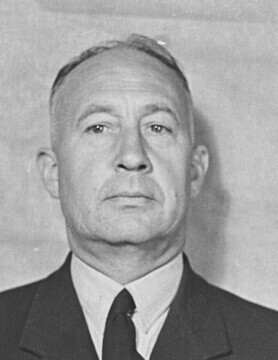
At the centre of this story is John Malyon Cook, born in Victoria in 1896, who served with the Australian Imperial Force during the First World War. He enlisted as a young man and was posted to the Divisional Signals—one of the most dangerous and critical roles on the Western Front. Signals men were responsible for maintaining communication under fire; when lines were cut by shelling, they were the ones sent out into open ground to repair them, often under intense artillery bombardment.
During his service in France, Cook distinguished himself through acts of bravery in the field. On 24 April 1917, his gallantry was formally recognised with the award of the Military Medal, as published in the London Gazette. This decoration was awarded for bravery under fire and places him among a select group of soldiers who demonstrated exceptional courage in frontline conditions. In addition to this, he was later Mentioned in Despatches, indicating continued distinguished and reliable service beyond a single act of bravery.
His wartime record shows not only courage but leadership. Rising from the ranks, he was commissioned as an officer—an indication of both his ability and the respect he earned from his superiors.
After the war, Cook returned to civilian life in Melbourne, where he established himself professionally and raised a family. However, the outbreak of the Second World War would once again draw the family into service.
In 1941, at the age of 45, John Malyon Cook applied for a commission in the Royal Australian Air Force. In his own handwriting, he described his First World War service as “four years abroad with the A.I.F., including a commission in Divisional Signals.” He was accepted and served in an administrative and operational capacity within the RAAF during the war, contributing his experience to Australia’s war effort once again.
His legacy, however, was carried forward most dramatically by his sons.
His eldest son, Flying Officer Frank Réné Malyon Cook, born in 1922, became a fighter pilot in the Royal Australian Air Force. He trained in Australia before being posted to the United Kingdom, where he flew the iconic Spitfire with No. 229 Squadron.
On 29 August 1944, during operations over the Netherlands, Frank Cook took part in a low-level attack on German shipping in the IJsselmeer. These missions were among the most dangerous of the war, requiring pilots to fly at extremely low altitude in the face of concentrated anti-aircraft fire.
During this operation, his aircraft—Spitfire Mk IX MH907—was struck by flak from German defensive vessels. He was killed in action at just 21 years of age. His body later washed ashore and was buried in Lemmer General Cemetery, initially as an unknown airman, before being identified and honoured. Today, he is commemorated both there and on the Australian War Memorial.
Decades later, parts of his aircraft—including the engine and supercharger—were recovered from the crash site, providing a rare and tangible link to his final moments.
A second son, Anthony James Malyon Cook, also answered the call to service. Enlisting in the Royal Australian Air Force in 1943 at the age of 18, he rose to the rank of Flight Lieutenant. His service included postings in India and other operational areas, contributing to the broader Allied war effort. Unlike his brother, he survived the war.
The story of the Cook family is therefore one of multi-generational service: a decorated First World War soldier who returned to serve again in the Second, alongside two sons who became officers in the Royal Australian Air Force—one of whom made the ultimate sacrifice.
He passed away in 1967,
The Cook family story stands as a powerful example of Australian service and sacrifice across two world wars—linking the trenches of the Western Front to the skies over Europe.
It is a legacy worthy of remembrance.
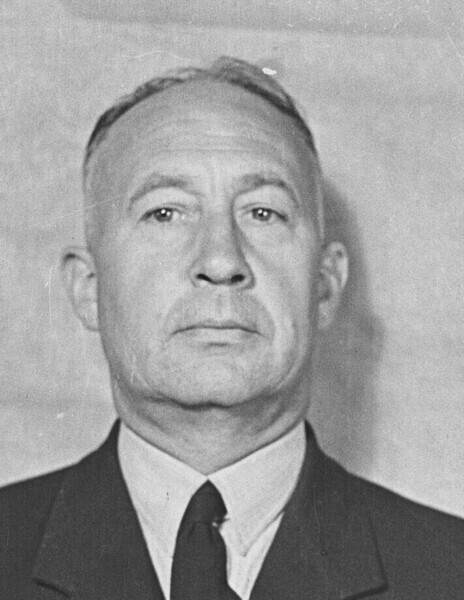
Click images to start slideshow.