







GREEN, Eric Douglas
| Service Number: | NX18919 |
|---|---|
| Enlisted: | 30 May 1940 |
| Last Rank: | Sergeant |
| Last Unit: | 2nd/13th Infantry Battalion |
| Born: | Ulmarra, New South Wales, Australia, 19 December 1916 |
| Home Town: | Ulmarra, Clarence Valley, New South Wales |
| Schooling: | Not yet discovered |
| Occupation: | Truck Driver |
| Died: | 23 February 1982, aged 65 years, cause of death not yet discovered, place of death not yet discovered |
| Cemetery: |
Maclean Lawn Cemetery, NSW A.B.5. |
| Memorials: |
World War 2 Service
| 30 May 1940: | Enlisted Australian Military Forces (WW2) , Sergeant, NX18919, 2nd/13th Infantry Battalion | |
|---|---|---|
| 19 Oct 1940: | Embarked Australian Military Forces (WW2) , Private, NX18919, 2nd/13th Infantry Battalion, Sydney NSW, disembarked Middle East. RTA 27-02-1943 | |
| 18 Jul 1943: | Promoted Australian Military Forces (WW2) , Corporal | |
| 22 Nov 1943: | Embarked Australian Military Forces (WW2) , Corporal, NX18919, Townsville QLD, disembarked Port Moresby, New Guinea. RTA 23-03-1944 | |
| 8 Dec 1944: | Promoted Australian Military Forces (WW2) , Sergeant, 2nd/13th Infantry Battalion | |
| 21 Feb 1945: | Transferred Australian Military Forces (WW2) , Sergeant, 2nd/7th Field Regiment | |
| 8 Apr 1945: | Embarked Australian Military Forces (WW2) , Sergeant, NX18919, 2nd/7th Field Regiment, Townsville QLD, disembarked Morotai. RTA 04-09-1945 | |
| 16 Oct 1945: | Discharged Australian Military Forces (WW2) , Sergeant, NX18919, 2nd/13th Infantry Battalion |
Help us honour Eric Douglas Green's service by contributing information, stories, and images so that they can be preserved for future generations.
Add my storyBiography contributed by Jack James
My Dad by Heather Green
I’d occasionally wondered why so many young Australians rushed to enlist in WW2 when Winston Churchill declared war against Germany. Back then, we were still considered to be British citizens, so to a certain extent we can assume patriotism was a contributing factor. But I think there was a more important point. The world had been in a depression for ten years. Families were struggling. Many men left their homes to walk the country looking for work. The prospect of a regular weekly wage would have been tempting. Half of a recruit's pay was sent to their next of kin.
Another reason for enlisting was the thought of travelling overseas. How many young boys played pretend soldiers, using pieces of wood as pretend rifles and swords? All very exciting!
I have compiled a story about my father and his three brothers who enlisted.
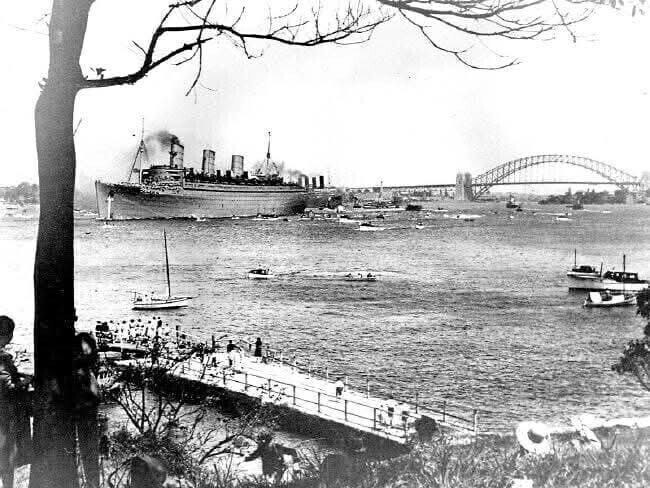
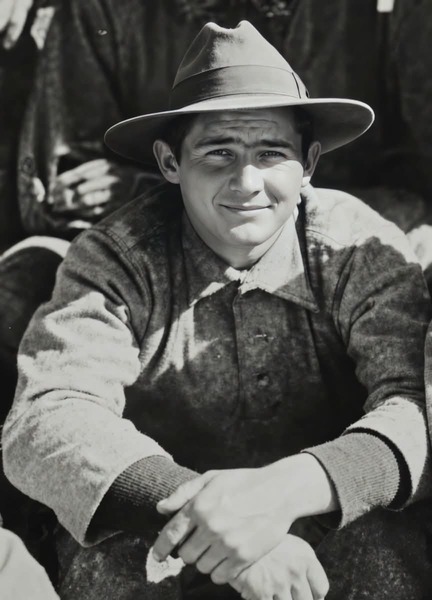
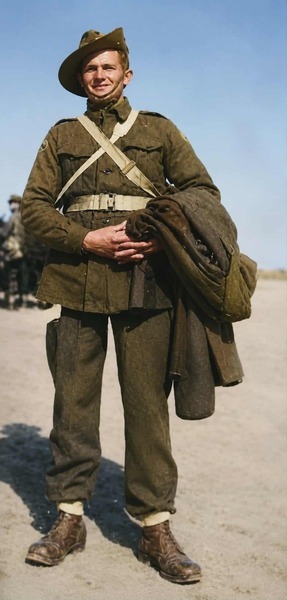
The first to sign up was my father, Eric Douglas Green. Dad waited until 4 April 1940 to sign up. After basic training at Ingleburn near Liverpool, he was posted to the 2/13 battalion which was part of the 9th division. The battalion was chosen to go on a recruitment march from Ingleburn over the mountains to Bathurst. The march took 10 days with the men being feted at each town they entered with dances and celebrations to welcome them. When the men reached Bathurst, they were told that they would be returning to Sydney by train prior to departure to the Middle East. They were told if they paid 5 pence they would be given a meat pie with sauce. Of course they all handed over their money in anticipation of a tasty pie. They weren’t told when this treat could be expected. The train raced through Katoomba and down the mountain into Hawkesbury and no pies were seen. By the time the train reached Circular Quay the hungry men were close to rioting. They hadn’t eaten since early morning and would have to wait until all 1600 men were on board the Queen Mary. They didn’t get their money back. This recruiting march resulted in the battalion being dubbed the "Glamour Battalion".
The battalion ended up in Tobruk and, with others, inflicted Germany’s first defeat on land. When the German propagandist William Joyce, "Lord Haw Haw", said that the Australians were trapped liked rats, the troops defiantly adopted the nickname the Rats of Tobruk.
Dad said that he was scared twice during the siege. Once, when he witnessed a tank battle. When it started, he dived into a foxhole for safety. He then realised he was safe as the battle was 25 miles away. He thought it was the most amazing light show he had ever seen. The second occasion was during a sand storm. They could hear this dreadful racket and thought it was the Germans on the attack. The garrison was so undermanned that any attack would have wiped them out. However, out of the sand came a battalion of Scots with their pipers marching them in. Needless to say the men were given a rousing welcome.
Meanwhile in the Far East in 1942, things were getting worse. Prime Minister Winston Churchill ordered the Australian troops in the Middle East be sent to Burma. That wasn’t what our prime minister wanted. John Curtin waited until the ships were at sea and ordered them back home. Churchill was furious!
Darwin was bombed by the Japanese 19 February 1942 followed by the sinking of HMS Kuttabul in Sydney harbour on 31 May 1942. We needed to protect our own people.
Dad met my mother, Olga while on leave in Sydney. He was so besotted that he went AWOL in August 1943 to marry her. He didn’t have a leave pass so they couldn’t find a minister to marry them until the vicar at the Baptist church in Punchbowl agreed to marry them. After two weeks dad left mum to rejoin his battalion in Queensland. On the way he went to the funeral of his sister in law, Constance Beryl Pitkin in Dorrigo. Beryl’s death was caused by an ectopic pregnancy. Dad was court martialled and spent a couple of weeks in jail before rejoining his unit in the Atherton tablelands for jungle warfare training. When dad went to the paymaster to change his marital status, he told him that his mother wanted to keep her allotment. The man laughed and told him if he gave both his wife and mother his allotment, he would be the richest man in the army
The battalion were fighting along the north coast of Papua New Guinea. After PNG, the battalion was sent to Borneo in February 1945 until early September 1945.
By this time, my mother was working and living in Gosford. News got around that there would be a troop train stopping in Gosford the evening of 19 October. Mother went to the station with the expectation that they would be reunited. It wasn’t to be. A few hours later, there was a knock on her door. He was home.


Click images to start slideshow.