








TAYLOR, Horace Hamlet Perrier
| Service Number: | 2742 |
|---|---|
| Enlisted: | 17 May 1916, Brisbane, Qld. |
| Last Rank: | Private |
| Last Unit: | 49th Infantry Battalion |
| Born: | Brisbane, Queensland, Australia, 31 July 1883 |
| Home Town: | Toogoolawah, Somerset, Queensland |
| Schooling: | Not yet discovered |
| Occupation: | Labourer |
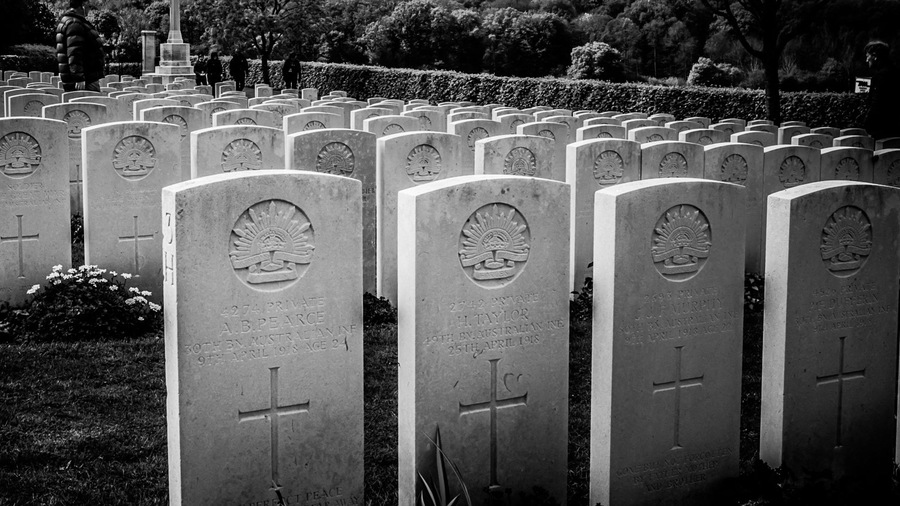
| Died: | Killed in Action, France, 25 April 1918, aged 34 years |
| Cemetery: |
Adelaide Cemetery Villers-Bretonneux, France III H 2 |
| Memorials: | Australian War Memorial Roll of Honour, Esk War Memorial, Toogoolawah Nestle & Anglo-Swiss Condensed Milk Co Honor Roll |
World War 1 Service
| 17 May 1916: | Enlisted AIF WW1, Private, 2742, 49th Infantry Battalion, Brisbane, Qld. | |
|---|---|---|
| 7 Oct 1916: | Involvement Private, 2742, 49th Infantry Battalion, --- :embarkation_roll: roll_number: '19' embarkation_place: Sydney embarkation_ship: HMAT Ceramic embarkation_ship_number: A40 public_note: '' | |
| 7 Oct 1916: | Embarked Private, 2742, 49th Infantry Battalion, HMAT Ceramic, Sydney |
Help us honour Horace Hamlet Perrier Taylor's service by contributing information, stories, and images so that they can be preserved for future generations.
Add my storyBiography contributed by Faithe Jones
Horace was born in Qld 13 July 1883 and enlisted in Brisbane on 17 June 1916. He was the only surviving child of Graham TAYOR & Isabel Edith nee PERRIER and had worked at Nestle and Anglo-Swiss Condensed Milk Co at Toogoolawah at the time of enlisting. Actually, his service record contains a letter from Nestles to the Army stating that they have his name on an honour roll. By now I wouldn't be surprised if it's no longer in existence.
Horace was killed in action on 25 April 1918 in France & is buried in the Adelaide British Cemetary at Villers Bretonneux, plot 3, row H, grave 2.
His regimental number was 2742 & he was a private in the 49th battalion.
Just as a matter of interest, Horace's mother was widowed sometime before he'd enlisted & as he was an only child he was her world. The poor woman passed away while his ship was sailing for England. The family used to say that she died of a broken heart.
Courtesy of Kerry Swindells
Biography contributed by Ian Lang
# 2742 TAYLOR Horace Hamlet Perrier 49th Battalion
Horrace Taylor was born in Brisbane on 31st July 1883 to Graham and Edith Taylor. There is no information in the official records to indicate when the family moved to Toogoolawah as the next event in Horace’s biography is when he enlists in the AIF.
Horace travelled by train from Toogoolawah to Brisbane to enlist on 17th June 1916. He advised he was 32 years and eleven months old, a single labourer of Toogoolawah. Horace worked at the Nestle and Anglo Swiss Milk Condensory in Toogoolawah as a labourer. The condensed milk factory was a major employer in the town at that time. He also informed the recruiters that he was the sole provider for his mother who was by then a widow. After being accepted into the AIF, Horace made his way to Enoggera where he was placed into a depot battalion. In August 1916, Horace was assigned to the 6th reinforcements of the 49th Battalion. The war news in July and August was unsettling for the Australian community. Western Front Battles at Fromelles, Pozieres and Mouquet Farm accounted for 23,000 casualties and the Australian newspapers were full of casualty lists. The Australian government was coming under increased pressure from the British Government to increase the number of enlistments, if necessary, by conscription.
In early October, Horace was granted a period of home leave during which he and his mother probably discussed the effect of Horace’s imminent departure. Apart from her son, Edith Taylor had no immediate family and the prospect of being left to fend for herself no doubt filled her with dread. The 6th reinforcements took trains to Sydney where they embarked on the “Ceramic” on 7th October 1916. The embarkation roll shows that Horace had allocated 80% of his overseas pay to his mother. The “Ceramic” sailed via Fremantle and South Africa. Three weeks after Horace left for overseas, his mother died. He would not learn of her passing until he landed in England on 21st November.
Once in England, the reinforcements were marched out to the 13th Brigade Training Battalion at Codford where Horace spent time in the base isolation ward with mumps. Mumps was a highly infectious disease which spread rapidly in the close confines of troop ships and barracks. While in camp at Codford, Horace received the news of his mother’s death from a cousin, Ethel Frost. She suggested that Horace should put his affairs in order and that she be named as Horace’s next of kin. On 8th February 1917, Horace, then fully recovered, crossed the English Channel from Folkstone to the large Australian depot at Etaples. He was taken on strength by the 49th on 13th February 1917.
The winter of 1916/17 was particularly bitter. Both sides had come to the conclusion that it was impossible to mount any successful operations and so contented themselves with lightly occupying the front line while labouring to improve the positions for the coming spring.
During that winter, the Germans had secretly constructed a 150 kilometre long defensive barrier, which the British labelled the Hindenburg Line, some distance to the east of their previous positions astride the Somme. Once the spring thaw allowed for transport to move again, the German forces began a strategic withdrawal to this new position. The British forces, which included the four divisions of the AIF cautiously followed, taking the towns of Bapaume and Noreuil along the way. During this advance, Horace reported to a Field Ambulance with a case of trench feet; caused by immersion in freezing water for days at a time without an opportunity to stimulate circulation. If untreated, the prognosis was often gangrene and amputation of toes and sometimes feet.
On 11th April, Horace was being processed at the 56th Casualty Clearing Station for transfer to the 9th General Hospital at Rouen. His case was assessed as severe and on 16th April, Horace was taken on the Hospital Ship “Londonderry” as a stretcher patient for transfer to the 1st Southern General Hospital in London. A month of frequent massage with whale oil and rest resulted in a discharge from hospital followed by a two week furlough which no doubt Horace used to see the sights of London. He reported back to the Overseas Training Battalion at Wareham on 4th June and on 23th July 1917, began the familiar routine of crossing to France at the depot at Etaples. Horace rejoined his battalion on 12th August. While in billets with the 49th in the rear areas behind Messines, Horace made a will nominating his cousin, Ethel Frost of Nambour as his sole beneficiary.
The 49th Battalion, as part of the 13th Brigade of the 4th Division AIF was in the reserve lines when the Battle of Messines began on 6th June 1917 with a massive explosion of 19 underground mines. On 9th June, the 49th was put into the line to consolidate gains made. The battalion remained in the front line for eight days before being relieved. The capture of Messines Ridge meant that the main thrust of the campaign in Flanders could proceed.
On 20th September, the 1st and 2nd Divisions of the AIF were the spearhead for an attack against the Gheluvelt plateau, the Battle of Menin Road, which opened the way for further advances eastward from the ruined city of Ypres towards the Broodseinde Ridge and the village of Passchendaele. A follow up advance on 26th September by the 4th and 5thDivisions of the AIF led to the capture of Polygon Wood, placing the British forces within striking distance of Passchendaele. As the first of the assaults against Broodseinde Ridge began, heavy rain began to fall, turning the shattered boggy ground into a quagmire which trapped men, animals, wagons and artillery in bog holes and flooded trenches. The campaign which had begun with such high hopes in the summer of 1917 ground to a muddy halt as winter descended.
The Australian infantry, exhausted after battling mud, shelling and poison gas, was withdrawn from the front and went into comfortable billets around the Flemish town of Poperinghe. There the troops could visit the divisional baths for uniforms to be cleaned and new underwear to be issued. There were battalion, brigade and divisional sports and some men were granted a two week leave in England.
The latter part of 1917 produced a change in the strategic situation as far as the German command was concerned. The Bolshevik Revolution in Russia brought about the end to fighting on the Eastern Front. A peace treaty between Germany and Russia released up to sixty German divisions which, once re-equipped and re-trained, could be used to press home a distinct advantage on the Western Front. The window for exploiting this advantage was however rather small as the entry of the United States into the war and an expected surge in troop numbers from July 1918 onwards would swing the advantage back to the Entente. The German commander, Ludendorff had only a short time to press home his advantage.
When Operation Michael began on 21st March 1918, the main assault was aimed along the line of the Somme River, the scene of so much fighting and hard won victories in 1916.
The British 5th Army, which was holding the line astride the Somme was unable to hold the German onslaught which in some places amounted to a three times numerical advantage. As the British retreated, often in disarray, the German Stormtroopers retook all of the gains made by the British in the Somme campaign and were within a few days of capturing the vital communication city of Amiens. If Amiens fell, Haig might well have lost the war; the situation was deadly serious.
Haig ordered his most successful and battle-hardened troops, four of the five divisions of the AIF in Belgium to race south to establish a defensive line in front of Amiens. On 26th March, the 4th Division, which included Horace Taylor in the 49th, began a journey south. At first, they travelled by train and then motor buses but for the final part of the trek, the men marched through the night with the encroaching enemy somewhere out on their left. Two brigades of the 4thDivision, the 12th and 13th, covered a distance of 35 kilometres on the evening of the 31st March to reach a position overlooking a railway line and the village of Dernacourt just across the embankment.
Battalions of the 12th Brigade took up a defensive line on an exposed forward slope and endured heavy artillery barrages from across the rail line. The 49th Battalion was in reserve on the reverse slope of the ridge unable to see the enemy activity but nevertheless exposed to constant shelling. After four days, the Germans had assembled almost two whole divisions at Dernacourt and were ready to attack. On 5th April, two companies of the 47th Battalion which were dug in on the railway embankment were over run and the German attackers poured through a railway underpass. At 5pm, the 4th Division Commander ordered the 49th supported by the 50th Battalion to counter attack. The two battalions moved up and over the ridge and began to engage the Germans who were occupying the ground between the ridge and the railway line. By the end of the day, the Germans had been forced back across the railway embankment and the threat in that sector had been neutralised. On the southern side of the Somme, German forces were advancing towards the village of Villers Bretonneux and the commanding hill, designated Hill 170, to the north of the village. From that position, heavy artillery could lob shells into Amiens, 14 kilometres away. Villers Bretonneux had been taken and lost by both sides several times during April. After British bungling, the 4th and 5th Divisions of the AIF were moved across the Somme to strengthen the defences in front of the village. On the evening of 24th April 1918, three battalions from the 13th Brigade and three battalions of Victorians from the 15th Brigade staged a daring pincer movement in the dark without artillery support. By the morning of 25th April, Anzac Day, Villers Bretonneux was back in British hands. The 49th Battalion had been in reserve during this action but was called up to quickly dig a trench line between the outskirts of the village and Monument Farm. Sometime on the 25th, Horace Taylor was killed in that trench at the age of 35. Horace’s body was taken to a small cemetery on the other side of Villers Bretonneux which in time became known as the Adelaide Cemetery.
Horace’s death created quite a dilemma for the authorities because in spite of Horace’s assurance to his cousin, Ethel, that he would nominate her as his next of kin, the file still showed Edith Taylor as NOK. The telegram that was sent to Edith Taylor of Toogoolawah was returned unable to be delivered. Written on the envelope is the word deceased. Having seen Horace’s name in the casualty lists, Ethel Frost wrote to the authorities enquiring if the person named in the casualty list was her cousin as the regimental number and date of death did not match. Ethel stated in her letter that she had advised Horace to change his NOK when his mother died and she stated that he had promised to do so in a letter which she had in her possession. At the same time, a Mrs Jones writing from Mt Larcom near Rockhampton stated that she was Horace’s aunt (his mother’s sister) and that as such she should be considered to be his NOK and also be the beneficiary of his estate. The matter was settled when Ethel Frost provided a statutory declaration to the military authorities stating the facts of the case. There was also the will which Horace had made in favour of Ethel.
A parcel of Horace’s effects which included an identity disc, fountain pen, wallet, cards and photos was prepared in London for despatch to Ethel Frost of Nambour. Unfortunately, the ship carrying the parcel, along with the personal effects of 5,000 other servicemen who had died was torpedoed off the coast of Plymouth. The “Barunga”, which had been captured as a prize of war in Sydney in 1914, had a number of returning servicemen on board. All passengers and crew were rescued but all cargo was lost.
The policy regarding the distribution of medals, meant that Horace’s uncle, George Perrier of Longreach received the Empire medal, the Victory Medal, the memorial plaque and scroll.
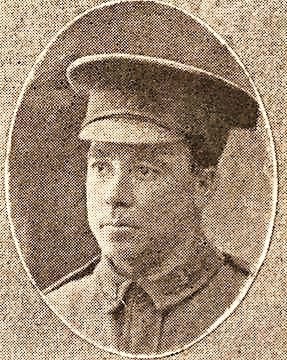

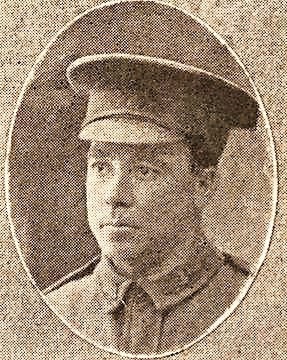
Click images to start slideshow.