







EGAN, William Rogers
| Service Number: | NX166012 |
|---|---|
| Enlisted: | 20 May 1940 |
| Last Rank: | Major |
| Last Unit: | 12th Small Ships Company |
| Born: | Greenwald, Victoria, Australia, 31 December 1900 |
| Home Town: | Portland, Glenelg, Victoria |
| Schooling: | Hamilton High School, Victoria, Australia |
| Occupation: | Surveyor and Land Valuer |
| Died: | Lymphoma, Melbourne, Victoria, Australia, 4 May 1977, aged 76 years |
| Cemetery: |
Springvale Botanical Cemetery, Melbourne |
| Memorials: |
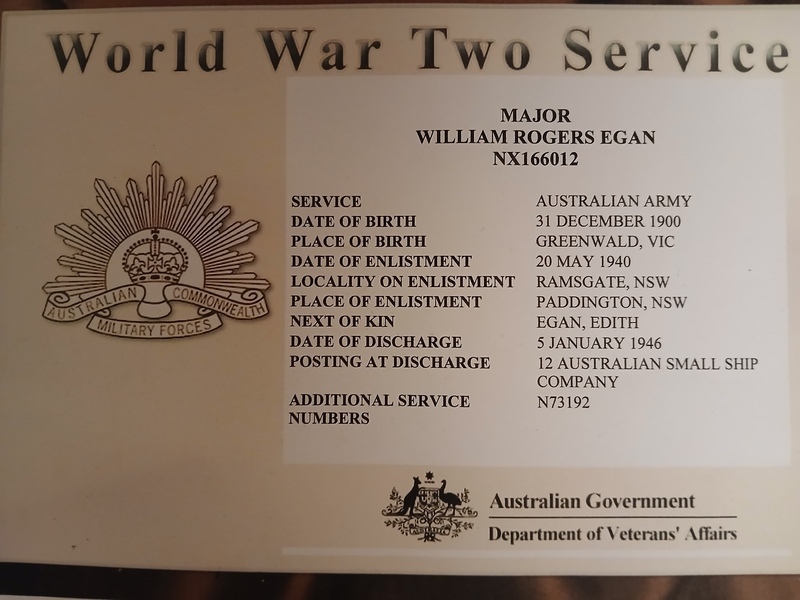
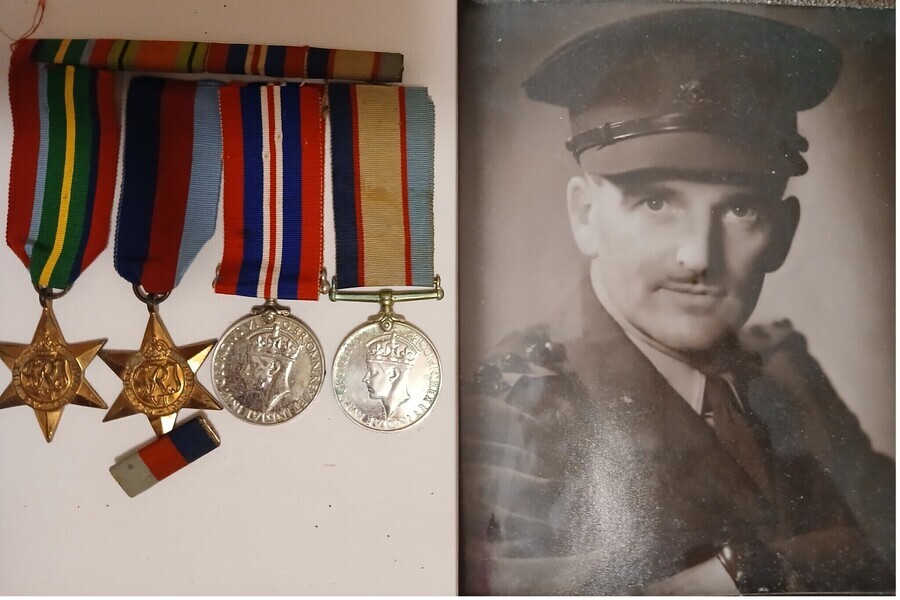
World War 2 Service
| 20 May 1940: | Enlisted Australian Military Forces (WW2) , Major, NX166012 | |
|---|---|---|
| 5 Jan 1946: | Discharged Australian Military Forces (WW2) , Major, NX166012, 12th Small Ships Company |
The War Years
Contributed by Vivien Spencer (Egan)
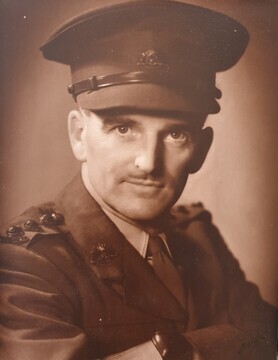
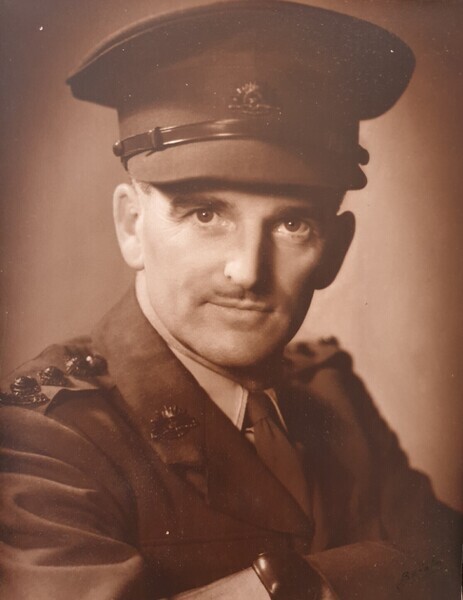
Roger enlisted in May 1940, aged thirty-nine. He worked in the Victoria Barracks, Sydney, using his survey skills. We rented a cottage at Ramsgate. Ross Anthony was born in 1941. Roger was so proud.
The Japanese struck Pearl Harbour in 1942 on the day of the christening. Victoria Barracks could no longer contain Roger. In mid 1942, when Allied forces were scrambling to repel the Japanese advance in New Guinea, General MacArthur turned to an Australian
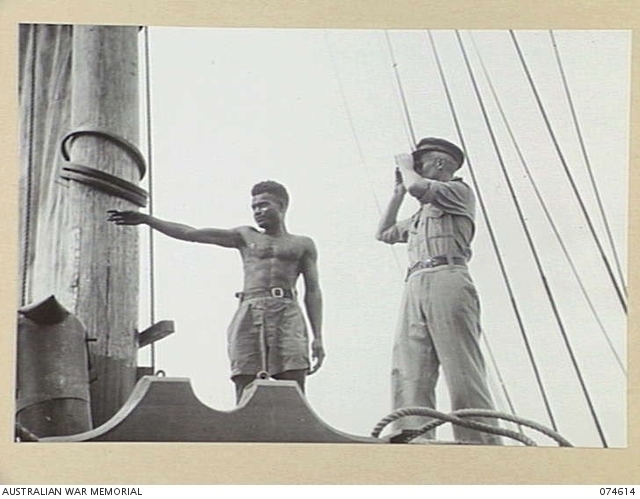
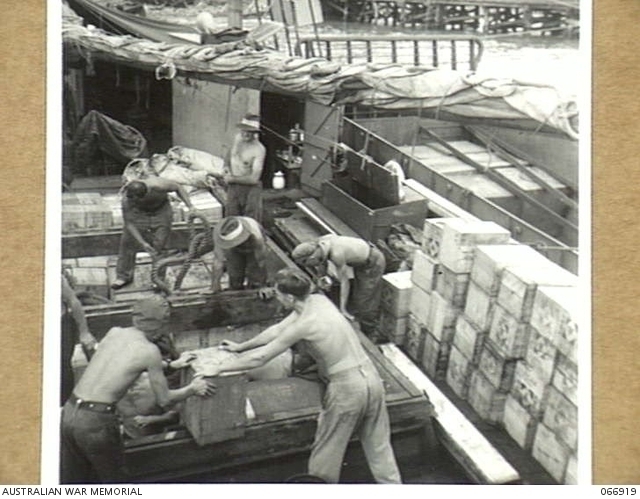
fleet of fishing trawlers, ferries, barges, sailing boats and pleasure craft to take on a critical role in the Pacific war effort. Roger was posted to Townsville and eventually to New Guinea in charge of a Water Transport Unit, a tough job for someone old enough to be the father of the lads he had to send out, where they might be killed. Their job was to deliver supplies to the troops, along the waterways, under cover of darkness. Known officially as ‘Mission X’ and locally as the ‘rag tag fleet’, the boats were crewed by Australians who couldn’t join the military - because they were either too young, too old, or otherwise ineligible. Over the course of the Pacific campaign, they would ferry soldiers - both fit and wounded - as well as weapons and other supplies, always at night.
Mim Egan
--------------------------------------------------------
From
THE AUSTRALIAN WATER TRANSPORT ASSOCIATION LOG BOOK No 26 April 1978
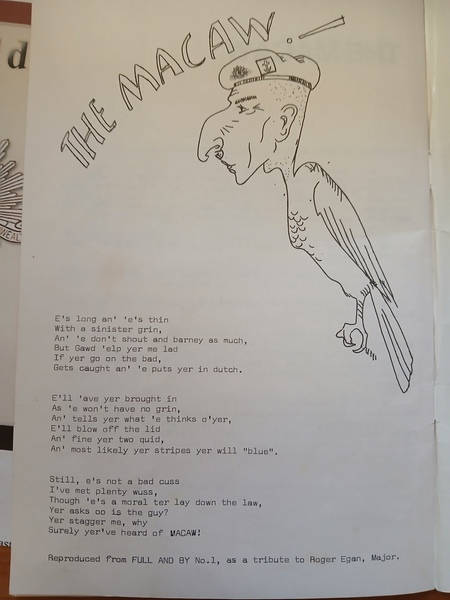
VALE THE MACAW
A letter from George French brings us the sad news of the passing of Major Roger (The Macaw) Egan
"In my Christmas mail, a card from Mim Egan, (his wife) and a note enclosed from which I quote, 'I am very sorry to tell you that Roger died in May (1977) . Towards the end of 1976.............. Needless to say, we will miss his great spirit'
Roger Egan leaves a widow, two daughters and a son
"Those who served under The Macaw will carry memories of respect for him. Of that I feel sure. While he boasted of no previous maritime experience, other than at Portland, he readily adapted his outlook in those of us and exercised his authority with tolerance and understanding ... I first met Roger when I was made his adjutant, and I sadly mourn the loss of a very dear friend.."
George French
--------------------------------------------------------------------------------------------------------------------------------------------------------------------------------------------
I, too, remember Roger Egan with the greatest respect. His genuine concern for the welfare of all those who served under him cast him in the role of a father figure.
He actively supported and encouraged the publication of the Unit magazine FULL AND BY.
Typically, he could take a joke against himself in good part. When the issue of FULL AND BY appeared, he was greatly taken with the poem, THE MAWCAW (reproduced in photos). He asked me... if it could be duplicated... and more copies run off. He wanted to include a copy in each letter that he wrote.
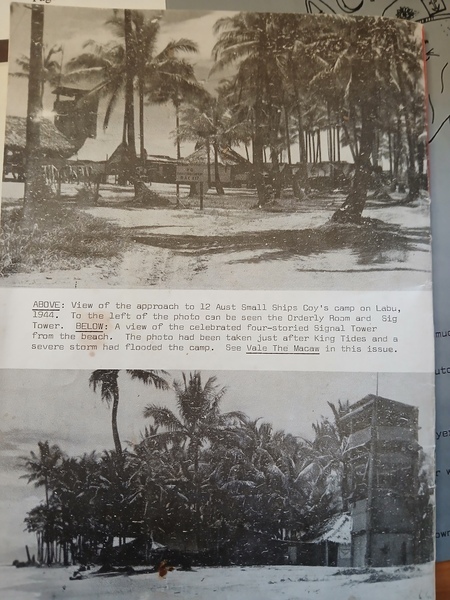
He will be remembered for building the Orderly Room at Labu, which looked more like a beachfront hotel... than a Haus Belong Paper. Then there was the Signal Tower of four floors - visual signs on the 4th floor, Radio Room on the 3rd, Living quarters on the 2nd, and Battery room on the Ground Floor - (see photo)
These structures have come and gone ... but the memory of those who knew them will remain evergreen.
Frank de Wall
Submitted 2 July 2026 by Robert Kearney
Biography contributed by Vivien Spencer
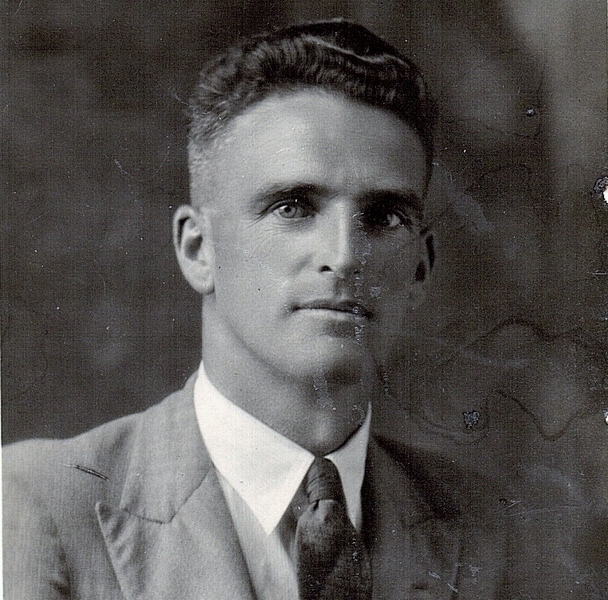
William Rogers, named after his grandfather, was born at Fernside, Greenwald, Victoria, on New Year’s Eve 31st December 1900, and was always known as Roger. Grandma Egan came to help at the birth. Roger was baptised at St. John’s C of E, Heywood, on 3rd February 1901. When Roger was two years old, they moved to Heywood. They had a dreadful trip in a bullock wagon, and it took several days to travel the twenty miles through the drenching rain and along the boggy road.
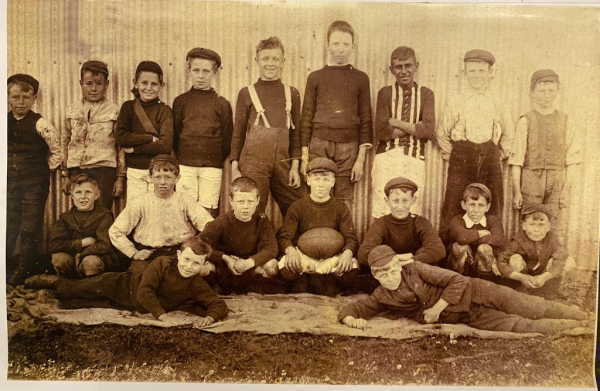
Roger attended Hamilton High School from February 1916 to December 1918 with the help of his sister, Phil. Later, Roger repaid her by working at Tawonga for six months when he and Phil’s husband Bob put in the pipe to bring water from the creek to the house. He gained his Intermediate Certificate and Leaving Certificate in English, Algebra, Geometry, Trigonometry, Physics and Chemistry. He then worked for L. H. Baker, Barrister and Solicitor, Hamilton, as a law clerk until December 1923. For the next six years, he was articled as an assistant surveyor to A.J. Leahy in Hamilton, doing general survey work in the Mallee, the Wimmera, and Western Districts of Victoria, part-time. The rest of his time, he spent in bricklaying, fencing, carpentry, gardening, pick-and-shovel work, and any job he could find. He studied Forestry and Geology at Melbourne Technical College.
It was during this time that he joined the Citizen’s Reserve Forces in Hamilton, where he gained his commission as Lieutenant, acting captain. He played football and tennis and captained teams wherever he was. At the age of twenty-eight, he had an accident while riding. The horse rolled on him, badly crippling his leg. He eventually overcame this injury after months in rehabilitation in a gymnasium.
Roger survived the depression by building dry-stone fences across western Victoria for a mere pittance plus his keep of ten pounds of flour, a piece of corned meat, half a pound of tea and two pounds of sugar. I think this was supposed to last a week. He lived in a tent and cooked on a campfire, making damper in the ashes. He was happy and very healthy!
Survey jobs were scarce. He went into partnership with Wally Cooke to form a Business and Estate Agency in Portland. The income from this was not enough to keep two families. Wally had a wife and two children, and agents do so much work for which there is no pay. In 1937, Roger obtained a job with Australian Iron and Steel in Port Kembla, N.S.W. He drove a 1929 Riley coupe with a fabric body. His battered suitcase, in the boot, held his worldly possessions. That is, apart from a scattering of ancient tools, bits of wire, string, silver paper and nails, all his vital needs for keeping the car on the road.
Roger quickly settled into his new life. He did extra surveys at the weekends and bought a block of land, for one hundred pounds, on the new Woodlawn Estate, overlooking Port Kembla. No 5, Woodlawn Ave. There, he built a modern brick veneer house employing contractors only when necessary. He threw himself into the social life of the place, and we met in the Barn Dance. A week later, he proposed. I already had a steady boyfriend in Sydney and was not interested. Roger was not one to give up. We married on 2nd September 1939, the day the Second World War began and moved into the new home, built by Roger, in Wollongong, overlooking Port Kembla.


Click images to start slideshow.