







ANDERSON, Norman Gabriel William
| Service Number: | VX14372 |
|---|---|
| Enlisted: | 7 May 1940 |
| Last Rank: | Lieutenant |
| Last Unit: | Not yet discovered |
| Born: | MOONEE PONDS, VIC, 31 July 1915 |
| Home Town: | Not yet discovered |
| Schooling: | Not yet discovered |
| Occupation: | Not yet discovered |
| Memorials: | Greensborough RSL Sub Branch Memorial Wall |
World War 2 Service
| 7 May 1940: | Enlisted Australian Military Forces (WW2) , Lieutenant, VX14372 | |
|---|---|---|
| 4 May 1948: | Discharged Australian Military Forces (WW2) , Lieutenant, VX14372 |
Mayor of Brunswick & MBE
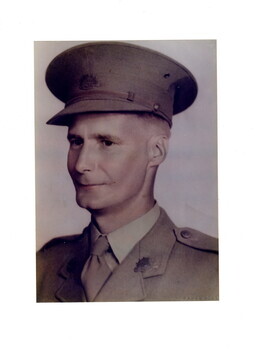
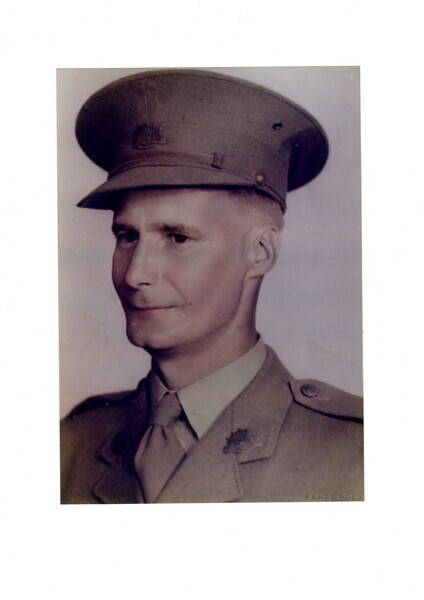
Norman Gabriel William Anderson’s life was defined by a profound commitment to service—both to his country during the Second World War and to his local community in the decades that followed.
Born in Moonee Ponds, Victoria, on 31 July 1905 (though his military enlistment records transcribe his birth year as 1915), Norman was the son of Wilhelm Anderson, a Norwegian mariner and ship’s carpenter, and Eliza Ann "Lily" Anderson. Growing up in Melbourne’s inner-northern suburbs, he was immersed in a family culture of manual trades, resilience, and community duty. Prior to the war, Norman trained as an architectural draftsman and became deeply involved in the local Scouting movement. He joined the 1st Mornington boy scouts, attended the 1st Scout Jamboree in London, and in 1934 became Scoutmaster to successfully reform the 4th Brunswick Scout troop.
With the outbreak of the Second World War, Norman enlisted in the Second Australian Imperial Force (AIF) on 7 May 1940 under the service number VX14372. Commissioned as a Lieutenant, he served extensively between 1940 and 1948, deploying overseas and applying his inherent leadership and technical skills in the defense of his nation.
Returning to civilian life, Norman embodied the "tradesman-statesman" model of the post-war era. He leveraged his architectural background and plumbing expertise to build a Tier-1 commercial plumbing enterprise, Commercial Hot Water & Maintenance Pty Ltd (CHWAM), which became a leader in the Victorian construction industry. His post-war resourcefulness and military connections were immediately felt by his community; in 1949, he procured a wartime "Masonite Hut" (a temporary military structure) to establish a permanent, dedicated scout facility on Jolley Street in West Brunswick.
His civic dedication culminated in serving as the Mayor of Brunswick on two separate occasions—most notably in 1965 alongside his wife, Mayoress Doris Estelle Dibbs. He also served as a Justice of the Peace, the Brunswick District Commissioner for Scouts, and the Hoadley Area Commissioner
. For his distinguished service to the community, he was awarded a Member of the Order of the British Empire (MBE).
Norman's most enduring philanthropic legacy is the Norm Anderson Young People's Trust. Originating from the Brunswick and Coburg Boys and Girls Club he helped lead, this perpetual fund continues to support disadvantaged youth in Melbourne's inner-north today.
Lieutenant Anderson passed away on 23 December 1992, aged 87, at the Repatriation Hospital in Heidelberg, Victoria. His story is one of a man who defended his country abroad and then dedicated the rest of his life to building the social, physical, and philanthropic infrastructure of his local community.
Submitted 23 April 2026 by Peter Henss
Click images to start slideshow.