




GRIFFITHS, Charles
| Service Numbers: | 2665, 2666 |
|---|---|
| Enlisted: | 16 August 1915 |
| Last Rank: | Bombardier |
| Last Unit: | 4th (Divisional) Medium and Heavy Trench Mortar Batteries, AIF |
| Born: | Ballarat, Victoria, Australia, 5 September 1882 |
| Home Town: | Gwalia, Western Australia |
| Schooling: | Not yet discovered |
| Occupation: | Miner |
| Died: | Brisbane, Queensland, Australia, 8 June 1945, aged 62 years, cause of death not yet discovered |
| Cemetery: |
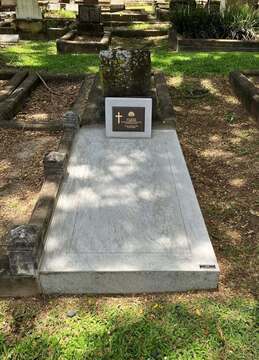
Lutwyche Cemetery, Brisbane, Qld Monumental Portion GP5 |
| Memorials: | Leonora Honour Roll, Leonora Road Board District Roll of Honor, Leonora War Memorial |
World War 1 Service
| 16 Aug 1915: | Enlisted AIF WW1, Private, 2665, 28th Infantry Battalion | |
|---|---|---|
| 2 Nov 1915: | Involvement Private, 2666, 28th Infantry Battalion, --- :embarkation_roll: roll_number: '16' embarkation_place: Fremantle embarkation_ship: HMAT Ulysses embarkation_ship_number: A38 public_note: '' | |
| 2 Nov 1915: | Embarked Private, 2666, 28th Infantry Battalion, HMAT Ulysses, Fremantle | |
| 12 Sep 1919: | Discharged AIF WW1, Bombardier, 2665, 4th (Divisional) Medium and Heavy Trench Mortar Batteries, AIF, 4th Division Trench Mortar 2nd MD |
Help us honour Charles Griffiths's service by contributing information, stories, and images so that they can be preserved for future generations.
Add my storyBiography contributed by Evan Evans
From Australian Remembrance Army
Over the past six years we have submitted the service records and causes of death of several hundred veterans to the Office of Australian War Graves for assessment for Official Commemoration. To date, more than 100 of these veterans interred at Lutwyche Cemetery have been accepted as Official Commemorations, and their graves are now being formally marked and will be maintained in perpetuity by the Office of Australian War Graves.
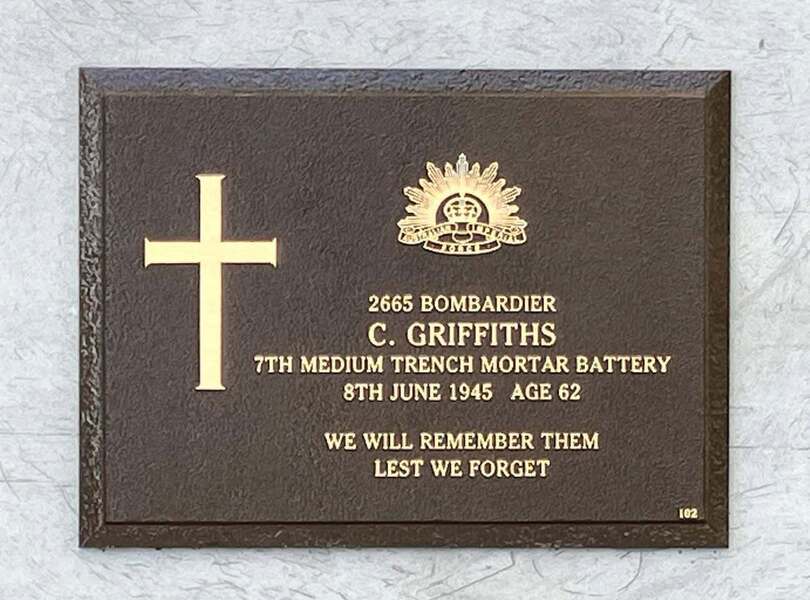
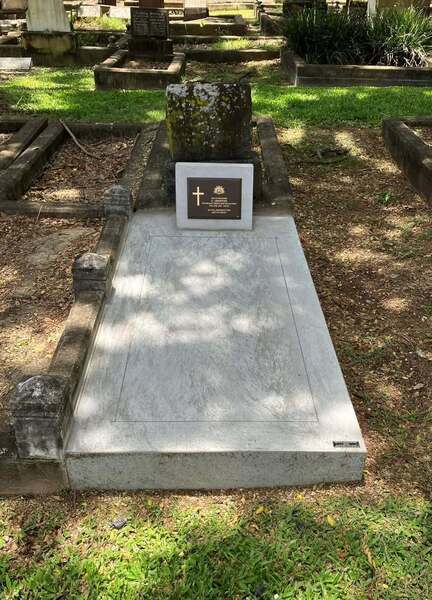
Bombardier Charles Griffiths (Service No. 2665), an Australian World War One veteran, is one of the previously unmarked WWI veterans’ graves in Lutwyche Cemetery that has been accepted as an Official Commemoration by the Office of Australian War Graves.
See Australian Remembrance Army Facebook page
OAWG Official Commemoration: https://connect.dva.gov.au/.../viewCommemoration.html...
Charles Griffiths was born in Ballarat, Victoria, on 4 September 1882, the son of Charles and Jane Griffiths. In August 1915, he enlisted in the Australian Imperial Force at Blackboy Hill, Western Australia, recording his age as 28 and his occupation as a miner.
He departed Australia for overseas service from Fremantle aboard HMAT Ulysses on 2 November 1915.
On 3 March 1916, he was allotted to the 51st Battalion at Zeitoun and shortly afterwards joined the battalion at Tel-el-Kebir. Within weeks he was transferred to the artillery, moving to the 4th Australian Divisional Artillery and later to the 4th Divisional Ammunition Column. In June 1916, he embarked from Alexandria for France with reinforcements for the 4th Division Base Depot Artillery, disembarking at Marseilles before proceeding to the Western Front.
While serving in France, Griffiths became part of the trench mortar units supporting the 4th Australian Division, eventually serving with the 7th Medium Trench Mortar Battery. During his service on the Western Front, he was attached to various artillery formations, including periods with field artillery brigades and divisional artillery units.
Late in 1918, Griffiths was detached from his unit and admitted to hospital after becoming ill during the final months of the war. Between November 1918 and January 1919, he spent approximately 56 days in hospital. In January 1919, he was transferred to England and later prepared for his return to Australia. He embarked for home in May 1919 aboard the troopship Beltana, arriving back in Australia in July 1919. After completing the formalities of demobilisation, he was discharged from the Australian Imperial Force in September 1919.
Bombardier Charles Griffiths died on 8 June 1945, aged 62, and was buried in Monumental Portion GP5, Lutwyche Cemetery, Brisbane. He never married and had no known children. His next of kin was recorded as his nephew, David Leslie Hopkins, the son of his sister Elizabeth and her husband William Hopkins. David arranged for his uncle Charles to be interred in the same grave as his father, William Hopkins, who had died in 1928.
In 2024, seventy-nine years after his death, we received notification that the Office of Australian War Graves had accepted our application for an Official War Graves Commemoration.
After decades in an unmarked grave, his final resting place now bears a plaque commemorating his service to Australia — ensuring his name endures among those remembered for their duty and sacrifice. His identity and dignity have now been restored.
Lest We Forget
Click images to start slideshow.