







HARDY, Tom Mayfield
| Service Numbers: | Not yet discovered |
|---|---|
| Enlisted: | Not yet discovered |
| Last Rank: | Lieutenant |
| Last Unit: | 9th Light Horse Regiment |
| Born: | Australia, South Australia, Adelaide, Underdale, 29 August 1890 |
| Home Town: | Not yet discovered |
| Schooling: | Not yet discovered |
| Occupation: | Wine Merchant |
| Died: | Plane Crash, Dandenong Ranges, Victoria, Australia, 25 October 1938, aged 48 years |
| Cemetery: |
St Judes Cemetery, Brighton, South Australia |
| Memorials: | Adelaide University of Adelaide WW1 Honour Roll, Outer Harbor Royal South Australian Yacht Squadron WWI Roll of Honour, St Peters - St Peter's College Honour Board |
World War 1 Service
| 10 Feb 1916: | Involvement Lieutenant, 9th Light Horse Regiment, --- :embarkation_roll: roll_number: '2' embarkation_place: Adelaide embarkation_ship: HMAT Warilda embarkation_ship_number: A69 public_note: '' | |
|---|---|---|
| 10 Feb 1916: | Embarked Lieutenant, 9th Light Horse Regiment, HMAT Warilda, Adelaide |
Help us honour Tom Mayfield Hardy's service by contributing information, stories, and images so that they can be preserved for future generations.
Add my storyBiography contributed by St Ignatius' College
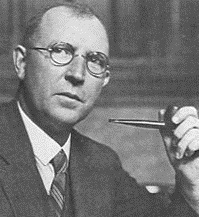
Tom Mayfield Hardy enlisted in World War I. He was born into a very prestigious family, as his grandfather, Tom Hardy, was a well-known winemaker in Adelaide known as the "Father of the South Australian Wine Industry." He was born in Underdale, Adelaide, on the 29th of August 1890. He described himself as following the Church of England. Hardy was 192cm in height, with blue eyes, light brown hair, and light/pale skin. Hardy enlisted with his younger brother Robert Cyril, who lost his life in the French battlefields.
Hardy enlisted in the war on 9 August 1915 at the age of 24. Hardy started in the infantry base depot for training before being transferred to a Light Horse unit. In September 2015, he joined the Non-Commissioned Officer and Officers’ schools, which Hardy completed, and received his commission in December 1915.
On 10 February 1916, Hardy departed Adelaide on the ship A69 Wirilda bound for Egypt. He was first attached to the 3rd Light Horse Reserve Regiment, then transferred on 25 June 1916 to the 9th Light Horse Regiment. On 6 September 1916, Hardy transferred to the 3rd Machine Gun Squadron and took command. He rank was confirmed as Lieutenant 25 June 1916. While in Zeitoun, Egypt, he completed the Lewis Machine Gun Course with high marks in October 1916
On 23 December 1916, Hardy participated in the Battle of Magdhaba in a village in the northern Sinai desert. The Turks were defending the route to Palestine, and the ANZACS attacked with bayonets and machine guns. The machine guns, including the Lewis guns, drove the Turks back, resulting in 97 deaths, 300 wounded, and 1,282 captured Turks. Allied troops then secured the vital water supplies crucial to the victory.
In late March 1917, Hardy’s 3rd Machine Gun Squadron was deployed to the coastal city of Gaza, a key Turkish defence position. On 26 March 1917, his unit fought in the First Battle of Gaza, supporting British infantry and Anzac troops with firepower as they advanced. Despite gaining ground, Lieutenant General Dobell ordered a withdrawal at dusk. Upon realizing this was a mistake, Dobell attempted to resume the attack, but Turkish reinforcements countered, resulting in defeat.
Hardy was later wounded in action on 12th of April 1917, from a gunshot injury to the right arm. Hardy was sent to a base hospital and then transferred to the 54th Casualty Clearing Station, then the 36th General Hospital in Egypt. He spent 20 days in the hospital for gunshot wounds and an extra 10 days for sickness after finally recovering on the 18th of May 1917. Throughout his rest, his unit battled ferociously in the Second Battle of Gaza but ended up being called off without gaining any significant ground. After Hardy recovered, he returned to duty with the 3rd Australian Machine Gun Squadron. He marched to the Imperial School of Instruction for further training. Hardy was later evacuated to the 3rd Light Horse Field Ambulance at Shillal for having gastric enteritis, which is a common stomach infection.
In 1918, Hardy continued to go through training and duties, which was rewarded by a short leave in Egypt. Once returned, Hardy undertook multiple machine gun and staff training and advanced courses at Zeitoun, Egypt, and infantry staff courses. This shows that Hardy was a very dedicated and disciplined person, by showing his willingness to take multiple courses to improve his skills with staff and machine guns. Towards the end of the war, Hardy left Egypt for England on 8th February 1919 and England for Australia on the ship, Lancashire.
After the war, Hardy continued to run his family’s wine business. Hardy was later married to Eileen Hardy in 1923. Eileen met Hardy through a joint love for sailing and together they had 2 children; Thomas Walter Hardy and David John Hardy. Hardy later died in the Kyeema plane crash, which was described as Australia’s most tragic plane crash, ending 18 lives, including Hardy's on the 25th of October 1938. The plane crashed into the slopes of Mount Dandenong, caused by poor visibility. Hardy died at the age of 48 and was buried in St Jude's Cemetery in Adelaide.

Click images to start slideshow.