







RICKETTS, Henry Charles
| Service Number: | 414830 |
|---|---|
| Enlisted: | 9 November 1941 |
| Last Rank: | Flight Lieutenant |
| Last Unit: | No. 467 Squadron (RAAF) |
| Born: | MELBOURNE, VIC, 2 December 1916 |
| Home Town: | Not yet discovered |
| Schooling: | Not yet discovered |
| Occupation: | Not yet discovered |
| Memorials: | Richmond War Memorial |
World War 2 Service
| 9 Nov 1941: | Enlisted Royal Australian Air Force, Aircraftman 2 (WW2), 414830, No. 3 Initial Training School Sandgate | |
|---|---|---|
| 14 Feb 1942: | Involvement Royal Australian Air Force, Sergeant, 414830, 9 Advanced Flying Unit, Empire Air Training Scheme, 9 (O) AFU Observers Advanced Flying Unit | |
| 27 Apr 1942: | Embarked Royal Australian Air Force, Leading Aircraftman, 414830, 2 Embarkation Depot, MV Klipfontein | |
| 6 Jun 1942: | Involvement Royal Australian Air Force, Leading Aircraftman, 414830, Royal Canadian Air Force Training Units, Empire Air Training Scheme, No. 5 Air Observation School - Navigator Training | |
| 25 Sep 1942: | Promoted Royal Australian Air Force, Pilot Officer, Royal Canadian Air Force Training Units, Discharged as an enlisted airman commissioned the same day as a Pilot Officer on completion of his Navigator's Course | |
| 20 Oct 1942: | Embarked Royal Australian Air Force, Pilot Officer, 414830, Canada to the UK | |
| 14 Dec 1942: | Involvement Royal Australian Air Force, Sergeant, 414830, 9 Advanced Flying Unit, Empire Air Training Scheme, Advanced Training: As part of his progression, he rotated through No. 9 (O)AFU in Wales. This unit specialised in training navigators, bomb aimers, and observers to survive the dark, fog-laden skies over the UK. Aircrews at this unit typically logged advanced day and night navigation hours flying the twin-engine Avro Anson. | |
| 2 Feb 1943: | Involvement Royal Australian Air Force, Flying Officer, 414830, Operational Training Units (RAF), Empire Air Training Scheme, No. 14 OTU Promoted to FLTLT 25 Mar 43 | |
| 14 Aug 1943: | Involvement Royal Australian Air Force, Flying Officer, 414830, No. 467 Squadron (RAAF), Air War NW Europe 1939-45 | |
| 25 May 1944: | Involvement 414830, Operational Training Units (RAF), Empire Air Training Scheme, Posted as an instructor | |
| 24 Oct 1944: | Involvement Royal Australian Air Force, Flight Lieutenant, 414830, No. 467 Squadron (RAAF), Air War NW Europe 1939-45, Promoted to FLTLT 25 Sep 1944 Second Tour of Duty with No. 467 SQN | |
| 1 Mar 1946: | Discharged Royal Australian Air Force, Flight Lieutenant, 414830 |
Help us honour Henry Charles Ricketts's service by contributing information, stories, and images so that they can be preserved for future generations.
Add my storyBiography contributed by Steve Larkins
Henry Charles RICKETTS, DFC, MID
Flight Lieutenant Henry Charles Ricketts, DFC (Service Number: 414830) was a decorated Australian Navigator who served with the Royal Australian Air Force (RAAF) during World War II.
Born and educated in Melbourne, in 1916, by 1942 he was in Brisbane when he decided to enlist in the RAAF.
He attended No.3 Initial Training School (ITS), where having passed preliminary assessments he 'mustered' for Aircrew. At the ITS personnel were rigorously screened for various 'streams'. Henry was to become a Navigator.
Because he was destined to serve in Europe, his operational pipeline followed a more or less standard standard path for Commonwealth airmen destined to support the Royal Air Force in the war against Nazi Germany. A visionary program had been established immediately prior to the outbreak of war. A large and remarkable network of training facilities were established under the Empire Air Training Scheme (/explore/campaigns/13) in the two years across the Commonwealth particularly in Canada, Australia New Zealand and Rhodesia (now Zimbabwe). Britain realised it would need to draw aircrew from across its Dominions to have sufficient manpower to be able to deal withthe might of Germany's Luftwaffe.
Henry sailed from Australia to the United Kingdom, via Canada, where he undertook Navigation Training at No. 5 Air Observers School, at Winnipeg in Manitoba. (/explore/units/2611)
He then embarked again, this time for the UK. He first progressed through the RAF's No. 9 Advanced Flying Unit (AFU) (/explore/units/3203) located in Wales to tune his individual skills flying in twin-engine Airspeed Oxfords or Avro Ansons. This training was necesary to briing key aircrew members , particularly pilots and navigators, so they could handle heavy aircraft configurations in total blackout conditions, using local UK radio beacons, before moving on to the heavy bombers.
Following successful completion of that phase of his training, he was posted to No. 14 Operational Training Unit (OTU) (/explore/units/1497)to master the local geography, heavy night-flying conditions, and British weather. It was also at the OTU where the men 'crewed up', joining the team of six other men with whom they would be going to war as part of a heavy bomber crew and with whom he would live and fight during the course of 30 or so missions over targets from Scandinavia to northern Italy - if they survived.
It was high risk. RAAF aircrew sent to Europe suffered the highest per capita loss rates of any Australian personnel in WW2.
From there he went with the rest of his crew-mates to No. 1654 Conversion Unit (/explore/units/3001) to convert to the four engined Lancaster bomber.
Finally on 14 August 1943, he and his crews joined No. 467 Squadron (/explore/units/398), an ostensibly 'Australian' squadron which was an Article XV squadron under Bomber Command, based predominantly at RAF Waddington in Lincolnshire, England. They operated the iconic four-engine Avro Lancaster heavy bombers. Aircrew comprised men from all over the Commonwealth.
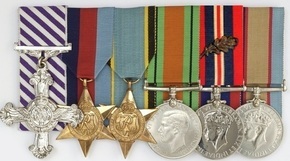
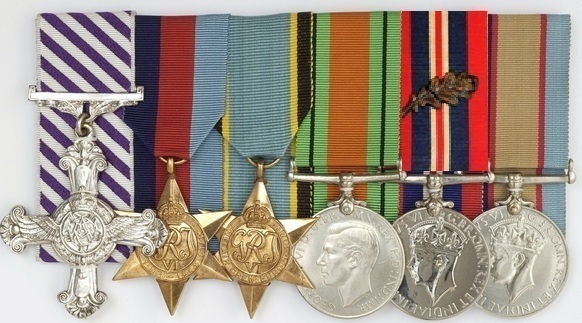
Henry Ricketts went on to complete two operational Tours of Duty with No.467 Squadron. He was awarded the Distinguished Flying Cross (DFC) in September 1945 for his gallantry and devotion to duty during intense bombing operations over occupied Europe.
Following his repatriation and the cessation of hostilities, he officially completed his wartime service commission and was discharged from active RAAF duties in late September 1948.
Compiled by Steve Larkins July 2026 from Service records and online resources.
Click images to start slideshow.