







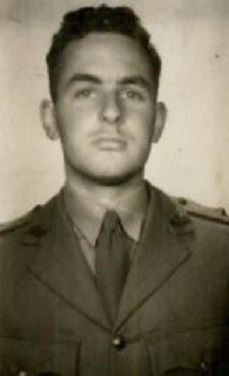
LIPMAN, Rex John
| Service Number: | VX69785 |
|---|---|
| Enlisted: | 15 March 1940, Caulfield, Victoria |
| Last Rank: | Captain |
| Last Unit: | 24 Brigade Headquarters (WW2 2nd AIF) |
| Born: | North Adelaide, South Australia, 26 April 1922 |
| Home Town: | Adelaide, South Australia |
| Schooling: | St Peter's College and Adelaide University |
| Occupation: | Merchant banker/Dentist/Author/Vigneron |
| Died: | Natural causes, Adelaide, South Australia, 4 July 2015, aged 93 years |
| Cemetery: |
Centennial Park Cemetery, South Australia Cremated: 13/07/2015, at Centennial Park Crematorium. |
| Memorials: | Medindie Wilderness School Roll of Honour WW2, St Peters - St Peter's College WW2 Honour Roll |
World War 2 Service
| 15 Mar 1940: | Enlisted VX69785, Caulfield, Victoria | |
|---|---|---|
| 15 Mar 1940: | Enlisted VX69785 | |
| 1 Mar 1943: | Involvement Lieutenant, VX69785, 2nd/4th Independent Company / Cavalry Commando Squadron | |
| 15 Jan 1946: | Discharged Captain, VX69785, 24 Brigade Headquarters (WW2 2nd AIF) |
Help us honour Rex John Lipman's service by contributing information, stories, and images so that they can be preserved for future generations.
Add my storyBiography contributed
- completed by Wilderness School
Rex John Lipman was born in Adelaide to Hyam John Lipman and Esther Lipman Jacobs in the early hours of the morning on the 26th of April 1922. He had two older siblings: Alice Lipman, who was born in February of 1920 and Gerald Lipman, who was born less than twelve months after Alice. The Lipmans were an uppermiddle-class Jewish family. Hyam was a successful dental
surgeon, and Esther did not work whilst the children were young. However, later she would go on to have a successful political career (Lipman, 2000).
In 1927, the Lipman children started at Wilderness School. At the time, there were about thirty boys in the preschool and junior school, along with the girls (Lipman, 2000).
The three Lipman children got on well with each other. However, in May of 1928, tragedy struck the family when Gerald developed osteomyelitis, then pneumonia, and then later passed away in the hospital. Around the same time, Esther, who was pregnant, had a miscarriage; Alice was unwell, and Rex was in the same hospital as Gerald with an abscess in his ear (Lipman, 2000).
Gerald’s death devastated Hyam, who sold the Lipman family home and all its contents and took Esther to Europe for the year of 1929 (Lipman, 2000).
When their parents went to Europe, Alice and Rex were sent to live with Esther’s mother in Melbourne. Alice attended Lauriston, and the family intended to send Rex to Melbourne Grammar School. At the last moment, however, they learnt that Melbourne Grammar did not take boarders under eight, so Rex was sent to Lauriston with Alice (Lipman, 2000).
When Rex returned to Adelaide in 1930, he was sent to Queen’s School as a boarder. At the time, antisemitism was ingrained in society, and Rex endured eighteen months of bullying. Halfway through 1931, Rex moved to Walkerville Public School, where he remained until 1933, when he started at Saint Peter’s College (Lipman, 2000).
During the poliomyelitis epidemic of 1937, Rex decided to leave school. His parents seemed to give up with little resistance, though his father warned him that getting work would be difficult during the recession (Lipman, 2000).
In 1938, Rex joined the Citizen Military Force (CMF) and became a soldier. Enlisting was something Rex had aspired to do since April 25, 1925, when he tried to join up at the age of just 15 and recruits were required to be eighteen (Lipman, 2000) (Lipman, 2012).
A week before the Second World War was declared, Rex was on track to be promoted to officer. However, his superiors in the CMF discovered he was only seventeen, when members of the CMF were required to be over eighteen. They allowed him to remain in the organisation, and he was promoted to sergeant major of his company (DVA, 2018).
On the 15th of March 1940, Rex enlisted in the Australian Imperial Force (AIF) and on the 6th of June, he was promoted to lieutenant (DVA, n.d.) (Lipman, 2000). In May of 1942, Rex was posted to the 2/4th Australian Commando Squadron and served with them in the Northern Territory. However, when they were deployed to Timor, he was unable to join them initially as he was hospitalised in Adelaide (DVA, 2018). This was where he met a nurse, Eve Fisher (Lipman, 2000). They would later marry in 1947 and have five children together. Rex was able to rejoin the Squadron in December of 1942 and remained in Timor until they withdrew in January of 1943 (DVA, 2024).
Later in the war, Rex served in the 2/24th Infantry Battalion. He spent time during his service in Morotai and British North Borneo. He was mentioned in despatches for exceptional service in the Pacific South-West (DVA, 2024).
In an interview conducted by the Department of Veterans’ Affairs (DVA), Rex spoke about his experience contracting malaria and dysentery. He recalled that he was unable to get rid of his dysentery until 1948 and still experienced malarial attacks until well after the war, his last being in 1950 (DVA, 2018).
In Luck’s been a lady, Rex described the end of the war as an anticlimax. He recalled that towards the end of the war, his battalion had minimal casualties and was advancing quickly. Rex recalled that his unit very suddenly heard of the nuclear attack on Hiroshima, and a day later received news that the war had ended (Lipman, 2000).
After the war ended, Rex was offered a promotion to major and to join the Japanese Occupation Force as a staff officer; however, a fellow soldier advised him to go back to Adelaide and do a university course. This advice was offered again to Rex when he was offered the position of Commissioner for the Railways in Borneo with a salary of £5000 a year, no taxes and a house (Lipman, 2000).
In December of 1945, Rex returned to Australia and on the 15th of January 1946, he was discharged from the AIF with the rank of captain (DVA, n.d.) (Lipman, 2000).
Figure 3: Rex served as a Captain in WWII and Eve served as a nurse (Lipman, 2000)
In 1946, Rex was studying hard at the CRTS school and Woodville High School to pass the matriculation examinations, and in 1947, he was at university studying dentistry (Lipman, 2000).
In 1947, Rex and his new wife Eve purchased a ten-acre farm in Campbelltown. At the time, the area was full of post-war immigrants from Italy, very few of whom spoke English. Only a few weeks after Rex and Eve were married, Eve discovered she was pregnant with the first of what would be their five children (Lipman, 2000).
As his studies progressed, Rex began a part-time teaching position at Wilderness School, teaching matriculation English and Philosophy in 1948 (M. Keane, personal communication, August 21, 2025). The same year, the CMF was reformed, and Rex was asked to form a regiment at Adelaide University. He was originally given the rank of major but was later promoted to lieutenant colonel. His regiment was formed on the 30th of May 1948 and called the Adelaide University Regiment (AUR). Fifty years after its formation, Rex was given the honour of leading the AUR from the University to the Torrens Parade Ground for the regiment’s Golden Jubilee Parade (Lipman, 2000).
At the end of 1951, Rex graduated from university and took over his ailing father's dental surgery. Later in his career, in about the 1960s, Rex decided to breed and train racehorses. This was a venture that Eve was heavily involved in. Rex described it as almost a full-time job for her. Rex and Eve spent time in the United States of America, France and England during their time involved in the horse racing industry (Lipman, 2000).
Throughout his long career, Rex also worked as a merchant banker, travel agent, founder and CEO of the Swiss Hotel Association International College of Hotel Management, and additionally as a vineyard operator (Lipman, 2015) (Lipman, 2000).
In his lifetime, Rex achieved numerous prestigious awards. In 1989, he was awarded the position of Member of the Order of Australia (AM) for his contribution to the banking and thoroughbred horse racing industries, and in 2008, for his service to the education, tourism and hospitality industries. In the 1990s, Rex was awarded the rank of a Chevalier de la Légion d'Honneur and an Officier in the Ordre National du Mérite by the French government and in July of 2014, he was promoted to an Officier de La Légion d'Honneur – This last was an extremely rare honour for an Australian. In addition to this, Rex also wrote multiple books, including his autobiography Luck’s been a lady, which was published in 2000 (M. Keane, personal communication, August 21, 2025).
Rex’s family was a large one. With Eve, he welcomed five children, fifteen grandchildren and, in his lifetime, sixteen great-grandchildren (Lipman, 2015). Rex passed away on the 4th of July 2015 at the age of 93 (Lipman, 2015).
REFERENCE LIST
Department of Veterans’ Affairs [DVA]. (2018, July). Rex Lipman - World War II veteran. Anzac Portal. https://anzacportal.dva.gov.au/resources/rex-lipman-world-war-ii-veteran
Lipman, G. (2015, 10 July). A remarkable life. GuyLipman.com. https://www.guylipman.com/2015/07/10/a-remarkable-life/
Department of Veterans’ Affairs [DVA]. (2024, 30 August). Rex Lipman's veteran story. Anzac Portal. https://anzacportal.dva.gov.au/stories/oral-histories/rex-lipmans-story
Lipman, R. (2000). Luck’s been a lady. Openbook Publishers.
Lipman, R. (2012, March 15). Interview by Regan, M. City of Adelaide Oral History (Extension) Project. City of Adelaide. https://policycommons.net/artifacts/14483845/copyright-in-the-recordings-and-transcripts/15381484/
Department of Veterans’ Affairs [DVA]. (n.d.). World War II Service. Australian Government. https://nominal-rolls.dva.gov.au/veteran?id=1290544&c=WW2#R
News (1926), ‘Wins first prize,’ 29 January. Available at: https://trove.nla.gov.au/newspaper/article/132041928?searchTerm=%22Rex%20lipman%22
Virtual War Memorial Australia [VWMA]. (n.d.), ‘Rex John LIPMAN AO, ED, MID’. Available at: https://vwma.org.au/explore/people/16681


Click images to start slideshow.