

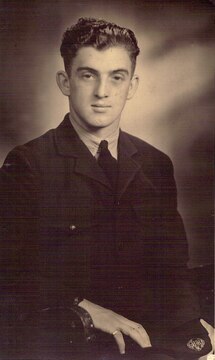
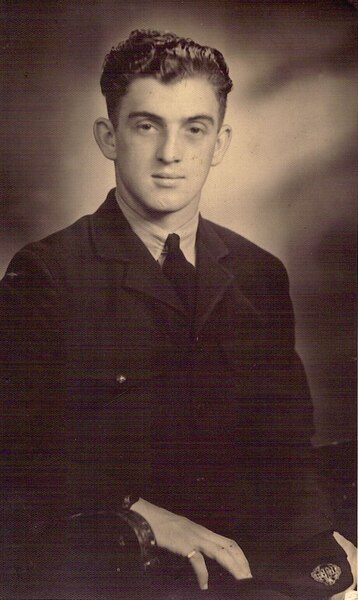
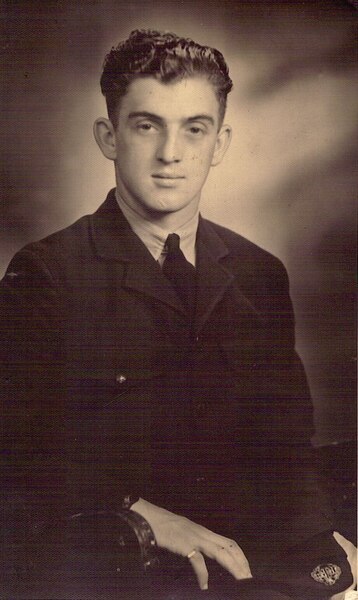
BAKER, George Edward
| Service Number: | 34124 |
|---|---|
| Enlisted: | 9 October 1940 |
| Last Rank: | Corporal |
| Last Unit: | Not yet discovered |
| Born: | BRISBANE, QLD, 23 January 1922 |
| Home Town: | Not yet discovered |
| Schooling: | Not yet discovered |
| Occupation: | Not yet discovered |
| Memorials: |
World War 2 Service
| 9 Oct 1940: | Enlisted Royal Australian Air Force, Corporal, 34124 | |
|---|---|---|
| 1 Apr 1946: | Discharged Royal Australian Air Force, Corporal, 34124 |
Escape from Singapore
the following summary of what happened as Japanese forces captured the town of Singapore, was recorded in an interview conducted with Corporal James Iliffe in 2002. Iliffe became a channel 9 TV personality in Brisbane during the 1960s... hence the interview.
George Edward Baker was one of seven ADF members who escaped by commandeering a small fishing boat, on the 15th of February 1942.
the following is from Jim Iliffes interview in May 2002:
(after I had been wounded in the leg by shrapnel) I’d been there from Friday afternoon till Sunday afternoon – the day of the surrender. A couple of fellows from my unit found me and they said the surrender’s been signed and a cease fire declared and it was every man for himself. They put me in a rickshaw and took me down to the docks and Barney Hanrahan swam out and brought in a little 16 feet sailing boat. He started the little pup motor and it went chug chug chug in to the dockside. By that time there were seven of us altogether. (George Baker was one of them)
The buildings on the wharfs were called “godowns” and they were full of supplies that had never been touched including aeroplane engine parts and all sorts of things and a lot of canned fruit, peaches and pears. So we grabbed an armful of those and filled our water bottles up and got on this little boat and chugged down into the middle of the harbour. By now it’s about 7 o’clock and the surrender was 3.30 in the afternoon."
“The sky was almost daylight because they’d set fire to all the oil installations around the islands in Singapore Harbour and so it was just like a big rosy glow. It was eerie because by now all the fighting had stopped so there was no gun fire or shelling or bombing. It was deathly quiet. It was a traumatic atmosphere because for weeks and weeks you’ve been constantly having this dreadful noise in your ears of gun fire and shells and suddenly it’s quiet. It’s a little bit hard to adjust to and we were sitting out in the harbour. It’s surrounded by islands, little islands and so you don’t know which way to go. You don’t know which way is out. We decided that we’d wait till morning so we threw out the anchor. We’d moved away from the shore and we put the anchor overboard and decided we’d spend the night and wait till daybreak and then get going. “
None of us knew anything about sailing a boat and so when we started the little pup motor on the boat – every boat has an auxiliary engine – we didn’t know that you had to turn on the little water cock to keep the engine cool. So by the time we got out and decided to throw the anchor overboard there was this dreadful smell of metal and the engine was just ready to seize because it was red hot. It hadn’t had any cooling and so we decided we had to find out how to put the sails up the next morning to make it go and I don’t recall much of what happened then. We’d drifted all night and had drifted right into near the shoreline again. We found out later that Singapore harbour was heavily mined, so we probably dragged this anchor through minefields. I don’t know how we missed any. We started to put the sails up and we saw Japanese running along the shore and they were firing at us, but we were out of range and just by some miracle we got the sails up enough to get a strong breeze and sailed out of range.
“If things had been just slightly different, we’d never have had a chance to get out. We sailed through the mass of little islands and got out into the open sea and put the sun behind us headed west to Sumatra and we went along at a good pace. It was actually just after dark on the second night and the wind dropped and we were becalmed. But we thought we were far enough away from land now and the next morning we woke up and we were still becalmed and it was something I could never have imagined. The sea was just like looking at a mirror, not a ripple, no breeze, just absolutely still. And you sit there and you sweat and it’s hot and of course we didn’t have any nice big Australian hats. All we had was our tin hats and you’d perspire in those – pretty horrible.
Japanese planes were flying over on the way to bomb Sumatra and we saw quite a few of those. One came down and had a little look at us and went on its way. And the next morning we got a breeze – it came up again and we set sail again and that afternoon, we ran into a violent storm. We saw land and we thought it was Sumatra, but it was an island off Sumatra. We saw this land we were heading towards it and this storm got so violent then we just lost control of the little boat and the storm swept us on to an outcrop of rocks. The boat hit the rocks and tumbled on its side We were thrown out on the water and on the rocks and then somehow got ashore. We were sitting on the beach wondering where we were going to go from here and around a little headland came this group of soldiers, all dressed in green. We thought they were Japanese. We were desperately wondering what we should do next – nobody had any rifles but three or four of the others had their bayonets in their belt. I had a .38 revolver. We wondered what we’d do and this voice called out in English. It was a Dutch army patrol and I remembering him saying “Where the hell did you come from?” Because they had been around the other side of the headland they didn’t know who we were but they took us to a little Dutch settlement on the island and gave us provisions and treated my leg.
“The next morning they put us in a sampan- a funny sort of a boat with two eyes painted in front - and Chinese fisherman took us up the river and to that part of Sumatra. Up the river was the first township and they took us in there and we spent the night. They gave us food, looked after us. The next morning they took us in a patrol boat up the river about 100 miles to the next village and we spent the night there. This went on for about four days, travelling up the river to a place called Rengat. There was a railway, rail head there and they put us on an open railway truck with carriages and the train went across the mountains and finally ended up at Padang on the west coast.
“At Padang there were about 240 troops altogether, British, Indian and about 30 Australians. We slept in the jail at Padang and we had nothing – we had no eating utensils, we had nothing really. I had a pair of shorts and a shirt on and the bottom was coming out of my shorts and my belt and a .38 revolver, and a tin hat and water bottles – we held on to our water bottles. We’d rationed our food coming over. We had tins of bully beef and tins of pears and peaches we’d got from the godowns and we’d rationed that all the way across but once you’ve opened your beef in those conditions you had to eat it, you couldn’t keep it. There was no rationing of that. But we could ration the peaches and the pears.
We were at Padang for about a week and they had a British destroyer in port and it took quite a number of Australians and Brits to Bombay. We went on a little coastal boat and it was a real little tub. We just slept on the deck and I know we had a diet of rice and sardines, very few sardines, mostly rice. We hugged the west cost of Sumatra and we crossed open water at night-time. We could see flashes in the sky like lightning and we could hear what sounded like thunder but it was actually the HMAS Perth being sunk by Japanese. We landed at a little port called Tjilitjap. There was a British Army post there. We arrived just in time – they were cooking a meal. It was stew, I remember – and it was the nicest meal I’ve ever had. We’d been living on nothing for weeks and suddenly we had this stew with carrot and potatoes. It was gorgeous.
“And so we were at Tjilitjap and we didn’t know where we’re going to go. The Japanese had already landed in Java, Batavia at the top side of Java and we thought – oh well, we’ve come this far. Where do we go from here? And there was another British destroyer came into port, evacuated, took women and children and sadly it was sunk about two days out I believe. This big boat came in, big Dutch vessel called the Zandaam and it came into port and it was evacuating mostly women and children and they said they couldn’t take us because they were fully occupied by evacuees and there was no way we could go aboard. At the last minute they said you can come on board if you use the crew toilets and sleep on the deck. We said okay, and that boat zigzagged all over the ocean. We didn’t know where we were going, north, south, west and nobody would tell us where we were going.
“I think it was about five days later we saw the big sandhills off Fremantle and knew that we were back in Australia. I was taken to Hollywood Hospital in Perth – that’s the army hospital there.
FOOTNOTE George Baker was re-posted to the RAAF base at Evans Head.
https://ehham.org.au/history-of-the-aerodrome/
Submitted 26 April 2026 by gary baker
Click images to start slideshow.