







ASHTON, Bruce Cecil
| Service Number: | A24804 |
|---|---|
| Enlisted: | 16 June 1943, Sydney, NSW |
| Last Rank: | Leading Aircraftman |
| Last Unit: | HQ Eastern Command |
| Born: | Newtown, New South Wales, Australia, 27 May 1925 |
| Home Town: | Epping, Parramatta, New South Wales |
| Schooling: | Not yet discovered |
| Occupation: | Sheep Station |
| Memorials: |
World War 2 Service
| 16 Jun 1943: | Enlisted Royal Australian Air Force, Leading Aircraftman, A24804, HQ Eastern Command, Sydney, NSW | |
|---|---|---|
| 20 Sep 1947: | Discharged Royal Australian Air Force, Leading Aircraftman, A24804 |
Help us honour Bruce Cecil Ashton's service by contributing information, stories, and images so that they can be preserved for future generations.
Add my storyBiography contributed
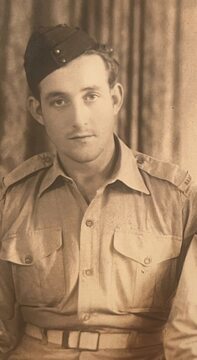
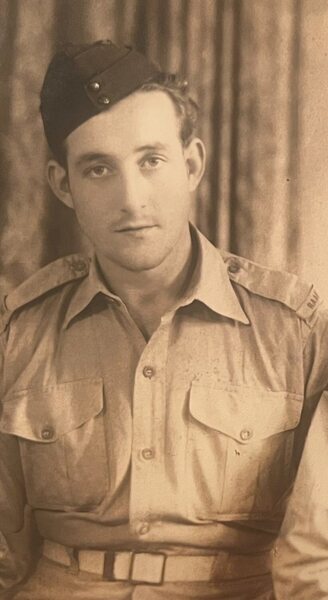
27 May 2025 would have been Bruce Ashton’s 100th birthday. Sadly, Bruce passed away shortly before he reached his milestone birthday.
Bruce, who was born in Paddington, NSW, was a veteran of the Second World War. Before his war service, he worked on a sheep station. In February 1942, Bruce put his age up to enlist in the Army, volunteering for the militia, known as the Citizen Military Force (CMF). As well as telling the recruiting staff he was 18 andhad his parents’ permission to enlist, Bruce dropped his middle name and changed his place of birth to a fictitious town, ‘Kookcamic’, which he said was in Western Australia. He served in the 21st Field Ambulance, part of the force that was to defend Sydney in the event of a Japanese attack. In January 1943, when it was discovered that Bruce was still under 21 and did not have his parents’ permission to serve, he was discharged.
Undeterred, Bruce enlisted in the Royal Australian Air Force (RAAF) in June 1943, this time with permission to enlist. He completed his ground staff technical trades training as a coppersmith before his first unit posting. After the war, Bruceanswered the call for volunteers to stay on and serve in the British Commonwealth Occupation Force (BCOF) in Japan. He was posted to No. 481 (Maintenance) Squadron in Borneo in February 1946, with the rank of leading aircraftman. The squadron sailed for Japanthree months later and was based at Bofu, maintaining aircraft, engines and equipment of No. 81 (Fighter) Wing. When on leave, Bruce toured parts of Japan and visited Hiroshima, where he sawthe terrible damage caused by the atomic bomb dropped on the city. He returned home in July 1947 and was discharged in September. Bruce said there was nothing good about serving, ‘I thought it was wrong. I didn’t like it, but because I have morals and principles, I served my country’.
After leaving the RAAF, Bruce married Leatrice and they had twins. Sadly, Leatrice died in 2013.
In his spare time, Bruce liked gardening, reading and listening to music. He enjoyed family life and loved visits from his loved ones. According to his granddaughter Bec, Bruce was an amazing father, grandfather and great grandfather, who she loved very much.
Bruce said he came from ‘good stock’ and he had credited that to his long life.
Click images to start slideshow.