






MCDONALD, Janet
| Service Number: | Sister |
|---|---|
| Enlisted: | 13 January 1915 |
| Last Rank: | Sister |
| Last Unit: | Not yet discovered |
| Born: | Norwood, South Australia, 24 March 1885 |
| Home Town: | Not yet discovered |
| Schooling: | Not yet discovered |
| Occupation: | Nurse |
| Died: | Cerebral Hemorrhage, Adelaide, South Australia, 17 October 1958, aged 73 years |
| Cemetery: |
Cheltenham Cemetery, South Australia Section D, Path C/40 Section O Allotment 88 |
| Memorials: |
World War 1 Service
| 14 Dec 1914: | Embarked Sister | |
|---|---|---|
| 13 Jan 1915: | Enlisted Australian Army Nursing Service (WW1) | |
| 9 Dec 1919: | Discharged Australian Army Nursing Service (WW1) | |
| Date unknown: | Involvement Sister |
Help us honour Janet McDonald's service by contributing information, stories, and images so that they can be preserved for future generations.
Add my storyBiography contributed
- completed by St Mary's College
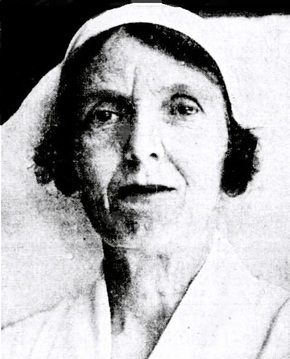
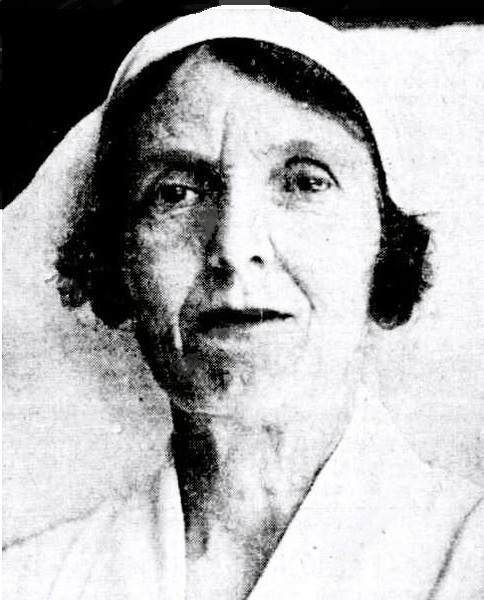
Janet Annie McDonald MBE (also spelt as “MacDonald”) was born in Adelaide, South Australia on the 24th of March 1885, to parents Alexander Norman McDonald (B.1859 – D.1922) and Margaret Jane Catherine Grant McDonald (B.1858 – D.1937). Janet the eldest of four siblings Norman, Flora (fondly referred to as Buddie) John and Jean. Janet’s brother, John McDonald also served in WW1.
Not much is known about Janet’s early life but on her birth, her parents resided in Norwood, moving to the beachside suburb of Semaphore c1890. It is likely that Janet, along with her siblings, attended Le Fevre's Peninsula Public School – children from the ages of 7 to 13 were required to attend due to the Education Act of 1875. Janet’s father worked as a public servant at the local post office (still in operation) making life in Semaphore comfortable but quiet.
After leaving school Janet pursued a career in nursing at the Royal Adelaide Hospital, later gaining employment at the Broken Hill Hospital, New South Wales where she worked as a night superintendent. before enrolling in the Australian Army Nursing Service on the 13th of January 1915 at the age of 28.
Janet enrolled in the Australian Army Nursing Service, signing her enlistment papers on the 13th of January 1915 - see enlistment papers below. Whilst enlisted, Janet served in Egypt, France and England until March 1919 as a nursing sister. She also assisted in the transportation of wounded soldiers from Egypt to New Zealand.
On November 11, 1918, when the Armistice was signed (the end of WW1), Janet returned to Australia and resided in Perth, Western Australia on the ship “Delta” at Fremantle dock. Her appointment as a sister enlisted AANS was terminated on 9 December 1919.
Once settled in Western Australia, Sister Janet McDonald took up a position as Matron at Kalamunda Hospital in 1920, convalescent home, also referred to as the “Kalamunda Convalescent Farm”.
The Kalamunda Convalescent Farm was established to provide care and recovery for "war-worn and weary soldiers" and civilians. It aimed to restore the health of returned soldiers through a farm environment.
From 1930 to 1939 Janet worked at Lemnos Mental Hospital, Perth Western Australia as the Principal Matron of Western Command.
Lemnos Mental Hospital was specifically opened for the recovery of WW1 soldiers suffering from PTSD, opening in 1926. It was named after the Greek island relevant to the Gallipoli campaign, providing a home-like environment rather than a strict institution.
Sister Janet McDonald was chosen to attend the Coronation of King George VI on 12 May 1937, representing the returned army nurses of Western Australia (Australian Women’s Weekly 13 November 1937). She was also accorded the honour of representing the ‘Ladies of the Lamp’ at the coronation.
An interview prior to her departure to England (6 March 1937) at the “Army Nurse Social” Lieutenant General Sir J Talbot Hobbs comments, “I am sure that the selection of Matron Janet McDonald to represent the returned Sisters of Western Australia at the coronation is a most popular one”.
Below are articles that contain interviews about Janet and what one of her patients had to say about her after she was chosen to go to England to attend the coronation of King George.
The Mirror article dated 6 February 1937, some of the soldiers interviewed noted “...the Matron is a lovable person and has even allowed diggers to call her “ma” or “mother” ...”.
They also referred to being “a disciplinarian” and “her yes is her “yes”. A good story is told by a digger of her firm but kindly methods “I was in hospital she was sticking a needle in me telling me all the time that it was for my own good. Finally, I said to her it hurts, sister. Well, it doesn’t hurt me, she replied. I stood it for a while and then I said again, I tell you it hurts me, but she didn’t stop longer than to say, “well I can’t feel it Joe, now be a good boy and go to sleep”.
When interviewed for The Daily News Perth, 9 February 1937, Sister McDonald spoke of the spirit of adventure and the urge to practice her profession where it was need most. Commenting “we had men friends and relatives in the firing lines and wanted to perhaps meet and nurse them”. She stated, “we all had the experience of dreading to take off bandages for fear of what we would see” noting “the men, however, were so wonderfully brave...”.
Following the coronation, Janet spent 6 months travelling in England, Germany and the Hebrides. During this time, she completed a short postgraduate course in psychology and visited numerous hospitals treating patients with nervous disease (PTSD). She returned to Lemnos Mental Hospital in November of that year to resume her position as Head Matron continuing to devote her life to caring for soldiers suffering from nervous disease after the war.
Janet retired from nursing in January 1949 in Perth, Western Australia. It is unclear when she returned to Adelaide but somewhere between 1949 and 1958, possibly after the death of her brother John Malcolm McDonald (27th of May 1951), residing at the family home in Torrens Park with her sister Flora McDonald (Buddy).
During her time in abroad Janet attained two seeds one of a Lone Pine and a Gallipoli Oak, two native trees from Turkey that became a symbol of the Gallipoli campaign after cones were retrieved and often brought back to Australia as a living memorial to those who served in the campaign. Both trees are now fully grown and planted in the descendants yard still serving as a living memorial to those who lost their lives.
Janet died on the 17th of October 1958 in the Royal Adelaide Hospital due to cerebral haemorrhage. After her death Janet donated all her money to a retired greyhound facility.
Bibliography
Australian Nurses in World War 1 (n.d.), Australian Nurses in World War 1, accessed 10 March 2025. https://ausww1nurses.weebly.com/
‘Broken Hill Hospital’ (2025), in Wikipedia, accessed 15 March 2025. https://en.wikipedia.org/wiki/Broken_Hill
[Convalescent Home for Returned Solders at Kalamunda, W.A. Additions in course of construction] (1920) The Diggers' gazette : official organ of the Returned Sailors' and Soldiers' Imperial League of Australia (South Australian Branch), Vol. 1, no 15(June):51.
McDonald, John M (Captain, MC, 9th LH Regt) (n.d.), The Australian War Memorial, accessed 20 June 2025. https://www.awm.gov.au/collection/C89899
The Daily News (Perth, WA : 1882 - 1955) (9 February 1937) ‘Should there be another war’, The Daily News.
Click images to start slideshow.