



HONIG, Amichai
| Service Number: | 120334 |
|---|---|
| Enlisted: | Not yet discovered |
| Last Rank: | Flying Officer |
| Last Unit: | Royal Air Force - unspecified units |
| Born: | Perth, Western Australia, Australia, 4 November 1919 |
| Home Town: | Melbourne, Melbourne, Victoria |
| Schooling: | Kardoorie (Jewish) Agricultural School, Mount Tabor |
| Occupation: | Government Inspector of Agriculture |
| Died: | Missing Air Operations, Prevesa, Gulf of Arta, West Greece, 30 August 1943, aged 23 years |
| Cemetery: |
Alexandria (Hadra) War Memorial Cemetery, Egypt |
| Memorials: | Alamein Memorial, Australian War Memorial Commemorative Roll, Kings Park Western Australia State War Memorial, Victorian Jewish War Memorial |
World War 2 Service
| Date unknown: | Involvement Flying Officer, 120334, Royal Air Force - unspecified units |
|---|
Help us honour Amichai HONIG's service by contributing information, stories, and images so that they can be preserved for future generations.
Add my storyBiography contributed
Son of Mordechai HONIG and Hannah nee NISSENSON
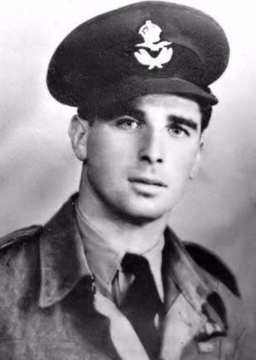
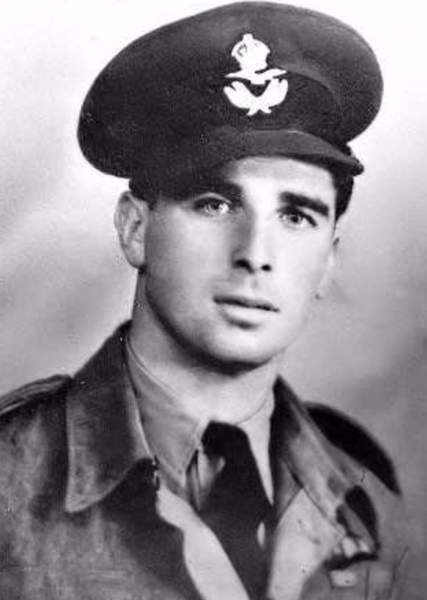
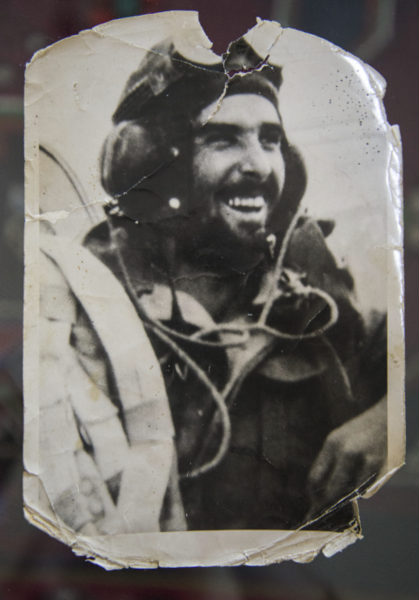
DFM Sergeant Amichai Honig, Royal Air Force Volunteer Reserve, No. 14 Squadron. In December 1941, this airman was detailed to participate in an attack on concentrations of armed fighting vehicles and enemy transports. Despite adverse weather conditions, Sergeant Honig displayed the greatest determination to complete his task and finally carried out a most successful attack from a very low altitude. By his keenness and tenacity, this airman has been able to cause considerable damage and destruction to the enemy's armed fighting forces.
DFM Winner - Sergeant Pilot Amichai Honig RAFVR was recently awarded the D.F.M. for great gallantry in air operations, is the son of Mr. and Mrs. Morecai Honig, of Hadera, Palestine. Hi is 22 and is a graduate of the Kadoorie (Jewish) Agricultural School, Mount Tabor, and was a Government Inspector of agriculture until the outbreak of war, when as an Australian citizen, he volunteered in Palestine for the Air Force. Mordecai and Ann Honig, his parents, were born in Palestine but went to Australia in their youth, became naturalised there, and returned to Palestine nine years ago. Mr. Honig, sen., teaches English in the Hadra School. Sgt. Honig is a nephew of Mrsl Rahe, Kelly, the wife of Dr. Simon Kelly, a prominent Manchester Aionist. Incidentally, Hadera, where the airman grew up and was educated, has sent 400 young men to the colours since the war began, and is rightly proud of her hero son.
On 30 August 1943, Amichai Honig piloted one of four Beaufighters in an attack on shipping near Preveza. His Beaufighter (serial V523) struck one ship, but subsequently was shot down, killing Honig and the navigator, Sergeant Finlay.
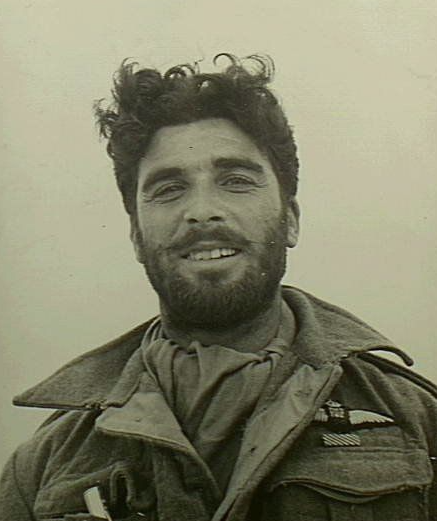
Born 4 November 1919 Perth, WA. Son of Mordechai HONIG and Channah née NISSENSON of Hadera, Palestine. Amichai grew up in Melbourne, Victoria. Born in Perth (Western Australia), to his parents, Hannah and Mordechai (both natives of Israel who had been compelled to immigrate to the Australian Continent; father Mordechai had written the Hebrew songs, “Enchantment on the Sea of Galilee”, and, “Hora Hadera”). From his childhood, he absorbed love and longing for Zion. With great devotion he fought his Australian friends more than once, when those offended his People. He was among the best pupils in his class and skipped grades three times. At the age of 12, he immigrated to Israel with his family and lived in the city of Hadera. At the age of 14, he participated in a course for sports instructors under the auspices of the “Maccabi”. In the middle of the course, a ship of Ma’apilim (a blockade running ship of illegal Jewish immigrants) arrived to the shores of Tel-Aviv. During that whole night, Amichai and his friends engaged in swimming to and from the ship until they finished transferring the Ma’apilim to safe harbor. Amichai fulfilled his high-school years at the “Kaduri” Agricultural School. During the events of “Tartsav-Tartsach”, the Arab revolt of 1936-1939, he participated in the defense of the school and warding off Arab attacks. At the completion of his studies, he worked for a while in the British Mandate’s Agriculture and Fishery Department. At the outset of World War II, even before the arrival of the mobilization order from the Jewish Agency, he volunteered to the British Air-Force (Royal Air-Force) and was sent to flight school in Egypt. From there he was dispatched to the Air-Base in Habania (Iraq), where he got his “Wings”. When he returned to Egypt, he received the rank of Sergeant and was then dispatched to the Western Desert front. Amichai participated in many combat flights, in which he bombed enemy concentrations in Tobruk, Benghazi and more. One day he flew out with a squadron of bombers to bomb an air-base that was preparing for an attack. Heavy fog rested over the enemy camp, a wind-storm was blowing madly and it was impossible to find the exact location. Having no alternative, the planes turned around and flew back to their base, all apart from Amichai, who stayed in the area, found the enemy base and emptied his entire bomb load on it. That bombing “softened” the German positions and made it possible to capture them. For this operation Amichai was awarded the highest decoration – the Distinguished Flying Medal (D.F.M.). Jewish and English newspapers, from America to Australia, were replete with the pictures and the feats of “the bearded hero”. Following a ten day leave, Amichai was dispatched, as the most able pilot in his unit, to the flight school in Kenya to become an instructor. A year later, he insisted on returning to the front and flew out to attack the enemy bases in Greece. On 30 August 1943, at 7:27 hours, four airplanes under the command of Officer Amichai Honig took off from Barka for a flight of reconnaissance and attack along the western coast of Greece. At 9:44 hours, they flew towards the western coast of Lefkada Island. By the end of the reconnaissance, at 10:26 hours, a cruiser ship was spotted leaving the Lefkas Canal area. Arrangements to attack it were made immediately. Each plane was carrying 250 pound bombs. Amichai, the Commander, was first to attack and he activated the guns. Traces from his shells were clearly visible on the ship’s deck, but the bombs he dropped did not explode. As the second plane entered the attack, the pilot saw Amichai’s plane going up in flames and crashing into the water. As the fourth plane entered the attack, the pilot believed he caught sight of an inflatable rubber dinghy and two bodies floating ten yards away from it among the fragments of Amichai’s aircraft. Attaining information about the fates of Amichai Honig, the pilot, and Sergeant Finlay, was not made possible. For seven years Amichai was considered missing and no one knew whether he was alive or dead, if he sank into the sea or was buried in Greece. The parents wanted to go to Greece in order to obtain information about their son, but the Greek Government refused to grant them an entry visa. Eventually, they did manage to get the visa. For four weeks they traveled from place to place, talked with villagers, talked with fishermen and interrogated members of the Greek Underground. Finally, in a spacious field close to the homes of one village, they found the grave of a British pilot. A Greek boy, who had been present there when the British pilot was buried, had witnessed how the Italians stripped him off his uniform and buried him. He revealed the grave to the parents and to the police. The parents identified their son’s body, collected bone after bone from the soil and brought him home to be buried among the graves of World War II and War of Independence Fallen in the soil of Hadera. Cousin of V155586 CPL Mattus Honig.
Amichai was buried with full military honours on 31 May 1950 at Hadera Cemetery, Haifa, Israel.
Click images to start slideshow.