


CHURTON, Alec Roper
| Service Number: | 171 |
|---|---|
| Enlisted: | Not yet discovered |
| Last Rank: | Private |
| Last Unit: | 10th Infantry Battalion |
| Born: | Brisbane, Queensland, 1895 |
| Home Town: | Adelaide, South Australia |
| Schooling: | Not yet discovered |
| Occupation: | Mechanic |
| Died: | Fenton's Creek, Victoria, 26 September 1974, cause of death not yet discovered |
| Cemetery: |
St Arnaud Cemetery, Victoria, Australia |
| Memorials: | Burnside Public School Roll of Honour, The Motor Cycle Club of SA Honour Roll |
World War 1 Service
| 20 Oct 1914: | Involvement Private, 171, 10th Infantry Battalion, --- :embarkation_roll: roll_number: '10' embarkation_place: Adelaide embarkation_ship: HMAT Ascanius embarkation_ship_number: A11 public_note: '' | |
|---|---|---|
| 20 Oct 1914: | Embarked Private, 171, 10th Infantry Battalion, HMAT Ascanius, Adelaide | |
| Date unknown: | Wounded 171, 10th Infantry Battalion |
Help us honour Alec Roper Churton's service by contributing information, stories, and images so that they can be preserved for future generations.
Add my storyBiography contributed by St Ignatius' College
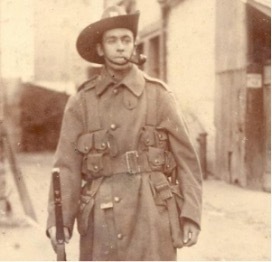
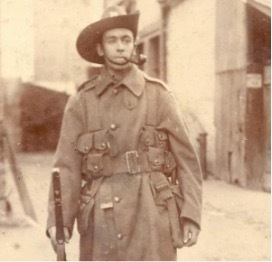
Alexander Roper Churton was born in Queensland near Brisbane in late January 1895 to Grace and Alex Franci (Frank) Churton. He moved to Adelaide, South Australia to pursue a career in motor mechanics servicing, repairing and custom-building automobiles. Churton was a part of the Church of England and was not married and had no children prior to enlistment.
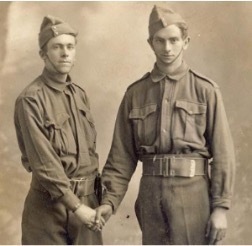
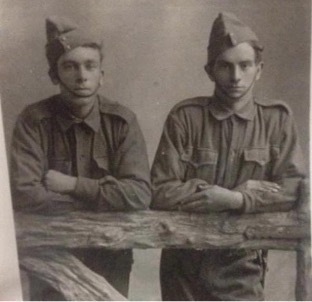
Alexander Churton enlisted at Morphettville with best mate Chris Robinson August 14th, 1914. They trained at Morphettville camp. In the early days, training mostly revolved around fitness, physicality, discipline and mentality. Officers conducted activities like long route marches, obstacle drills, bayonet training, and musketry as well as many other topics.
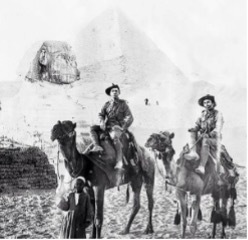
Assigned to the 10th battalion on the 20th of October 1914 Churton embarked from Outer Harbour, Adelaide on Transport A11 Ascanius, to face the unknowns of what lay ahead in the war. After a long one and a half months of crowded, unsanitary life at sea the 10th battalion arrived in Egypt in early December. Allocated to be a signaller most likely due to prior skills obtained from his occupation. Churton was a communications specialist whose role was to maintain contact between the front line and headquarters through different methods. Signallers often faced enemy sniper and shellfire making it one of the most dangerous jobs throughout the war.
On the evening of the 24th of April 1915, the 1st Australian division disembarked from their major allied base in the Greek islands to launch the amphibious landing on the Gallipoli peninsula. Miscalculations of the landing point, led to the ANZACS landing on steep incorrect terrain under heavy fire. Churton’s best mate Christopher Robinson was killed very early in the action on the 27th of April just 2 days after the landing. Robinson Died of wounds on H.M.T Ionian and was Buried at sea.
After an attack on the enemy on the 19th of May, Churton was wounded, (with a sprained back) evacuated and returned to Egypt to recover, then assigned to base details for the rest of 1915. He would have done administrative work, light training, guard duty and camp maintenance.
At the beginning of 1916 the remainders of the 10th battalion returned from Gallipoli exhausted, reduced in numbers and in need of reinforcement. This led to the reorganisation of the AIF, doubling the Australian army in size. They then began an intense training phase for 3-4 months as moving to the Western Front would require a different kind of fighting, trench warfare. On May 29th he embarked from Alexandria to the Western Front, the decisive theatre of WW1. He arrived on June 7th in Étaples, a huge British base camp. There, he was hospitalised for 63 days for a medical condition, returning to duty in mid August after some leave.
Churton proceeded to join the 1st Division Signal School in October 1917 and spent a couple of weeks training there. He returned to his unit and was wounded on 13th January 1918 in France with a sharpnel wound to his left wrist and was hospitalised. In March he took 2 weeks of leave and returned to the UK, rejoining his unit on 26th March 1918
During April Churton fought in the major battle of Villers-Bretonneux , a key engagement on the Western Front where Australians halted the Germans last major advance towards Amiens. July, increasingly offensive actions took place as momentum began shifting towards the allies.
In July Churton was sent to hosptial sick for a couple of days before returning to the 10th Battalion. The beginning of August marks the start of the Hundred-day offensive/Battle of Amiens which ultimately led to the end of the war. Massive, coordinated attacks lead to huge German losses and rapid Allied advances. Churton was victim of a gas shell during a battle in mid-august which marked the end of his contributions in the field during the war. He was admitted to a hospital in Brighton, England for gas exposure and discharged around a week later. Then went on furlough between August 21st and September 4th.
December 3rd, 1918, he disembarked set to return home to Australia.
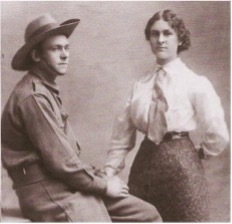
He returned home to Australia January 27th, 1919, on ship Port Hacking. When he arrived home, he would have been turning 24 years old in a few days. Alex Roper Churton had a total service of 4 years and 221 days, and 4 years 100 days abroad. In November 1919 he married Adelaide Florence Castle (1886 - 1923).
Alexander Roper Churton passed away September 26th 1974 at age 79, and is buried at St Arnaud, Northern Grampians Shire, Victoria, Australia.
Bibliography
· The Australian War Memorial n.d., www.awm.gov.au.
· Advanced Search | Australian War Memorial n.d., www.awm.gov.au.
· Find a Grave 2019, Find a Grave, Findagrave.com.
· OpenAI 2025, ChatGPT, ChatGPT, OpenAI.
· SA Red Cross Information Bureau Record n.d.
· Session Manager n.d., recordsearch.naa.gov.au.
· The AIF Project 2016, Adfa.edu.au.
· Canadian War Museum 2019, Land Battles - Passchendaele | Canada and the First World War, Canada and the First World War, Canadian War Museum.
· Morphettville Camp | Places | A World Away | South Australia’s War 2026, Sa.gov.au.
· National Museum of Australia 2022, ‘Gallipoli landing | National Museum of Australia’, Nma.gov.au, vol. 1, no. 11.
· Roy, RH & Foot, R 2018, Battle of Passchendaele | World War I [1917], Encyclopedia Britannica.
· Sir John Monash Centre 2017, Villers-Bretonneux: ’France and Australia together forever…’ | Sir John Monash Centre, Sir John Monash Centre.
· 2018, The Battle of Amiens | Sir John Monash Centre, Sir John Monash Centre.

Click images to start slideshow.