








VINCENT, Charles
| Service Number: | 2174 |
|---|---|
| Enlisted: | 6 December 1915, Adelaide, South Australia |
| Last Rank: | Trooper |
| Last Unit: | 4 Battalion Imperial Camel Corps |
| Born: | Balmoral, Victoria, date not yet discovered |
| Home Town: | Coonawarra, Wattle Range, South Australia |
| Schooling: | Not yet discovered |
| Occupation: | Labourer |
| Died: | Pernicious Anemia, Egypt, 24 November 1916, age not yet discovered |
| Cemetery: |
Cairo War Memorial Cemetery Cairo War Memorial Cemetery, Cairo, Egypt |
| Memorials: | Australian War Memorial Roll of Honour, Penola District WW1 Roll of Honor, Penola Memorial Walk, Penola War Memorial, The South Australian National War Memorial |
World War 1 Service
| 6 Dec 1915: | Enlisted AIF WW1, Private, 2174, Adelaide, South Australia | |
|---|---|---|
| 16 Mar 1916: | Involvement Private, 2174, 9th Light Horse Regiment, --- :embarkation_roll: roll_number: '2' embarkation_place: Adelaide embarkation_ship: HMAT Anchises embarkation_ship_number: A68 public_note: '' | |
| 16 Mar 1916: | Embarked Private, 2174, 9th Light Horse Regiment, HMAT Anchises, Adelaide | |
| 24 Nov 1916: | Involvement Trooper, 2174, 4 Battalion Imperial Camel Corps, --- :awm_ww1_roll_of_honour_import: awm_service_number: 2174 awm_unit: 4 Battalion Imperial Camel Corps awm_rank: Trooper awm_died_date: 1916-11-24 |
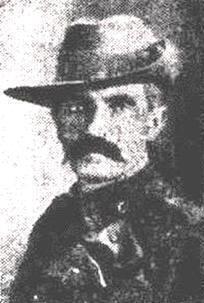
Charles VINCENT 2174
Private Charles Vincent was born at Balmoral, Victoria, in November 1871, the son of Charles Vincent and Ann Lear (née Shanks), widow of Robert Lear. Raised within a blended family, Charles grew up alongside his older half siblings William, Robert, and Louisa Lear, with whom he would remain close throughout his life.
At sixteen, Charles began working for Mr James Cuzens, a travelling merchant of Balmoral. The work was demanding—long journeys with drays and a large wagon drawn by bullock teams—but it suited Charles’s steady temperament. He became well known across the district, forming many friendships during his years on the road. His employer later described him as a splendid citizen, a good sportsman, and a devoted son.
In 1892, Charles’s half siblings moved to the developing Penola Fruit Colony at Coonawarra, and their mother Ann was visiting when she passed away in 1904 her body was returned to Balmoral for burial with Robert Lear. Charles remained in Balmoral until November 1914, when the town farewelled him warmly. At a public gathering, residents spoke of his fine character and presented him with a travelling rug in appreciation of his service to the community.
Charles eventually settled with his family at Coonawarra, but as the First World War continued and the enlistment age was raised to forty five, he saw his opportunity to serve. On 6 December 1915, just shy of his forty fourth birthday, he travelled to Adelaide to enlist. Standing over six feet tall, weighing twelve stone, and with greying hair, he was accepted into the 9th Light Horse Regiment and commenced training at Mitcham.
After only two months’ preparation, Charles embarked from Port Adelaide aboard HMAT Anchises on 16 March 1916, bound for Egypt. Upon arrival, he was transferred to the newly formed Imperial Camel Corps (ICC), a unique mounted infantry force operating in the harsh deserts of Egypt and Sinai. The ICC undertook long patrols and skirmishes against pro Turkish Senussi tribesmen—gruelling work marked more by endurance than by major battles.
In late 1916, the ICC moved deep into the Sinai Desert to support operations against the Turkish army. During this period, Charles took part in securing the Isharia Oasis, nearly 370 kilometres from Cairo. Conditions were extreme, and on 20 November 1916 he was bitten by an infected sand fly, contracting malaria. Along with many others, he was evacuated to the field hospital at Bahariya Oasis, but his condition deteriorated rapidly. Despite all efforts, he died at Shussa four days later.
The news of his death deeply affected his unit. Lieutenant R. Camm wrote to Charles’s brother, describing him as “greatly liked and respected by all ranks… always willing to do anyone a good turn… quiet and unassuming… one of the best soldiers we had.” Thirty of his comrades, along with Brigadier General Herbert and other officers, travelled to attend his funeral. Charles was buried with full military honours at Legalit Gate Cemetery on 25 November 1916. His remains were later reinterred at Minia War Memorial Cemetery, Egypt, in 1923.
In August 1918, a brass memorial tablet dedicated to Private Vincent was unveiled at St Mary’s Church of England, Balmoral, honouring his sacrifice. His brother William Henry Lear received his belongings and medals in the years following the war.
Among those who felt his loss was Lilian Daisy Gray, the Balmoral postmistress, who requested his death certificate in early 1917. Though the nature of their relationship is unknown, her gesture suggests a personal connection. She later left Balmoral to live with her family in Melbourne.
Private Charles Vincent is remembered as a man of integrity, loyalty, and quiet strength—qualities that shaped both his life and his service. His name endures among the honoured dead who gave their lives far from home, in the service of Australia.
Submitted 30 November 2025 by Christine Dohnt


Click images to start slideshow.