




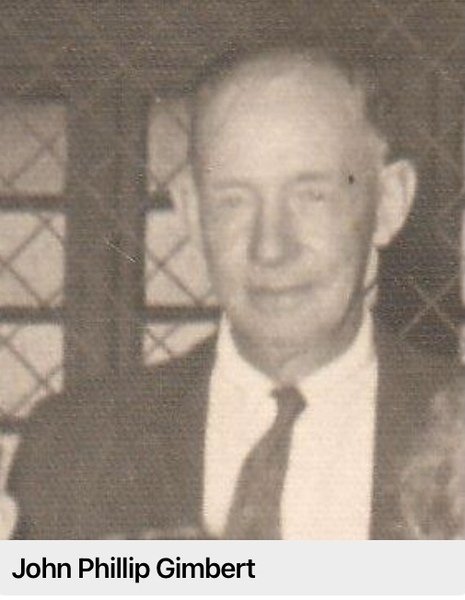
GIMBERT, John Phillip
| Service Number: | 431 |
|---|---|
| Enlisted: | 10 January 1916 |
| Last Rank: | Private |
| Last Unit: | 3rd Pioneer Battalion |
| Born: | Tamworth, New South Wales, Australia, 1881 |
| Home Town: | Murrurundi, Upper Hunter Shire, New South Wales |
| Schooling: | Not yet discovered |
| Occupation: | Shearer |
| Died: | Concord, New South Wales, Australia, 4 May 1962, cause of death not yet discovered |
| Cemetery: |
Woronora Memorial Park, Sutherland, New South Wales PLOT Flor Ct Aif W Of Mem U, 0041 MEMORIAL ID 181531398 · View Source |
| Memorials: |
World War 1 Service
| 10 Jan 1916: | Enlisted AIF WW1, Private, 431, 3rd Pioneer Battalion | |
|---|---|---|
| 6 Jun 1916: | Embarked Private, 431, 3rd Pioneer Battalion, --- :embarkation_roll: roll_number: '5' embarkation_place: Melbourne embarkation_ship: HMAT Wandilla embarkation_ship_number: A62 public_note: '' |
Help us honour John Phillip Gimbert's service by contributing information, stories, and images so that they can be preserved for future generations.
Add my storyBiography contributed by Kerry Hockey
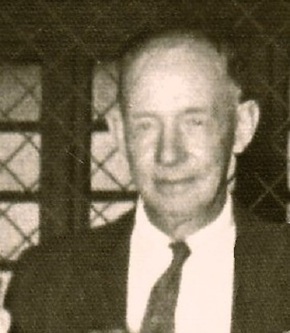
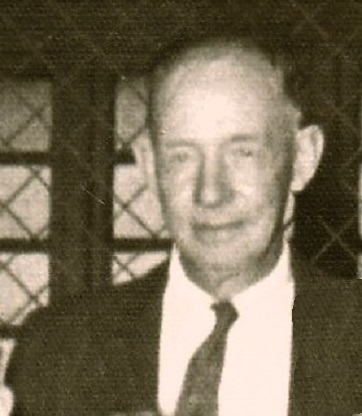
John(Jack)Phillip Gimbert
John Phillip Gimbert(Jack) was born 1881 at Tamworth N.S.W. to John & Mary Anne Gimbert nee Maughan at Murrurundi NSW. John was the 3rd child of 10 children.
John & Mary Gimbert had 5 sons & 5 daughters, 4 of the sons served in WW1.
John Phillip Gimbert married Jessie Kathleen Halcrow in 22 February 1915 at Auburn. NSW. They divorced after the war.
John (Jack)Phillip Gimbert enlisted in the B Coy, 7th Pioneer Battalion.Later 3rd Pioneer Battalion.
John was aged 34years.
Regimental number- 431
Religion-Church of England
Occupation-Shearer
Marital status-Married
Next of kin- Wife Jessie Kathleen Halcrow, Auburn N.S.W.
Enlistment date-10/1/1916 at Liverpool NSW
Rank-Private
Unit name-3rd Pioneer Battalion
AWM Embarkment Roll number-14/15/1
Rank from Nominal Roll- Private
Embarkment Unit details-6/6/1916- Wandilla
Disembarked Plymouth-26/71916
Fate- Returned to Australia-17/5/1919 - Zealandia
Returned to Australia medically unfit. Wounded
Wounded -15 April 1918- sent to England G.S.W right buttock-24/51918
Recommendation (Medals and Awards) Distinguished Service Medal(American)
Recommendation date:25 February 1919
Fate Returned to Australia 11May 1919.
Wounded
14/4/1918- wounded in France
24/4/1918- Taken to England
24/51918- GSW- buttock flesh
15/8/1918- Proceeded to France
17/51919- Proceeded back to Australia per Zealandia
My great Uncle Jack visited the family in Wollongong & I was about 9 yrs & we played droughts & if he was winning I would tip up the board & he would laugh. The next day he would ask me again if I wanted to play draughts again. Sometimes he took me swimming.
Uncle Jack was a lovely old man, I have very fond memories of him. He never married again or had children.
Each Division was allocated a Pioneer Battalion. The 3rd Pioneers belonged to the 3rd Division as indicated by the eliptical-shaped colour patch.
Pioneer Battalions were essentially infantry with light military combat engineer skills and located at the very forward edge of the battle area. They were used to develop and enhance protection and mobility for supported troops and to deny it to the enemy. They constructed defensive positions, command posts and dugouts, prepared barbed wire defences and on occasion breached those of the enemy using devices like the Bangalore Torpedo.
Their skills and capability were broad from building, construction and maintenance to road and track preparation and maintenance. They could also, and did quite often, fight as infantry.
Although they had existed in the Indian Army before 1914, pioneer battalions were used on a large scale by Commonwealth forces on the Western Front during the First World War. Becasue of its largely static nature, there was a much heavier reliance on field defences and the provision of mobility support to get troops, weapons, ammunition, rations and stores up to the front and casualties out. Roads and railways needed to be built maintained and repaired.
While these were also Engineer tasks, Engineers alone could not meet the heavy demand, while riflemen were always needed at the front. Therefore, pioneer battalions were raised to meet the needs of both and trained to support both engineers and infantry.
The 3rd Pioneers were raised in 1916 and were engaged in every action undertaken by the 3rd Division, starting at Messines then Third Ypres in 1917, the stemming of the German tide in the Spring Offensive of 1918, the "Peaceful Penetration" phase leading up to and including the 'Last Hundred Days' campaign in late 1918.
Battle / Campaign / Involvement
Battle of Messines 1917 (/explore/campaigns/7)
Third Ypres (/explore/campaigns/8)
German Spring Offensive (/explore/campaigns/80)
Peaceful Penetration (/explore/campaigns/31)
Last Hundred Days (/explore/campaigns/31)
Battle of Amiens (/explore/campaigns/14)
Mont St Quentin (/admin/units/67/vwma.org.au/explore/campaigns/15)
Crossing the Hindenburg Line (/explore/campaigns/81)
Click images to start slideshow.