


HUGHES, Richard
| Service Number: | 3113 |
|---|---|
| Enlisted: | 6 September 1916 |
| Last Rank: | Private |
| Last Unit: | 4th Pioneer Battalion |
| Born: | Liverpool, Lancashire, England , March 1885 |
| Home Town: | Longreach, Longreach, Queensland |
| Schooling: | Not yet discovered |
| Occupation: | Mechanic's labourer |
| Died: | Esophageal cancer, “Riviera Flats,” North Quay, Brisbane, Queensland, 21 April 1946 |
| Cemetery: |
Lutwyche Cemetery, Brisbane, Qld Anzac Portion 7 |
| Memorials: |
World War 1 Service
| 6 Sep 1916: | Enlisted AIF WW1, Private, 3113, 4th Pioneer Battalion | |
|---|---|---|
| 17 Nov 1916: | Involvement Private, 3113, 4th Pioneer Battalion, --- :embarkation_roll: roll_number: '5' embarkation_place: Brisbane embarkation_ship: HMAT Kyarra embarkation_ship_number: A55 public_note: '' | |
| 17 Nov 1916: | Embarked Private, 3113, 4th Pioneer Battalion, HMAT Kyarra, Brisbane | |
| 17 Sep 1919: | Discharged AIF WW1, Private, 3113, 4th Pioneer Battalion, 1st MD |
Help us honour Richard Hughes's service by contributing information, stories, and images so that they can be preserved for future generations.
Add my storyBiography contributed by Evan Evans
From Australian Remembrance Army
Over the past six years we have submitted the service records and causes of death of several hundred veterans to the Office of Australian War Graves for assessment for Official Commemoration. To date, more than 100 of these veterans interred at Lutwyche Cemetery have been accepted as Official Commemorations, and their graves are now being formally marked and will be maintained in perpetuity by the Office of Australian War Graves.
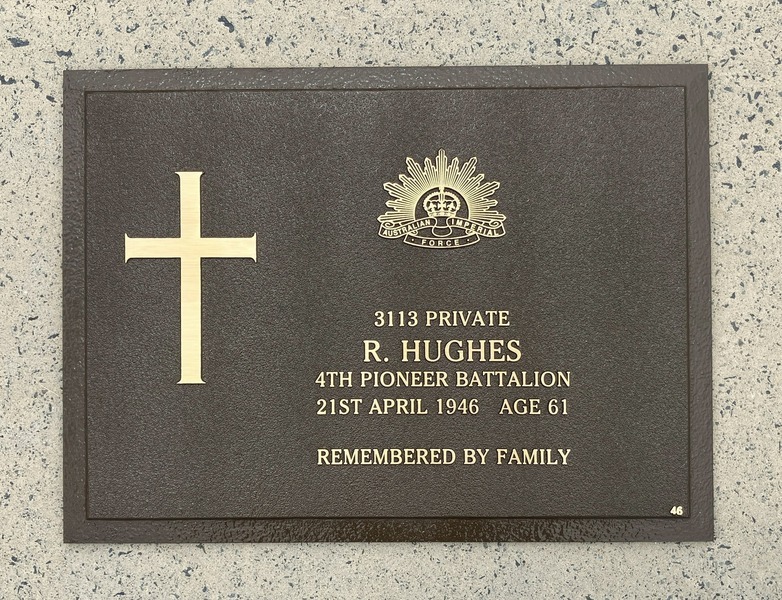
Private Richard Hughes (Service No. 3113), an Australian World War One veteran, is one of the previously unmarked WWI veterans’ graves in Lutwyche Cemetery that has been accepted as an Official Commemoration by the Office of Australian War Graves.
See Australian Remembrance Army Facebook page
OAWG Official Commemoration link: https://connect.dva.gov.au/.../viewCommemoration.html...
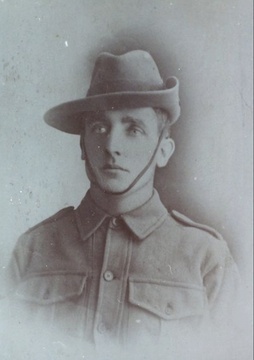
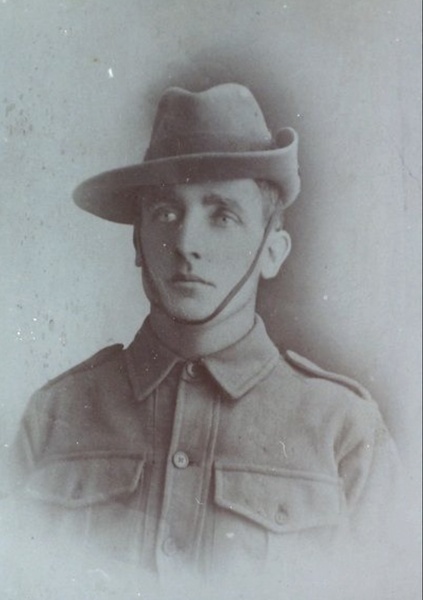
Richard Hughes (also known as Richard Sumner) was born in 1885 in Liverpool, Lancashire, England to Joseph Sumner and Sarah Jane Sumner (nee Hughes).
He enlisted in the Australian Imperial Force at Longreach, Queensland, on 6 September 1916, using his mother’s maiden name as his surname. He recorded his occupation as a mechanic’s labourer and stated that he was single and 31 years of age.
On 17 November 1916, he embarked for overseas service with the 4th Pioneer Battalion aboard HMAT Kyarra from Brisbane. He arrived in England and disembarked at Plymouth on 30 January 1917, where he underwent further training and preparation for active service on the Western Front.
Later in 1917 Hughes proceeded to France and joined the 4th Pioneer Battalion. Pioneer battalions were infantry units trained to undertake both combat duties and engineering work such as building roads, trenches, and defensive positions close to the front line. While serving with his unit in France, Hughes participated in operations supporting Australian forces during the later stages of the war.
In March 1918 Hughes was wounded in action, sustaining a severe gunshot wound to the right knee. After receiving medical care in France, he was transferred to England, where he was admitted to Southwark Military Hospital at Dulwich Grove. Reports in his service record indicate that his condition gradually improved and he was later placed on convalescent status while recovering from the wound.
Following a period of recovery in England and at military depots, in November 1918 Hughes rejoined his unit in France. In June 1919 he returned to Australia and was discharged from the AIF in September 1919.
Private Richard Hughes died of cancer of the oesophagus on 21 April 1946, aged 61, and was buried three days later in Anzac Portion 7, Lutwyche Cemetery, Brisbane. At the time of his death, he was residing at “Riviera Flats” North Quay Brisbane. He was unmarried and had no known children.
In March 2024, seventy-eight years after his death, we received notification that the Office of Australian War Graves had accepted our application for an Official War Graves Commemoration. After decades in an unmarked grave, his final resting place now bears a plaque commemorating his service to Australia — ensuring his name endures among those remembered for their duty and sacrifice. His identity and dignity have now been restored.
Lest We Forget
Click images to start slideshow.