







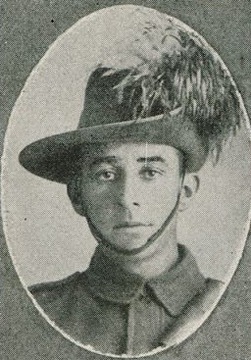
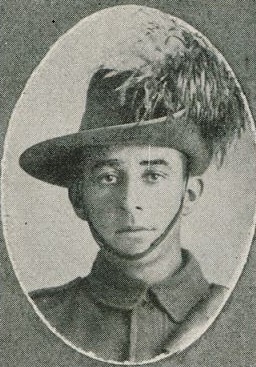
KENNEDY, Matthew
| Service Number: | 1606 |
|---|---|
| Enlisted: | 31 July 1915, 5 years Manchester Volunteers |
| Last Rank: | Private |
| Last Unit: | 41st Infantry Battalion |
| Born: | Southport, England, July 1881 |
| Home Town: | Brisbane, Queensland |
| Schooling: | Not yet discovered |
| Occupation: | Groom |
| Died: | War Veterans’ Home at Caboolture, Queensland, Australia, 30 August 1959, cause of death not yet discovered |
| Cemetery: |
Lutwyche Cemetery, Brisbane, Qld Anzac Portion 9 |
| Memorials: |
World War 1 Service
| 31 Jul 1915: | Enlisted AIF WW1, Private, 1606, 2nd Light Horse Regiment, 5 years Manchester Volunteers | |
|---|---|---|
| 30 Nov 1915: | Involvement Private, 1606, 2nd Light Horse Regiment, --- :embarkation_roll: roll_number: '1' embarkation_place: Sydney embarkation_ship: HMAT Suffolk embarkation_ship_number: A23 public_note: '' | |
| 30 Nov 1915: | Embarked Private, 1606, 2nd Light Horse Regiment, HMAT Suffolk, Sydney | |
| 8 Oct 1918: | Discharged AIF WW1, Private, 1606, 41st Infantry Battalion, 1st MD, medically discharged |
Help us honour Matthew Kennedy's service by contributing information, stories, and images so that they can be preserved for future generations.
Add my storyBiography contributed by Carol Berry
Australian Remembrance Army
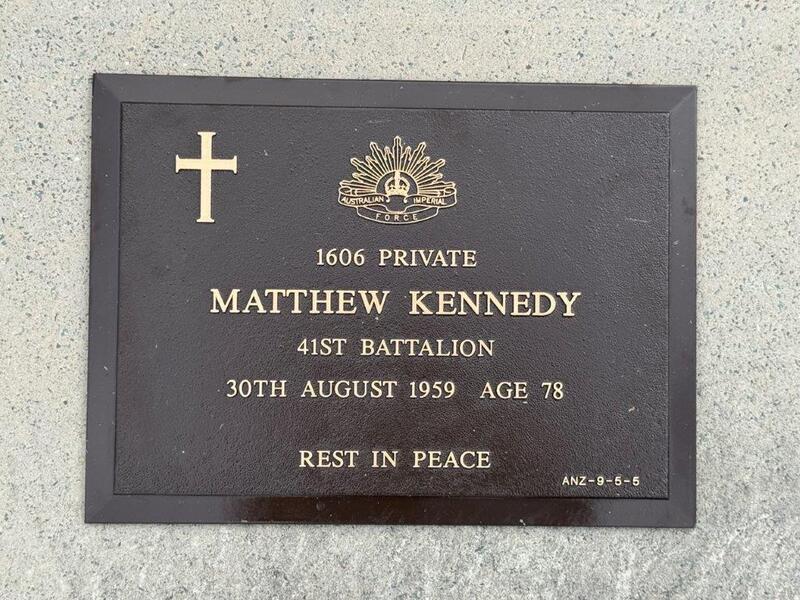
Australian World War One veteran Private Matthew Kennedy (Service No. 1606), is among almost 800 previously unmarked WWI veterans’ graves in Lutwyche Cemetery we have now marked with plaques in recognition of their service for Australia.
We unveiled his plaque in Lutwyche Cemetery on 20 September 2025 along with a further 161 plaques on the previously unmarked graves of Australian World War One veterans:
https://www.australianremembrancearmy.com/20-09-25...
WWI service file: https://recordsearch.naa.gov.au/.../Int.../ViewImage.aspx...
Matthew Kennedy was born in 1881 in Southport, England, to Matthew Kennedy and Margaret Kennedy (nee O'Keefe).
He enlisted in the Australian Imperial Force in Brisbane on 31 July 1915, aged 35, stating his occupation as a groom and nominating his brother, Thomas Kennedy, as his next of kin. On 30 November 1915, he embarked for overseas service with the 2nd Light Horse Regiment, 12th Reinforcement, aboard HMAT Suffolk from Sydney.
He arrived in Egypt in early 1916 and was initially taken on strength with the 1st Light Horse Regiment at Heliopolis in March 1916. Shortly afterwards, he was transferred to the 5th Divisional Ammunition Column at Moascar, where he was mustered as a gunner, indicating a change from mounted to artillery service. In May 1916, he was evacuated to hospital suffering from a hernia and a tumour in the groin. After treatment, he was discharged to duty in June 1916 and joined artillery training units at Tel-el-Kebir.
Later in 1916, Kennedy embarked for service with the British Expeditionary Force, travelling via Alexandria to England, where he trained at Codford and Parkhouse with artillery depots. In December 1917, he proceeded overseas to France via Southampton, disembarking at Rouelles, and joined the 41st Battalion in the field.
Kennedy saw active service on the Western Front but was wounded in action on 30 March 1918, sustaining a gunshot wound to the left leg. He was evacuated through the casualty chain and admitted to a series of hospitals, where he underwent further treatment and rehabilitation. His injury required extended care, including treatment to his knee, and he was eventually discharged from hospital to a command depot. Owing to the severity and lasting effects of his wounds, he was returned to Australia in 1918 and discharged as medically unfit, his condition attributed to a gunshot wound to the knee.
In 1956, decades after his wartime service, he wrote from the War Veterans’ Home at Caboolture, Brisbane, to the Army Medal Section applying for his First World War campaign medals, confirming his service with the 2nd Light Horse Regiment and subsequent attachment to the 41st Battalion, AIF. He died three years later, on 30 August 1959, aged 78, and was buried in Anzac Portion 9, Lutwyche Cemetery, Brisbane.
After decades without recognition at his place of burial, his grave now bears a plaque commemorating his service to Australia — ensuring his name endures among those remembered for their duty and sacrifice. His identity and dignity have now been restored.
We have remembered him.
Lest We Forget
Click images to start slideshow.