







ILLINGWORTH, Ernest
| Service Number: | 463 |
|---|---|
| Enlisted: | 26 August 1914, 12 years (8 years colours, 4 years reserve) with 4th Royal Irish Dragoon Guards |
| Last Rank: | Private |
| Last Unit: | 1st Divisional Ammunition Column |
| Born: | Islington, London, England, 1877 |
| Home Town: | Mackay, Mackay, Queensland |
| Schooling: | Not yet discovered |
| Occupation: | Labourer |
| Died: | Eventide Nursing Home, Queensland, Australia, 10 December 1949, cause of death not yet discovered |
| Cemetery: |
Lutwyche Cemetery, Brisbane, Qld Anzac Portion 8 |
| Memorials: | Mackay Old Town Hall Honour Roll |
World War 1 Service
| 26 Aug 1914: | Enlisted AIF WW1, Corporal, 463, 2nd Light Horse Regiment, 12 years (8 years colours, 4 years reserve) with 4th Royal Irish Dragoon Guards | |
|---|---|---|
| 24 Sep 1914: | Involvement Corporal, 463, 2nd Light Horse Regiment, --- :embarkation_roll: roll_number: '1' embarkation_place: Brisbane embarkation_ship: HMAT Star of England embarkation_ship_number: A15 public_note: '' | |
| 24 Sep 1914: | Embarked Corporal, 463, 2nd Light Horse Regiment, HMAT Star of England, Brisbane | |
| 3 Feb 1919: | Discharged AIF WW1, Private, 463, 1st Divisional Ammunition Column, 1st MD |
Help us honour Ernest Illingworth's service by contributing information, stories, and images so that they can be preserved for future generations.
Add my storyBiography contributed by Evan Evans
From Australian Remembrance Army
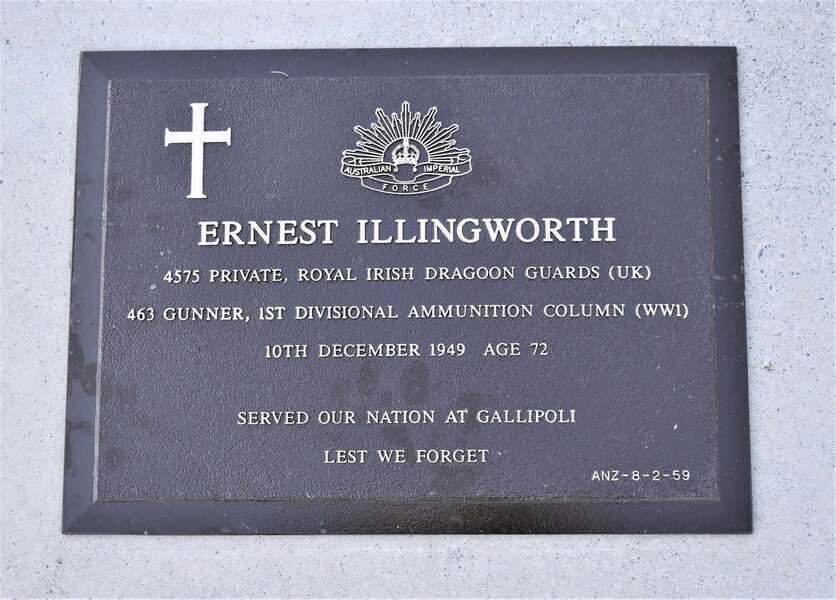
Gunner Ernest Illingworth (Service No. 463), an Australian World War One veteran who served our nation at Gallipoli, is among almost 800 previously unmarked WWI veterans’ graves in Lutwyche Cemetery we have now marked with a plaque recognising their service for Australia.
On 23 September 2023, we unveiled his plaque in Lutwyche Cemetery, along with a further 300 plaques on the previously unmarked graves of Australian World War One veterans:
See Australian Remembrance Army Facebook page
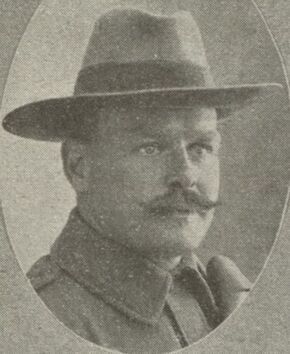
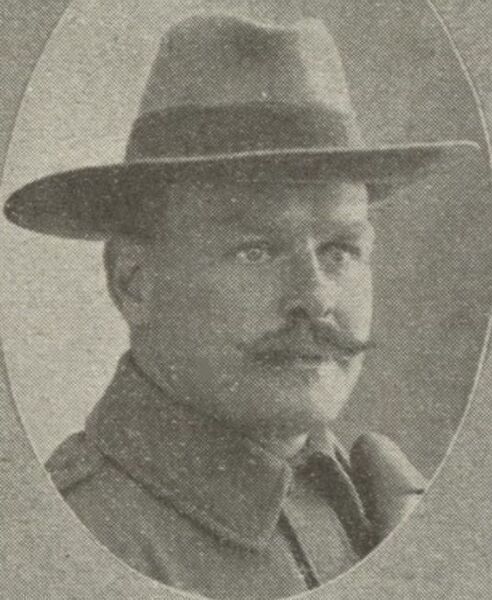
Ernest Illingworth was born in 1877 in Islington, London, England, to George Illingworth and Martha Ann Illingworth (née Abbey). Before emigrating to Australia, he completed twelve years of regular military service with the 4th (Royal Irish) Dragoon Guards, a distinguished cavalry regiment of the British Army. Following his arrival in Australia, he undertook a brief period of naval service as Stoker No. 2786 in the Royal Australian Navy, serving aboard HMAS Warrego in 1913.
Ernest Illingworth enlisted in the Australian Imperial Force at Gladstone, Queensland, on 26 August 1914. He stated his age as 33, although he was in fact 37, and gave his occupation as labourer and his address as the Prince of Wales Hotel, Mackay. He was posted to the 2nd Light Horse Regiment and embarked from Brisbane on 24 September 1914 aboard HMAT Star of England for overseas service.
After completing training in Egypt, he proceeded to the Gallipoli Peninsula in May 1915. During the campaign he was attached to the Mule Transport Corps as an interpreter and inspector, drawing on his extensive pre-war cavalry experience. In September 1915 he was evacuated to medical care suffering from ague, an older term for a recurring fever often linked to malaria. He later required further treatment for dysentery in October but, following his recovery, returned to duty in December 1915.
In early 1916 he continued his service in Egypt, transferring to the 4th Division Artillery on 5 May. He later joined the Australian General Base Depot at Etaples and on 22 October 1916 was appointed Acting Sergeant. He rejoined his unit in France in November 1916 and shortly afterwards reverted to the rank of corporal upon posting to the 5th Divisional Ammunition Column. Throughout 1917 he served in a succession of artillery and ammunition column units, including the 12th Army Brigade Ammunition Column, the 3rd Army Brigade Ammunition Column, and the 1st Divisional Ammunition Column.
On 31 December 1917 he was reduced to the rank of gunner. In January 1918 he was attached to No. 1 Company, Australian Army Service Corps, 1st Division Train, undertaking essential transport and supply duties in support of operations on the Western Front. He continued in these roles during 1918 and was granted leave to the United Kingdom in July before returning to his unit in August. On 8 October 1918 he embarked at Taranto for return to Australia, and he was discharged from the AIF in Australia on 3 February 1919.
Following his military service, he lived a quiet life. In 1943 he was recorded as residing at ‘Kingshome’, a home for returned soldiers and sailors in Swann Road, Taringa, Brisbane. By 1949 he was living at the Eventide Nursing Home at Sandgate. No evidence has been found to suggest that he ever married or had children.
Gunner Ernest Illingworth died on 10 December 1949, aged 72, and was buried four days later in Anzac Portion 8, Lutwyche Cemetery, Brisbane.
After decades without recognition at his place of burial, his grave now bears a plaque commemorating his service to Australia — ensuring his name endures among those remembered for their duty and sacrifice. His identity and dignity have now been restored.
We have remembered him.
Lest We Forget.
Click images to start slideshow.