







MOON, Alexander Henry
| Service Numbers: | 1875, 1875 , 1875B |
|---|---|
| Enlisted: | 3 March 1916 |
| Last Rank: | Private |
| Last Unit: | 42nd Infantry Battalion |
| Born: | Kensington, Victoria, Australia, 9 September 1887 |
| Home Town: | North Dulacca, Queensland |
| Schooling: | Not yet discovered |
| Occupation: | Farmer |
| Died: | Killed in Action, Belgium, 4 October 1917, aged 30 years |
| Cemetery: |
No known grave - "Known Unto God" (Menin Gate) Memorial (Panel 27) |
| Memorials: | Australian War Memorial Roll of Honour, Brisbane 42nd Infantry Battalion AIF Roll of Honour, Dulacca War Memorial, Miles Wall of Remembrance, Ypres (Menin Gate) Memorial |
World War 1 Service
| 3 Mar 1916: | Enlisted AIF WW1, Private, 42nd Infantry Battalion | |
|---|---|---|
| 16 Aug 1916: | Embarked AIF WW1, Private, 1875, 42nd Infantry Battalion, --- :embarkation_roll: roll_number: '18' embarkation_place: Brisbane embarkation_ship: HMAT Boorara embarkation_ship_number: A42 public_note: '' | |
| 17 Mar 1917: | Involvement AIF WW1, Private, 1875 , 42nd Infantry Battalion, Involved in trench warfare on the Western Front, during the German retreat to the Hindenburg Line. | |
| 7 Jun 1917: | Involvement AIF WW1, Private, 1875, 42nd Infantry Battalion, Battle of Messines | |
| 10 Jun 1917: | Wounded AIF WW1, Private, 1875, 42nd Infantry Battalion, Wounded in Action - GSW (L) thigh. Admitted to 1 Convalescent Depot in Boulogne 12/6/17. Rejoined Unit 7/7/17 | |
| 3 Jul 1917: | Honoured Military Medal, Awarded for "conspicuous bravery and devotion to duty." | |
| 7 Jul 1917: | Involvement AIF WW1, Private, 1875, 42nd Infantry Battalion, Third Ypres, Involved in Third Battle of Ypres campaign and on the day he was killed specifically the Battle of Broodseinde. | |
| 4 Oct 1917: | Involvement AIF WW1, Private, 1875B, 42nd Infantry Battalion, Third Ypres, Killed in action on this day. Service medals: British War Medal; Victory Medal. |
Ode to Henry
Ode to Henry
We visited Dulacca country—often harsh and unpredictable, yet known and worked by those who called it home—
at Creek Vale where you shaped a life and called it your own.
Your name was spoken there again—quietly at first, then carried onward—
back to the family who still stand upon that country you once worked.
Across oceans and time we followed your trace,
from paddock to trench, from silence to thunder,
until your story was no longer lost in distance or record,
but held again in memory and spoken with care.
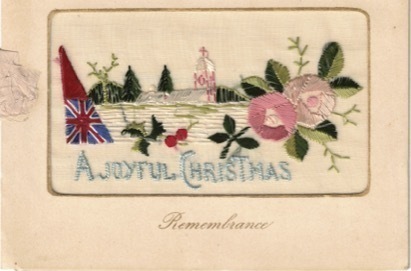
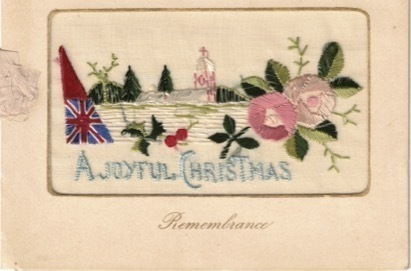
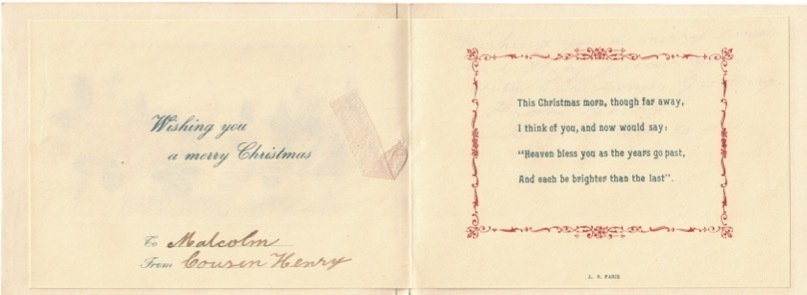
The cards you sent from the front have endured the years—
kept safe, held sacred, and read with quiet reverence—
small pieces of your hand that still reach across time.
For your courage, marked by the medal you earned,
and for the life you gave in distant fields,
we remember not only the soldier you became,
but the man you were at Creek Vale.
You are remembered, Henry—
not only in stone at Ypres,
but in the land you once tended,
and in the telling that brings you home again.
Not lost to time, nor to silence—
but known, and remembered.
Julie Gundry - 1st cousin (3 x removed)
Submitted 21 May 2026 by Julie Gundry
Return to Creek Vale
A Return to Creek Vale
The road to Dulacca is not unfamiliar to us. It is country we have known not only through stories, but through our own childhood. We lived there once, and the land—often harsh and unpredictable, demanding respect and resilience—has never quite left us. Many in our family - Hairs, Norris, Fluerty, Reville, Harrison, were among the original selectors, and long before this journey, their places had been carefully marked onto a map—each property named, each holding its own piece of the past.
We set out to follow that map.
It became a loop through time as much as distance, moving from one selection to the next. The places themselves have changed—as all places do—but the names remain. Each property still bears the name given by those who first worked it, quiet markers of lives that shaped the land and left something behind.
And then we came to Creek Vale.
There is a sign. It still bears the name.
A small, steady link between then and now. Visiting, not claiming, we paused there, knowing this was the place where Henry had once lived and worked—where he had risen early, shaped the land, and built a life before the war carried him far from it.
It is a different kind of knowing, to return to a place from your own past, and within it, to meet someone from the past of your family.
Until then, Henry had been a name in records, a soldier among many. But here, he became something more. Not just a man who went to war, but one who had shared in the same land, the same effort, and the same beginnings as those whose lives were already woven into our own.
Later, gathered together, his name was spoken again—this time with recognition. Not as a distant figure, but as family. His story was told alongside the others, finding its place among them.
We spoke of his service—of the 42nd Battalion, of the fighting near Messines, of the wound he carried and the courage that earned him the Military Medal. Of his return to the line, and of the day he did not come back.
And then something unexpected came into our care.
The cards.
They had been kept quietly over the years, held onto without ever quite losing their meaning. When they were placed in our hands, it felt less like a discovery and more like a responsibility being passed on.
They are simple, but they carry his presence. Words sent home across distance and uncertainty. You can imagine him writing them—perhaps in a brief moment of stillness, perhaps not knowing if they would ever reach their destination.
They did.
And now, they have reached us.
Back on that road, with the map folded but not forgotten, the land endures. The names endure. And Henry’s name now sits among them—not separate, but returned.
Brought home in the only way that time allows- through memory, through care, and through the quiet act of remembering.
Julie Gundry (nee Harrison) Henry’s 1st cousin (3 x removed)
Lesley Parry (nee Harrison) Henry’s 1st cousin (3 x removed)
Submitted 21 May 2026 by Julie Gundry
Biography contributed by Julie Gundry
Alexander Henry Moon was born on 9 September 1887 at Kensington, Victoria, the son of Alexander and Christina Moon. His early life was marked by loss, and at the age of five he was taken into the care of his uncle and aunt, Thomas and Margaret Hair (née Moon), who raised him as their own son. In their care, he grew into a capable and steady young man. At 22 years of age, Henry moved with the Hair family to Queensland, where they took up land at Dulacca. In 1909, he became one of the earliest settlers at Tchanning, North Dulacca, establishing his home and livelihood at “Creek Vale,” where he worked the land as a farmer in the years before war called him away.
Henry was 28 years old when he enlisted at Toowoomba on 3 March 1916, joining the Australian Imperial Force at a time when the war in Europe had already taken a heavy toll. He embarked from Australia on 16 August 1916 aboard the HMAT Boorara, leaving behind the life he had built on the Queensland land he helped shape.
The journey to war was long and uncertain. Packed into crowded quarters below deck, the men endured heat, illness, and the strain of weeks at sea. At Cape Town, Henry’s path briefly diverged when he failed to re-embark with his ship. Yet the war carried him forward regardless, and he was sent on to England, arriving at Plymouth on 19 October 1916.
In England, he was posted to Dorrington Camp, where he trained through a cold and unforgiving winter. Many men struggled in those months—far from home, adjusting to a climate that cut through them after the warmth of Australia. Illness was common, and Henry himself was reported sick in January 1917. But like so many of his generation, he recovered and pressed on.
In February 1917, he crossed to France aboard the SS Golden Eagle. On 2 March 1917, he was taken on strength of the 42nd Battalion and stepped into the world of the Western Front.
There, life was defined by mud, exhaustion, and unending vigilance. Trenches collapsed in rain and shellfire, the ground churned into mire, and danger came not in moments, but in hours that never truly ended. Men worked, waited, and endured under the constant presence of artillery and the sharp, unseen threat of rifle fire.
On 6 March 1917, only days after joining his battalion, Henry was taken to hospital suffering from scabies and catarrh. He returned to duty on 17 March, resuming his place among his comrades without hesitation.
In June 1917, during the operations of the Battle of Messines, Henry’s conduct earned him recognition for bravery. For his actions, he was awarded the Military Medal, recorded in AIF List 198 on 3 July 1917.
On 10 June 1917, in the days following the battle, Henry was wounded while the 42nd Battalion held the newly taken positions along the Messines Ridge. The ground they occupied was scarred and exposed, still under the reach of artillery and the watch of enemy fire. In that place, Henry was struck by a gunshot wound to the left thigh.
He was carried back through the long chain of evacuation—first to aid posts near the front, then onward to hospitals in France, including treatment at Wimereux and Boulogne.
He returned to his battalion on 4 July 1917. The war did not pause for recovery, and neither did the men who fought it.
On 4 October 1917, Henry was killed in action during the Battle of Broodseinde, part of the wider Third Battle of Ypres in Belgium. It was there, in that vast and broken landscape, that his life came to its end.
Private Alexander Henry Moon has no known grave. His name is inscribed at the Menin Gate Memorial, Panel 27, beneath the words:
“Known Unto God.”
After his death, his uncle Thomas Hair wrote to the Department of Defence, describing Henry as a son and remembering him simply as “a good, brave lad.”
Julie Gundry
Sources:
Australian Imperial Force service dossier: Alexander Henry Moon (S/N 1875)
Australian War Memorial (AWM) unit diaries – 42nd Battalion (1917)
AWM First World War mapping and battle summaries (Messines, Broodseinde, Ypres)
HMAT Boorara transport movement records (AIF embarkation rolls, 1916)
British WWI medical evacuation and convalescent hospital records
AI Assistance Disclosure
This biography was generated and structured with the assistance of AI (ChatGPT, OpenAI) using user-supplied family records combined with historical military context and publicly available WWI battalion history. It is a historical reconstruction intended for memorial and family history purposes, not an official archival transcript.


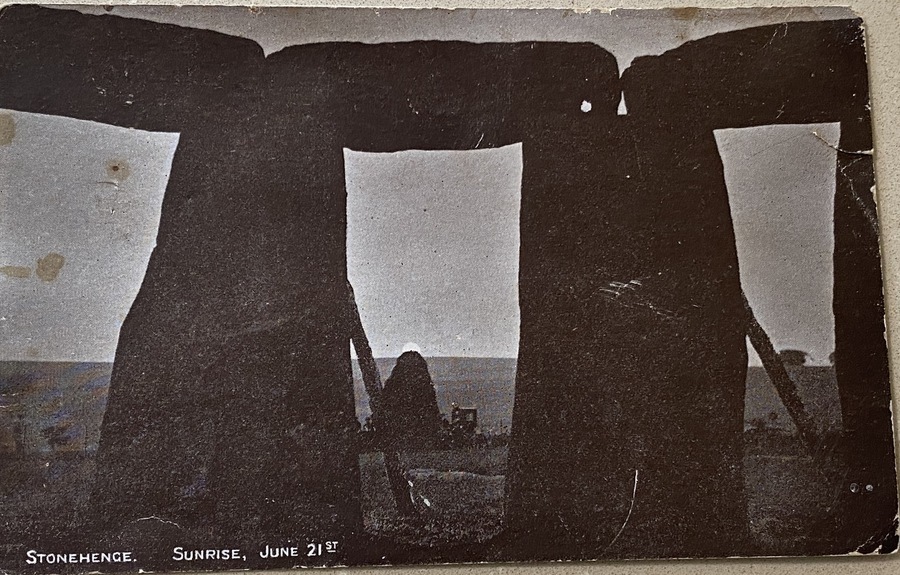
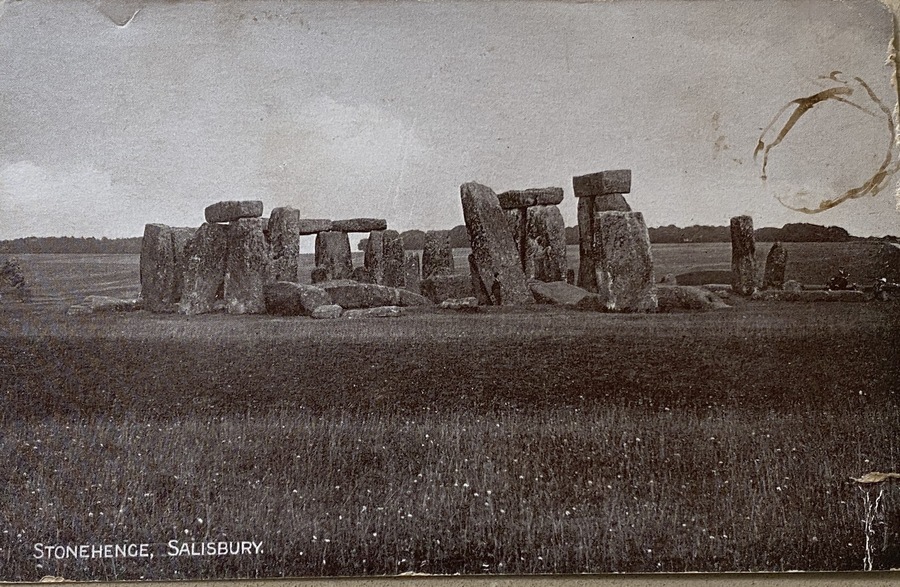




Click images to start slideshow.