


CARDWELL, Alaric Arthur
| Service Number: | 985 |
|---|---|
| Enlisted: | 15 August 1914, An original member of B Company 5th Bn. |
| Last Rank: | Private |
| Last Unit: | 5th Infantry Battalion |
| Born: | Penrith, New South Wales, Australia, 15 May 1888 |
| Home Town: | Carlton, Melbourne, Victoria |
| Schooling: | Not yet discovered |
| Occupation: | Painter |
| Died: | Victoria, Australia, 20 June 1964, aged 76 years, cause of death not yet discovered |
| Cemetery: |
Diamond Creek Cemetery, Victoria Compartment 3, Row 4A |
| Memorials: |
World War 1 Service
| 15 Aug 1914: | Enlisted AIF WW1, Private, 985, 5th Infantry Battalion, An original member of B Company 5th Bn. | |
|---|---|---|
| 21 Oct 1914: | Embarked Private, 985, 5th Infantry Battalion, --- :embarkation_roll: roll_number: '8' embarkation_place: Melbourne embarkation_ship: HMAT Orvieto embarkation_ship_number: A3 public_note: '' |
Help us honour Alaric Arthur Cardwell's service by contributing information, stories, and images so that they can be preserved for future generations.
Add my storyBiography contributed by Stephen Brooks
Alaric Arthur Cardwell, was the son of Thomas Andrew (died 1906) and Elizabeth Cargill Cardwell of North Fitzroy, Victoria. Alaric and three brothers enlisted in the AIF and served overseas. Alaric was the oldest and he was married with a young child. He stated on enlistment in 1914 that he had served in the Victorian Scottish regiment for five years.
His younger brother, 206 Pte. Rupert Edgar Cardwell, also an original member of the 5th Battalion AIF, died of wounds on Gallipoli 8 August 1915.
Another younger brother, 2792 Lce. Cpl. Percy Eric Cardwell 6th Battalion AIF was killed in action during the Battle of Broodseinde on 4 October 1917, aged 22.
Alaric came home to his family in 1918, having had a lot of pleurisy, but according to family records he suffered the rest of his life with crippled feet due to rheumatism and the effects of trench foot.
The youngest brother, Quenton Charles Cardwell, enlisted two days before his 18th birthday in July 1915. He was wounded in the arm at Fromelles with the 60th Battalion, and lucky to have survived the battle. He was evacuated to England to recover. Although Quenton did return to duty in France during late 1916, he was sent home to Australia on the order of the Department of Defence, in April 1918, as at that stage he had lost two brothers in the war. He was discharged for ‘family reasons’.
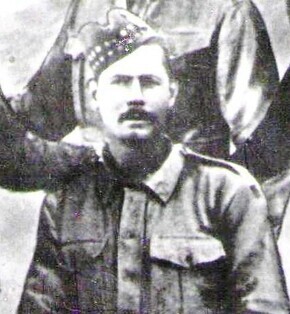
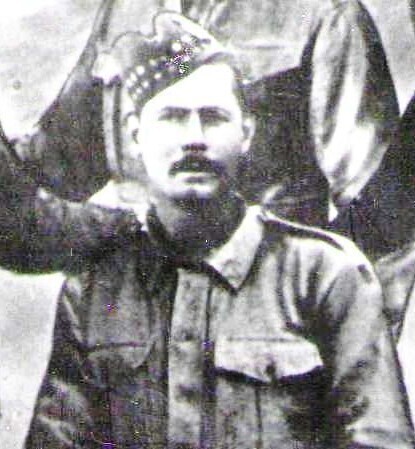
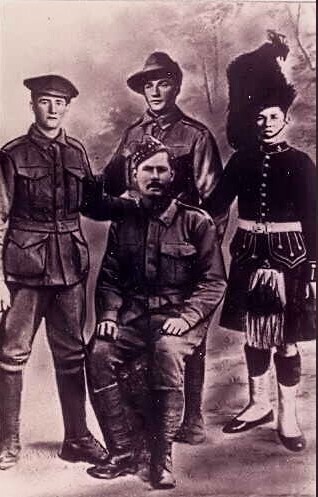
Click images to start slideshow.