








30361
BROWN, Albert Wallace
| Service Number: | 2630 |
|---|---|
| Enlisted: | 1 May 1916, Next of kin Mother, Mrs Ellen Brown, Princes Road, Mitcham, South Australia 50th Battalion, 6th Reinforcement |
| Last Rank: | Private |
| Last Unit: | 50th Infantry Battalion |
| Born: | Pinaroo, South Australia, 1878 |
| Home Town: | Pinnaroo, South Australia |
| Schooling: | Not yet discovered |
| Occupation: | Gardener |
| Died: | Natural causes, 15 July 1962, place of death not yet discovered |
| Cemetery: |
West Terrace Cemetery (AIF Section) Section: KO, Road: 5A, Site No: 58 |
| Memorials: |
World War 1 Service
| 1 May 1916: | Enlisted AIF WW1, Private, 2630, 50th Infantry Battalion, Next of kin Mother, Mrs Ellen Brown, Princes Road, Mitcham, South Australia 50th Battalion, 6th Reinforcement | |
|---|---|---|
| 23 Oct 1916: | Embarked AIF WW1, Private, 2630, 50th Infantry Battalion, --- :embarkation_roll: roll_number: '19' embarkation_place: Adelaide embarkation_ship: HMAT Port Melbourne embarkation_ship_number: A16 public_note: '' | |
| 31 Jul 1918: | Wounded Private, 2630, 50th Infantry Battalion, Although he had a Red Cross File raised there is no record of him having been wounded. An inquiry (his sister) had been made presumably because his family had not heard from him for some months. He is recorded as rejoining his unit in late July 1918 after leave in the UK. | |
| 6 Aug 1919: | Discharged AIF WW1, Private, 2630, 50th Infantry Battalion, Returned to Australia 12 May 1919 'Port Napier' Discharged from Keswick Barracks Adelaide 6 Aug 1919 Awarded British War Medal and Victory Medal. per service record |
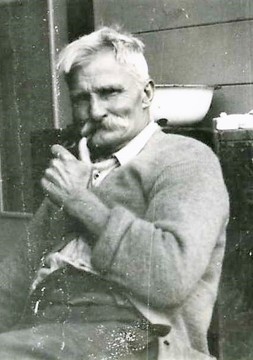
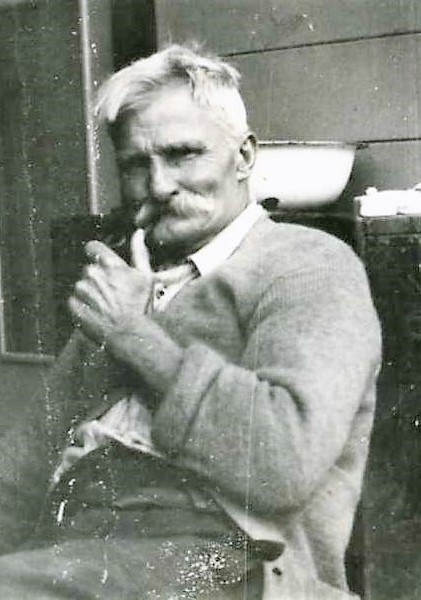
Brownie
Albert Wallace Brown or Brownie as he became known was born 10 June 1877 in Cherry Gardens, in the Adelaide Hills district of South Australia. He was one of twelve children born to Thomas Brown and Ellen Hall. They later moved to Mitcham where Thomas and Ellen spent their remaining years and are buried in the Mitcham cemetery. World War One had been going on for almost two years when Albert now almost thirty eight years of age travelled from Pinnaroo to Adelaide in May 1916 to enlist. Most probably he would have caught the train for the 150 mile journey. Only 5 ft. 3in tall, tanned skin brown eyes dark hair this handsome and well-built man had previously been rejected. With the war going on longer than anticipated and with numerous casualties the limits of age and height had inevitability changed. A man had to be between 19 and 38 years of age which criteria he fitted but not the height which had previously been set at minimum of 5 feet six inches. In June 1915 just a year into this war, that was to end all wars, the age range and minimum height requirements were changed. Age limits were now set to between 18–45 years and height reduced to 5ft 2in, with the minimum height being lowered again to just 5ft in April 1917.
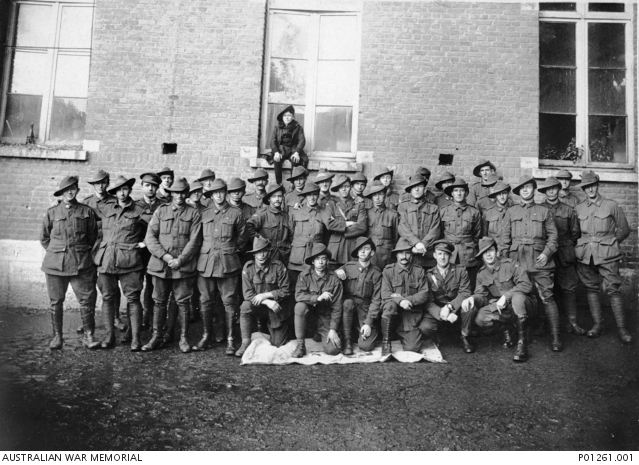
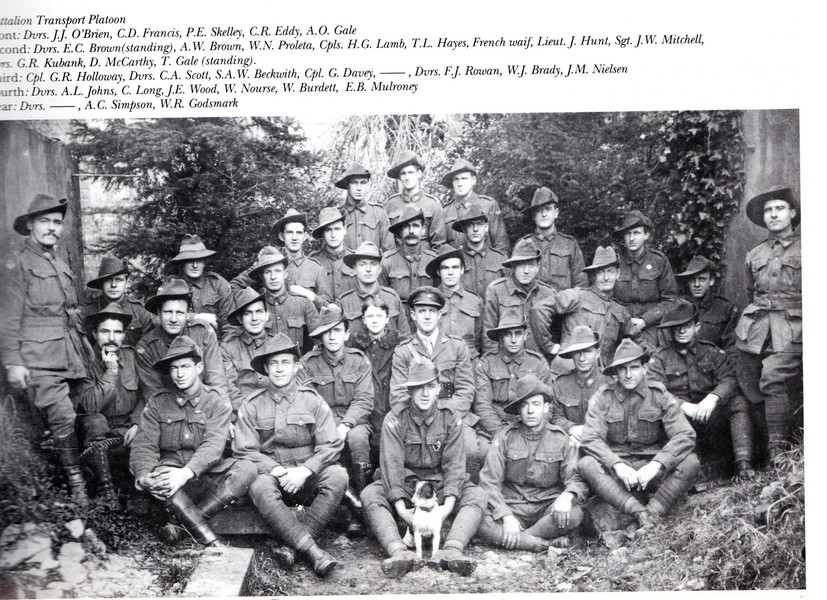
He was assigned to the 6th reinforcements of the 50th Battalion which was known as Hurcombes hungry half hundred named after the 50th Battalion's inaugural Commanding Officer Lieutenant Colonel Frederick Hurcombe. Private Brown embarked aboard the ‘Port Melbourne’ from Adelaide 25 October 1916 and disembarked two months later 28 December 1916 in England. Five months training at Codford followed, there was free time though and men being men he was out on the town with his mates when failing to get back in time cost him two days’ pay and seven days confined to camp. The reinforcements proceeded overseas to France 9 May 1917 and marched into the battle field at Etaples 13 May to join the 50th Battalion. These new reinforcements were to double the numbers of veterans whose numbers had been severely depleted during the previous months. The harsh winter had taken its toll on those men left fighting in the freezing conditions. Illness was a large cause of death during the First World War. Medical services were basic with many of today’s lifesaving antibiotics yet to be discovered. Vaccination was not routine as it is today. The Anzacs were subject to many diseases such as influenza, typhoid, trench foot, trench fever, dysentery, typhus and cholera. Alexander Fleming witnessed the deaths of many soldiers during the First World War; men who died not from wounds but from septicaemia (blood poisoning) following successful operations. After the war he experimented and discovered antiseptic in 1921. His experimenting continued and it was in 1928 that he discovered penicillin which would treat bacterial infections such as gangrene and tuberculosis. He was knighted in 1943
Early in 1917, the battalion participated in the advance that followed the German retreat to the Hindenburg Line, and attacked at Noreuil on 2 April. Later that year, the focus of AIF operations moved to Belgium. There the battalion was involved in the battle of Messines between 7 and 12 June and later in the campaign known as Third Ypres beginning with actions to the south of the town culminating in the battle of Polygon Wood on 26 September. Another bleak winter of trench routine followed. The battalion alternated between front-line duty, and training and labouring behind the line.
The German Army, reinforced by troops freed by the collapse of Russia, launched a major offensive on the Western Front at the end of March 1918. At Dernancourt, on 5 April, the 50th Battalion assisted in the repulse of the largest German attack mounted against Australian troops during the war. The German threat persisted through April, and on ANZAC Day 1918 the 50th participated in the now-legendary counter-attack to dislodge the enemy from Villers-Bretonneux, attacking on the southern flank, complementing the 5th Divisions 15th Brigade to the north. The 50th battalion sustained heavy casualties 720 killed, 1,557 wounded and many of the bodies of the fallen were never identified.
The 50th Battalion continued to play an active role during the Allies own offensive, launched on 8 August 1918. Its last major operation of the war was the attack on the Hindenburg Line on 18 September, during which the 50th composed part of the 4th Division‘s reserve. The 50th Battalion ceased to exist as a separate entity when it amalgamated with the 51st Battalion on 6 March 1919 as soldiers were repatriated home. In France leave was granted on 30 March 1919 until 8 April when they boarded a ship to England
They spent a month in England during which time Brownie once again was absent for two days between 3 and 5 May. Was the two days confined to camp and two days loss of pay worth it? Of course it was good on you Private Brown.
Private A W Brown #2630 was one of 208 South Australians who left England in the summer 2 May aboard the troop carrier Port Napier to arrive in chilly Semaphore on Saturday evening 29 June 1919. After the quarantine authorities declared the vessel uncontaminated, the ship sailed in to the Outer Harbour Wharf on Sunday. The soldiers disembarked shortly after midday. Relatives and friends who owned a car were there to welcome them home. Three trips were provided by the military authorities to transfer the soldiers to Keswick. The Y.M.C.A., assisted by the V.A.D.'s, entertained the men on the wharf, and also at a concert and tea in their hall, at the wharf side. Lieut. A. R. Mortimer had charge of the disembarkation, and was assisted by Sgt A.S. Gardiner and Cpl W. Murray. Lieut. A. Mitchell represented the Sailors and Soldiers' Imperial League. Major J.J. Hughes extended a welcome home to the men on behalf of the military commandant.
Brownie was discharged 6 August 1919 after three years’ service to his country. He received his three medals the 1914/1915 Star, the British War Medal and the Victory Medal in August 1921.
Following his discharge Brownie moved around South Australia looking for work. Eventually arriving in Wirrabarra where he found employment in the timber industry. Lawrie Dohnt gave him a home there with the Dohnt family. In 1933 Brownie lent Lawrie £400 to start a log hauling business at Bundaleer.
Lawrie was one of the first Logging Contractors for the Woods & Forests Department at this time employing many workers. Brownie continued to work for the company going with them when they moved to the forests of the South East.
When he retired he lived with Catherine Dohnt at Nangwarry until 1961 when due to aging and ill health he was moved to Daw Park repatriation hospital where he died 16 July 1962 aged 85 years. He is buried alongside other veterans in Kendrow Oval row 5A number 58 in the war grave section of West Terrace cemetery.
Submitted 11 December 2025 by Christine Dohnt
Biography contributed by Heathfield High School
Born in 1878 in Pinaroo South Australia to Mrs Ellen Brown Albert, Wallace Brown grew up in the same town that he was born in. Unfortunately a lot of his early personal life is unknown.
Albert Wallace Brown enlisted on 1 May 1916, at Princes Road, Mitcham, South Australia. Albert Wallace Brown was conscripted to be a part of the 50th Battalion.
On the 23rd of October 1916 Albert embarked to Belgium with the 50th Battalion. The 50th Battalion engaged in many vital battles of the war. These battles include the German retreat to the Heindenburg line in 1917, which was a huge battle with the Germans retreating to a line that stretched across many hundreds of kilometres of French land. This line was heavily fortified and defended by the Germans. This line was an extremely vital and “The last and strongest of the German army’s defence” – (The Hindenburg Line: Breaking the Hindenburg Line | Australian War Memorial 2021).
The 50th Battalions last major battle was on the Hindenburg line on September 18th 1918. On March 6th, 1919 the 50th Battalion ceased to exist as it merged with the 51st Battalion.
After the war had ended Albert Wallace Brown returned home to Australia in Port Napier on the 12th of May 1919. He was then discharged from the AIF on the 6th of August the same year from the Keswick barracks in South Australia. He was awarded the British war medal and victory medal for his service in the AIF. Throughout all of his time serving the AIF Albert started and ended with him being the rank of private.
Not much is known of what happened to Albert after the war. After Albert was discharged from the AIF he returned to his former job of being a Gardener until his unfortunate death in 15th of July 1962 to natural causes living a long 84 years, however his place of death was never uncovered. After his death he was buried in the AIF Cemetery, West Terrace Cemetery, Adelaide, South Australia.
Biography
Albert Wallace (Brownie) BROWN 2023, Vwma.org.au, viewed 23 May 2023, <https://vwma.org.au/explore/people/270248>.
Wikipedia Contributors 2023, Operation Alberich, Wikipedia, Wikimedia Foundation, viewed 23 May 2023, <https://en.wikipedia.org/wiki/Operation_Alberich>.
The Hindenburg Line: Breaking the Hindenburg Line | Australian War Memorial 2021, Awm.gov.au, viewed 23 May 2023, <https://www.awm.gov.au/visit/exhibitions/1918/battles/hindenburg#:~:text=The%20Hindenburg%20Line%2D%20the%20last,Hindenburg%20Line%20could%20be%20launched.>.
Attack on Noreuil 2023, Awm.gov.au, viewed 23 May 2023, <https://www.awm.gov.au/collection/E84290>.
Wikipedia Contributors 2023, Battle of Messines (1917), Wikipedia, Wikimedia Foundation, viewed 23 May 2023, <https://en.wikipedia.org/wiki/Battle_of_Messines_(1917)>.
The Battle of Polygon Wood 2017, Qld.gov.au, viewed 23 May 2023, <https://anzac100.initiatives.qld.gov.au/events/battle-of-polygon-wood/index.aspx#:~:text=Known%20as%20the%20Battle%20of,Australian%20casualties%2C%20including%20many%20Queenslanders.>.
Western Front | International Encyclopedia of the First World War (WW1) 2015, 1914-1918-online.net, viewed 23 May 2023, <https://encyclopedia.1914-1918-online.net/article/western_front#:~:text=The%20Western%20Front%2C%20a%20400,victory%20for%20their%20respective%20alliance.>.
The Battle of Villers-Bretonneux - Sir John Monash Centre 2018, Sir John Monash Centre, viewed 23 May 2023, <https://sjmc.gov.au/battle-villers-bretonneux/>.
The Hindenburg Line: Breaking the Hindenburg Line | Australian War Memorial 2021, Awm.gov.au, viewed 23 May 2023, <https://www.awm.gov.au/visit/exhibitions/1918/battles/hindenburg#:~:text=On%2018%20September%201918%2C%20a,defences%20and%20machine%2Dgun%20posts.>.
Albert Wallace Brown 2023, Awm.gov.au, viewed 23 May 2023, <https://www.awm.gov.au/collection/R1871334>.
The Western Front 1916-1917 map 2013, Govt.nz, viewed 23 May 2023, <https://nzhistory.govt.nz/media/photo/western-front-1916-17-map>.
Battle of Messines | Summary | Britannica 2023, Encyclopædia Britannica, viewed 23 May 2023, <https://www.britannica.com/event/Battle-of-Messines>.
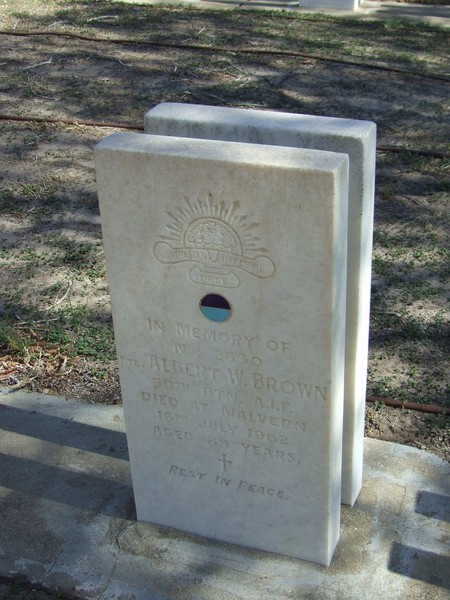
Click images to start slideshow.