


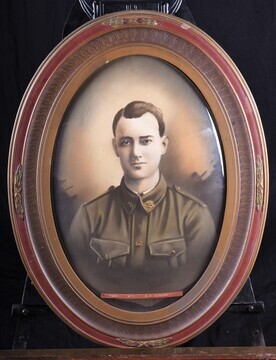
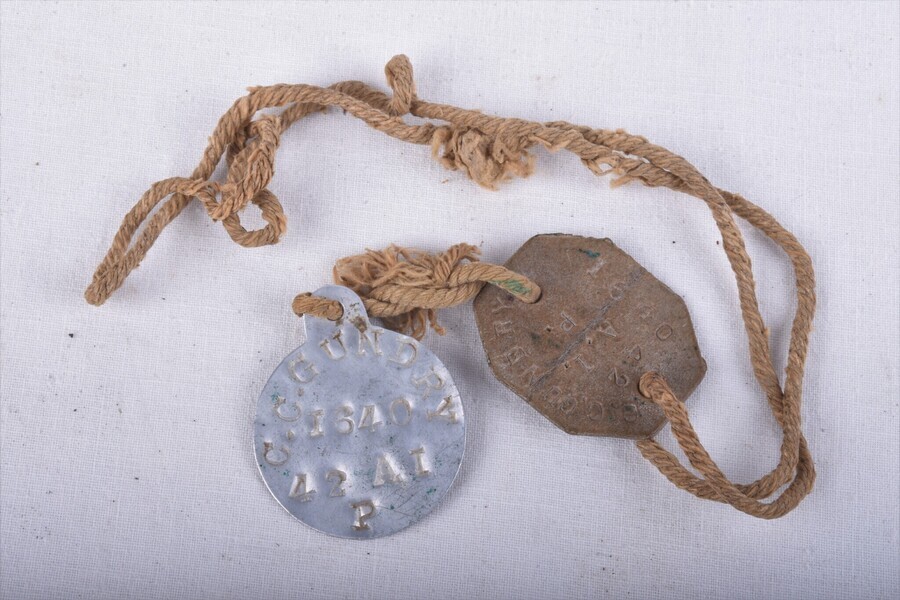
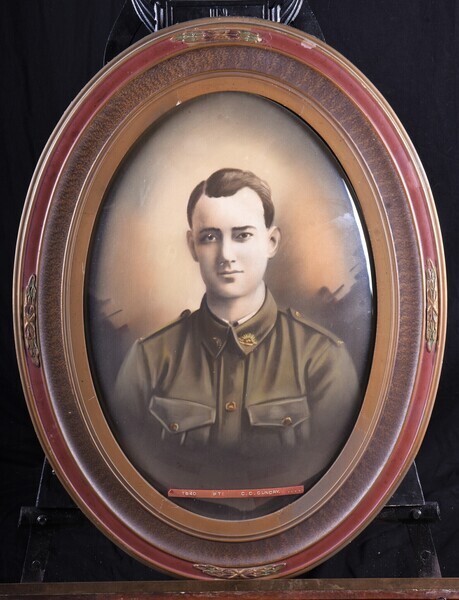
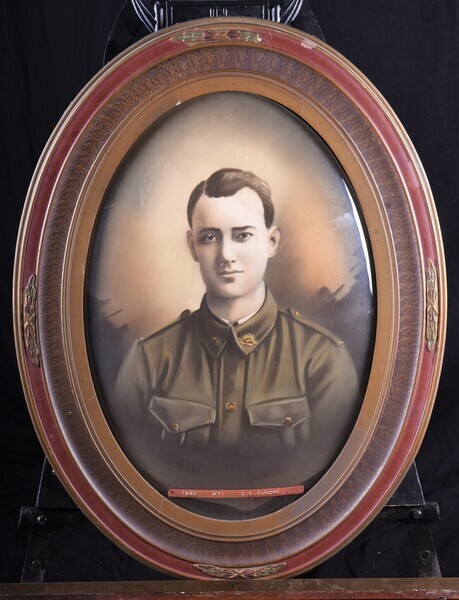
GUNDRY, Cecil Charles
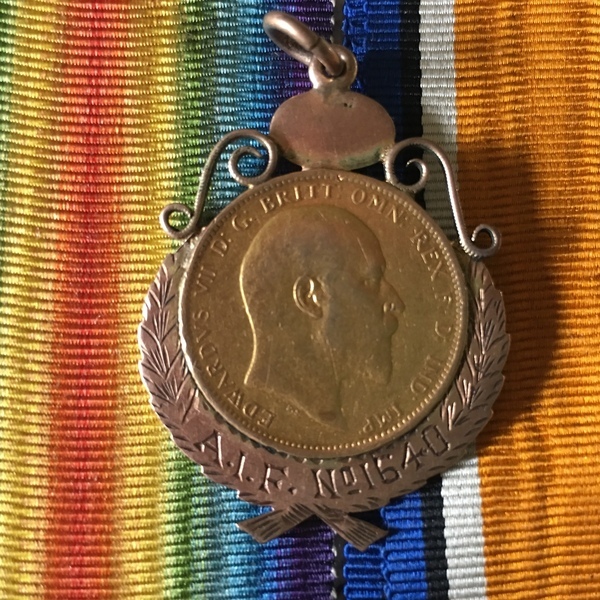
| Service Number: | 1640 |
|---|---|
| Enlisted: | 31 January 1916 |
| Last Rank: | Lance Corporal |
| Last Unit: | 42nd Infantry Battalion |
| Born: | Pyramid Hill, Victoria, Australia, 9 December 1894 |
| Home Town: | Miles, Western Downs, Queensland |
| Schooling: | Gunbower or Cohuna, Victoria, Australia |
| Occupation: | Farm Assistant/Boot Maker |
| Died: | Toowoomba, Queensland, Australia, 10 May 1974, aged 79 years, cause of death not yet discovered |
| Cemetery: |
Toowoomba Garden of Remembrance | Cemetery & Crematorium Plot 767-A-5 Memorial ID 180689486 |
| Memorials: |
World War 1 Service
| 31 Jan 1916: | Enlisted AIF WW1, Private, 1640 | |
|---|---|---|
| 5 Jun 1916: | Embarked Private, 1640, 42nd Infantry Battalion, HMAT Borda, Sydney | |
| 5 Jun 1916: | Involvement Private, 1640, 42nd Infantry Battalion, --- :embarkation_roll: roll_number: '18' embarkation_place: Sydney embarkation_ship: HMAT Borda embarkation_ship_number: A30 public_note: '' | |
| 4 Jun 1917: | Involvement AIF WW1, 1640, 42nd Infantry Battalion, Battle of Messines | |
| 19 Aug 1917: | Promoted AIF WW1, Lance Corporal, 42nd Infantry Battalion, Promoted to Lance Corporal. | |
| 4 Oct 1917: | Wounded AIF WW1, Lance Corporal, 1640, 42nd Infantry Battalion, Shrapnel and Gun shot wounds to the leg, arms and hips in the field "Thames Farm" Broodseinde near Ypres in Belgium. On the 21/10/1917 his right leg was amputated. | |
| 4 Jul 1919: | Discharged AIF WW1, Lance Corporal, 1640, 42nd Infantry Battalion, Service Medals: British War Medal; Victory Medal. |
Help us honour Cecil Charles Gundry's service by contributing information, stories, and images so that they can be preserved for future generations.
Add my storyBiography contributed by Julie Gundry
Cecil Charles "Charlie" Gundry (Service No 1640) 42nd Battalion, Australian Imperial Force - World War 1
Cecil Charles Gundry enlisted in Toowoomba, Queensland, on the 31st January 1916, answering the call to serve far from home. On 5 June 1916, he embarked from Australia aboard the troopship HMAT Borda, beginning a long journey to the war in Europe. The voyage crossed the Indian Ocean likely included a coaling stop in Columbo before continuing through the Red Sea to Alexandria. After a brief stay in Egypt, he sailed on to England, arriving in southhampton on 23 July 1916.
From Southhampton, Charlie was sent to the training camps on Salisbury Plain, where he trained through the wet, cold English winter. On 2 March 1917 he proceeded to France and joined the 42nd Battalion AIF, entering the harsh realities of trench warfare on the Western Front.
His first major action came in June 1917 at the battle of Messines. At the Battle of Messines he advanced with his battalion to capture the vital ridge that dominated the battlefield. In the months that followed, during the Third Battle of Ypres, he endured the harshest conditions of the war - fighting not only to take ground, but to hold it under constant shellfire.
On 19 August 1917, he was promoted to Lance Corporal. As a Lance Corporal, he led his section in the assault and, under intense artillery fire, helped secure and hold the captured ground.
In the early hours of 4 October 1917, during the Battle of Broodseinde near Zonnebeke, the battalion advanced behind a creeping barrage across broken, shell-torn ground shattered by weeks of bombardment, through smoke and devastation, under relentless artillery fire.
Although successful, the attack was followed by heavy German artillery fire during consolidation. Charlie was severely wounded by shellfire, suffering injuries to his legs, arms, hips, and head and later underwent amputation of his right leg.
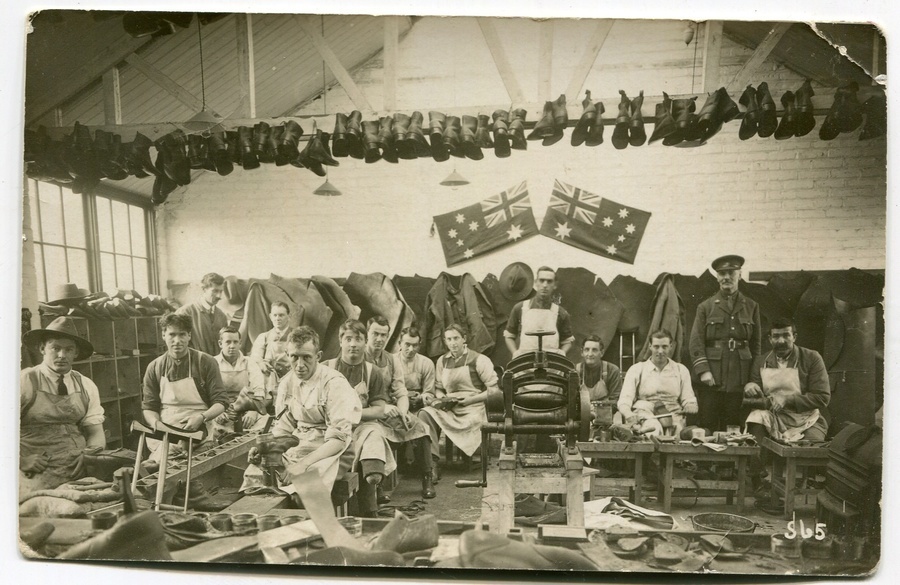
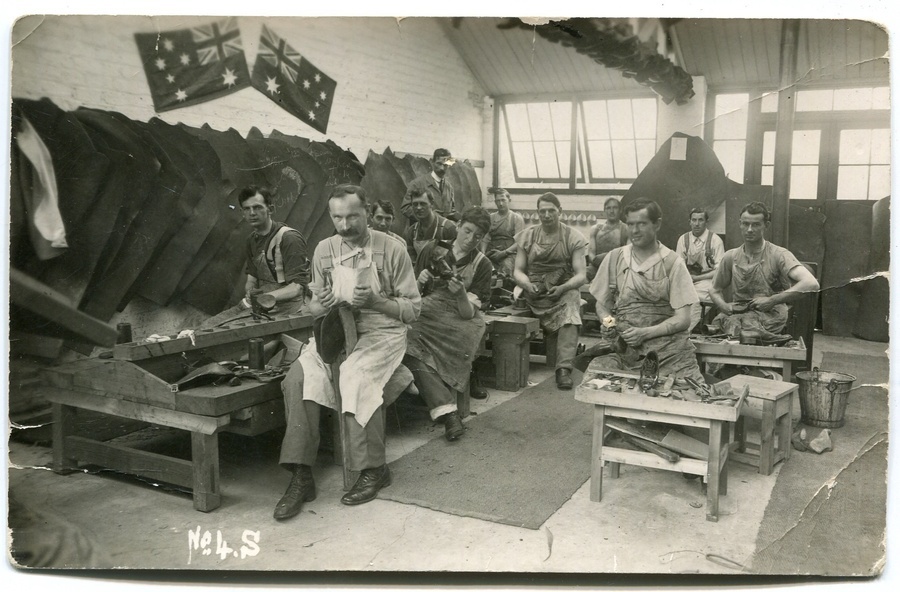
After evacuation to England, he recovered through the winter and was transferred in February 1918 to Southall, where he was retrained as a cobbler. He returned to Australia in March 1919.
In the early 1920's, Charlie settled in Miles Queensland, where he established CC Gundry Boot and Shoe Store, putting his training into practical use.
In 1922 he married Florence Nightingale Meyer. Together they raised their family became active members of the local rural community.
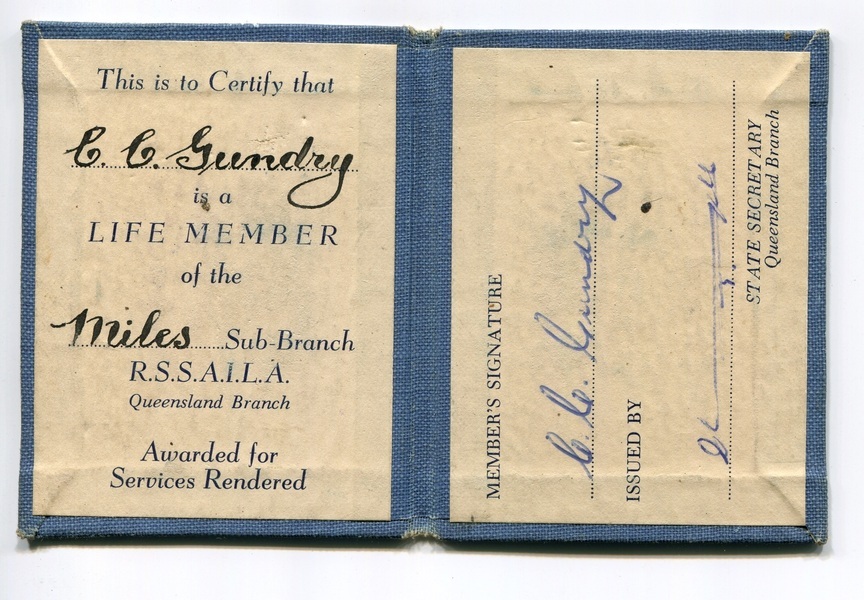
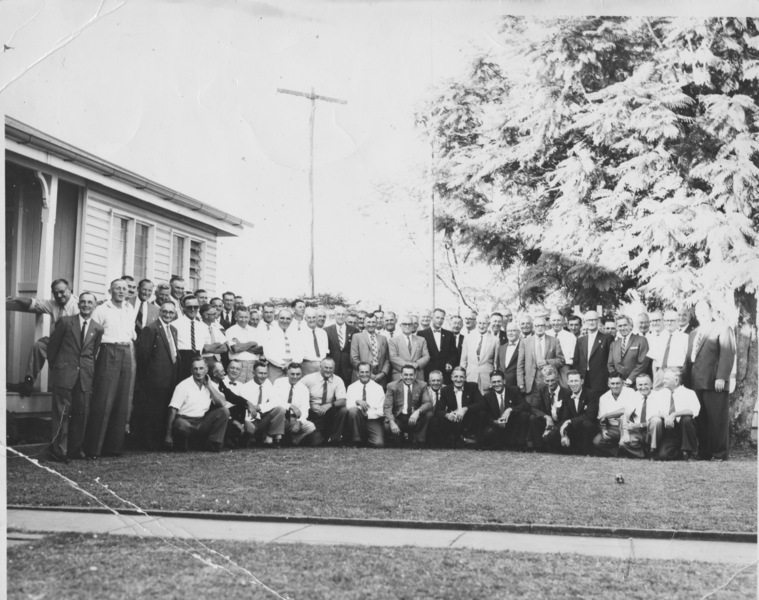
Charlie served as President of the Miles R.S.S.A.I.L.A. for many years and was to later receive life membership for his services. He was also instrumental in the forming of the Dulacca R.S.S.A.I.L.A. in 1938, maintaining a lifelong commitment to service and comradeship.
Research Sources: National Archives Australia (NAA)- Service Record Australian War Memorial (AWM)- War Diaries and Rolls British War Office Trench Maps (1918) C.E.W. Bean - Official History of Australia in the War of 1914 -1918.
This document was prepared with the assistance of artificial intelligence tools to support the research and organisation of historical material. All information has been reviewed against the primary and secondary sources cited above, and responsibilty for interpretation and presentation is mine.
Julie Gundry





Click images to start slideshow.