







SCRIVENER, Arthur Herbert
| Service Number: | 994 |
|---|---|
| Enlisted: | 20 August 1914, Randwick |
| Last Rank: | Private |
| Last Unit: | 2nd Infantry Battalion |
| Born: | Birmingham, Warwickshire, England, 1895 |
| Home Town: | Cremorne, North Sydney, New South Wales |
| Schooling: | Sydney Church of England Grammar School, New South Wales, Australia |
| Occupation: | Student |
| Died: | Natural causes, Bengal, India, 14 August 1942 |
| Cemetery: |
Karachi War Cemetery, Pakistan 8. C. 4. - Interred at Murree, Pakistan |
| Memorials: |
World War 1 Service
| 20 Aug 1914: | Enlisted AIF WW1, Private, 994, 2nd Infantry Battalion, Randwick | |
|---|---|---|
| 18 Oct 1914: | Involvement Private, 994, 2nd Infantry Battalion, --- :embarkation_roll: roll_number: '7' embarkation_place: Sydney embarkation_ship: HMAT Suffolk embarkation_ship_number: A23 public_note: '' | |
| 18 Oct 1914: | Embarked Private, 994, 2nd Infantry Battalion, HMAT Suffolk, Sydney | |
| 18 Apr 1915: | Discharged AIF WW1, Private, 2nd Infantry Battalion, Granted commission in the Imperial Army - 6th Yorkshire Regiment. |
Help us honour Arthur Herbert Scrivener's service by contributing information, stories, and images so that they can be preserved for future generations.
Add my storyBiography contributed by Michael Silver
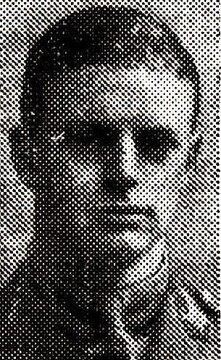
Born in Birmingham, England, Arthur Herbert Scrivener arrived in Australia with his mother and younger brother in 1908 after his father Arthur Read Scrivener (1872-1935) came to Australia the previous year to manage the Sydney operations of wholesale agents Wilkinson, Beale, and Tindley Pty Ltd.
An old boy of Sydney Grammar School, he enlisted in August 1914 and left Sydney with a machine-gun section of the 2nd Battalion AIF in HMAT A23 Suffolk on 18 October 1914. While training in Egypt he was discharged from the AIF after receiving an offer of a commission in the British Army with the 6th Yorkshire Regiment, 11th (Northern) Division, as part of Kitchener's New Army.
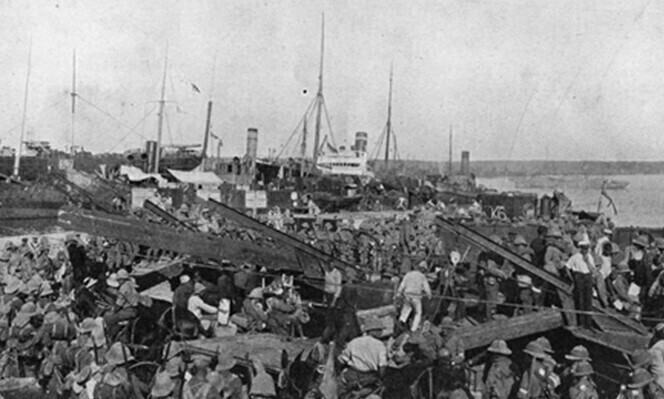
Following further training in England the Regiment was ordered to proceed to Gallipoli. The campaign in Gallipoli had struggled since the initial amphibious landings in April 1915. Reinforcements for a planned second major attack were required and the only troops that were available were the untried Kitchener Divisions.
On the night of 6 August 1915 (as part of the ill-fated August Offensive), men from the 11th (Northern) Division found themselves approaching the hostile shore at Suvla Bay. All was not well. They were very tired – vigorous training in baking temperatures had been undertaken that morning; many were suffering serious reactions from injections, and they had only learned that they were going into action that afternoon. Maps were handed out – far too late – and no worthwhile training in night operations had taken place.
Amongst the troops heading towards the inky black shore were men from the 6th Battalion Yorkshire Regiment and the 9th Battalion West Yorkshire Regiment. Crowded together in rudimentary landing craft, they were the first of Kitchener’s New Army to go into action.
These two battalions had been ordered to secure the strategically important hill known as Lala Baba.
The landing was not opposed, but the assault on Lala Baba most certainly was. The Turkish defenders, although few in number, were able to inflict heavy casualties amongst the inexperienced Yorkshiremen. The junior officers, leading from the front, took disproportionately heavy casualties. Fatalities amounted to six officers and 25 ‘other ranks’ in the 9th West Yorks, and eleven officers and 56 ‘other ranks’ in the 6th Yorkshires - all but three of its officers were killed, including the battalion's commanding officer.
The Turks were driven off Lala Baba, but little else went according to plan as the command structure fell apart. Afterwards the hill was known to the Allies as York Hill.
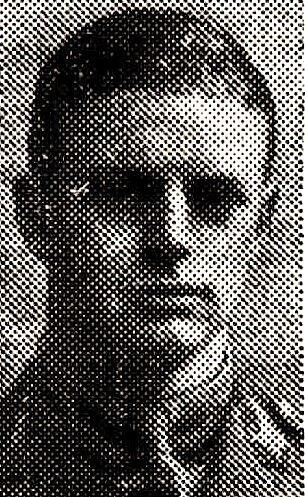
Second Lieutenant Arthur Scrivener was wounded in the knee, and subsequently lost his left leg. Though seriously wounded he remained with his men until evacuated.
On recovering, he was appointed musketry instructor at the Hythe (England) School of Musketry. He was afterwards transferred to Hayling Island, a vital military training hub off the south of England.
In early 1918 he received his captaincy, and was appointed A.D.C. to Lord Pentland, Governor of Madras, India. On 25 April 1921 he married an English nursing sister, Dorothy Lilian Noske Jeanes (1893-1984) in Karachi, India.
Scrivener subsequently continued his military career with the Indian Army, rising through the ranks to Lieutenant Colonel.
Lieutenant Colonel Arthur Herbert Scrivener died in Bengal, India in 1942.
References:
http://nla.gov.au/nla.news-article263617213
https://www.westernfrontassociation.com/world-war-i-articles/2020/august/the-yorkshire-landings-at-suvla/
https://en.wikipedia.org/wiki/11th_(Northern)_Division
Click images to start slideshow.