







GILLIGAN, Francis Abraham
| Service Number: | 1494 |
|---|---|
| Enlisted: | 24 December 1914, Lismore, New South Wales |
| Last Rank: | Private |
| Last Unit: | 15th Infantry Battalion |
| Born: | Cullendulla, Batemans Bay, New South Wales, Australia, 14 December 1889 |
| Home Town: | Lismore, Lismore Municipality, New South Wales |
| Schooling: | Public School, New South Wales, Australia |
| Occupation: | Labourer |
| Died: | Illness, Brisbane General Hospital, Queensland, Australia, 1 August 1943, aged 53 years |
| Cemetery: |
Lutwyche Cemetery, Brisbane, Qld Anzac Portion 7, Lutwyche Cemetery, Brisbane. |
| Memorials: | Nowra Shoalhaven Soldiers Memorial Gates |
World War 1 Service
| 24 Dec 1914: | Enlisted AIF WW1, Lismore, New South Wales | |
|---|---|---|
| 13 Feb 1915: | Involvement Private, 1494, 15th Infantry Battalion, --- :embarkation_roll: roll_number: '11' embarkation_place: Brisbane embarkation_ship: HMAT Seang Choon embarkation_ship_number: A49 public_note: '' | |
| 13 Feb 1915: | Embarked Private, 1494, 15th Infantry Battalion, HMAT Seang Choon, Brisbane | |
| 25 Apr 1915: | Involvement AIF WW1, Private, 1494, 15th Infantry Battalion, ANZAC / Gallipoli | |
| 10 Jun 1916: | Embarked AIF WW1, Private, 1494, 15th Infantry Battalion, RTA from Suez per HT Itonus | |
| 9 Aug 1916: | Discharged AIF WW1, Private, 1494, 15th Infantry Battalion, Medically Unfit |
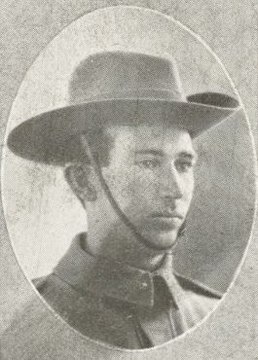
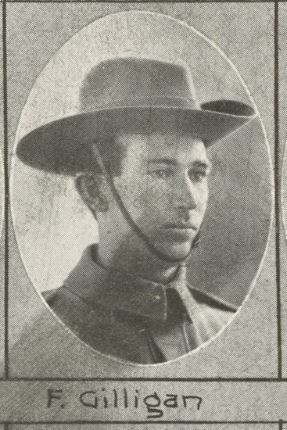
Francis Abraham Gilligan - My Grandfather
Francis Abraham Gilligan was born on the South Coast of NSW.
He was 24 when he enlisted in Lismore NSW with his Brother John on 24th December 1914.
He sailed from Brisbane on the Seang Choon.
His Brother John was killed in Villier Bretonneaux.
Francis stayed on in different WW1 postings until his return due to ill health in 1917. Francis married Agnes Ellen Schneider in Casino in 1918, they had four children John, Gladys, James and Lorraine (Mary), then separated and divorced due to his health issues following great personal damage from this war.
It took me years to find Dad's Father for him and only by coincidence, visiting an old cousin in Casino did we see that he had died in Brisbane in 1943 aged 53.
I purchased his death certificate and sadly noted that his family did not note his children on his death certificate.
Also he is buried under grass with no plaque in the Anzac area of Lutwyche Cemetery in Brisbane. I have laid flowers at this site (from cemetery records).
I do not understand why a veteran of so much great commitment to the war effort, who also suffered the death of his Brother, was not given the dignity of a plaque.
I am in the process of having my Grandfather, who I did not know acknowledged as the committed, hard working Australian citizen and Service Man that he was.
Amanda Gilligan
Submitted 16 March 2016 by Amanda Gilligan
Biography contributed by Evan Evans
From Australian Remembrance Army
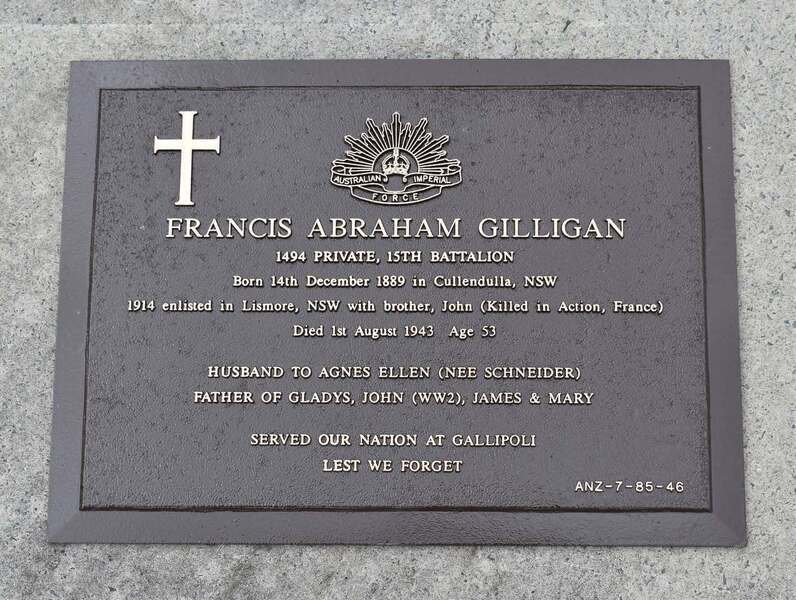
Private Francis Abraham Gilligan (Service No. 1494), an Australian World War One veteran who served our nation at Gallipoli, is among almost 800 previously unmarked WWI veterans’ graves in Lutwyche Cemetery we have now marked with a plaque in recognition of their service for Australia.
We unveiled his plaque (which was worded by descendants) in Lutwyche Cemetery on 15 April 2023, along with a further 246 plaques on the previously unmarked graves of Australian World War One veterans:
See Australian Remembrance Army Facebook page
Francis Abraham Gilligan was born on 14 December 1889 at Cullendulla, on the South Coast of New South Wales, the son of John Gilligan and Frances Gilligan (née Keeling). He worked as a labourer prior to the First World War and, at the age of 24, enlisted in the Australian Imperial Force at Lismore, New South Wales, on 24 December 1914. He embarked from Brisbane on 13 February 1915 aboard HMAT Seang Choon for overseas service. His brother John Gilligan (Service Number 1493), who enlisted alongside him at Lismore, also served with the 15th Battalion and was killed in action in France in February 1917.
Gilligan served in the Middle East and took part in the Gallipoli campaign, though his active service was repeatedly interrupted by illness. From June 1915 he was frequently admitted to hospital suffering from neurasthenia and tachycardia, followed by recurring attacks of rheumatism. His service records document a succession of transfers between medical facilities at Gallipoli, Mudros, Malta and England, reflecting prolonged periods of ill health. Despite these setbacks, he rejoined his battalion whenever possible and continued to serve when his condition allowed.
Toward the end of 1915 and into 1916, his health further declined. He was hospitalised with influenza and later diagnosed with pleurisy, bronchitis and ongoing rheumatism. While serving in Egypt he experienced repeated relapses, and his condition was increasingly described as chronic bronchitis and asthma. These illnesses rendered him unfit for further active service, and he was formally marked to be invalided to Australia. In mid-1916 he returned aboard the hospital transport Itonus and was medically discharged from the Australian Imperial Force in September 1916 as permanently unfit.
The death of his brother John in France in early 1917 brought the war’s cost home with particular force. Contemporary newspaper reports noted that while Francis had returned from service broken in health, the family was soon faced with the greater blow of losing John, who had continued to serve until he was killed in action. The sacrifice of the Gilligan brothers reflected the burden carried by many families who gave multiple sons to the war, with consequences that endured long after the fighting ended.
Following his return to civilian life, Francis married Agnes Ellen Schneider in Casino, New South Wales, in 1918. The couple had four children: John, Gladys, James and Lorraine (Mary). Despite ongoing health issues arising from his war service, Gilligan returned to manual labour to support his family.
In March 1930, while working as a labourer at Berry in the Shoalhaven region of the New South Wales South Coast, Gilligan suffered a catastrophic industrial accident. As he was driving a steel wedge into timber, a fragment of steel flew off and severed an artery in his thigh. The injury proved so severe that his left leg was later amputated, bringing his working life to an abrupt end. The matter was heard before the Workers’ Compensation Commission, which ruled that despite subcontracting arrangements, the principal contractor was legally responsible. Gilligan was awarded weekly compensation and medical expenses, providing limited financial security following the life-altering injury.
By 1936, Francis and Agnes had divorced. In 1943 he was recorded as living at Tweed Heads, New South Wales, his later years shaped by the combined legacy of war service, chronic illness and industrial injury.
Private Francis Abraham Gilligan died on 1 August 1943, aged 53, and was buried in Anzac Portion 7, Lutwyche Cemetery, Brisbane.
After decades without recognition at his place of burial, his grave now bears a plaque commemorating his service to Australia — ensuring his name endures among those remembered for their duty and sacrifice. His identity and dignity have now been restored.
We have remembered him.
Lest We Forget.
Click images to start slideshow.