








S15542
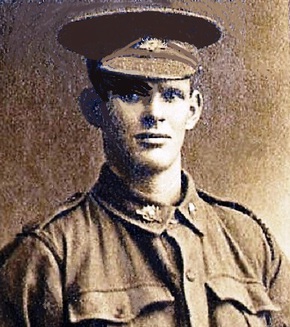
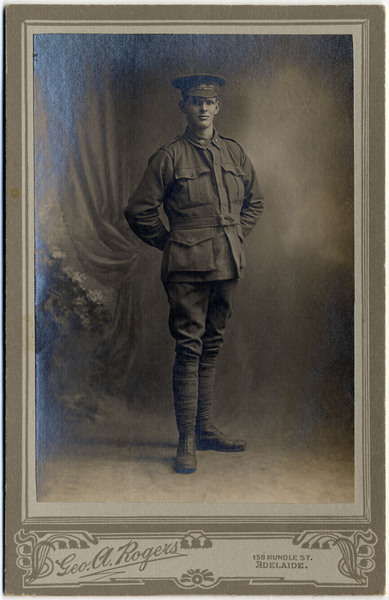
CASTLE, George William
| Service Number: | 3525 |
|---|---|
| Enlisted: | 1 April 1916, Adelaide, South Australia |
| Last Rank: | Private |
| Last Unit: | 32nd Infantry Battalion |
| Born: | Blanchetown, South Australia, 12 March 1896 |
| Home Town: | Blanchetown, Mid Murray, South Australia |
| Schooling: | Blanchetown Public School, South Australia |
| Occupation: | Farmer |
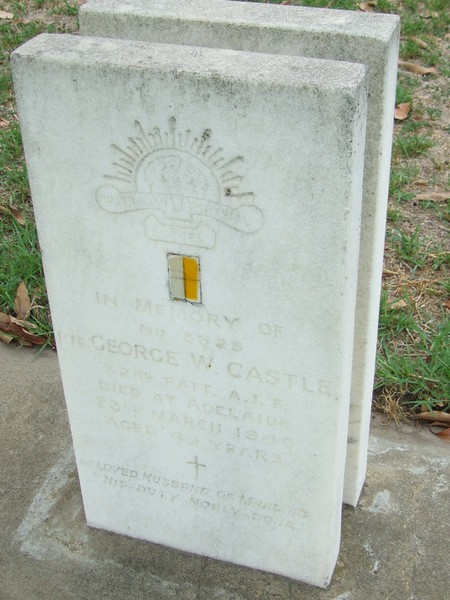
| Died: | North Adelaide, South Australia, 23 March 1945, aged 49 years, cause of death not yet discovered |
| Cemetery: |
West Terrace Cemetery (AIF Section) Kendrew Oval, Row 14, Site No: 12 Lease expires 31/12/2032 |
| Memorials: | Adelaide Scots Church WW1 Honour Board, Blanchetown & District WW1 Memorial |
World War 1 Service
| 1 Apr 1916: | Enlisted AIF WW1, Adelaide, South Australia | |
|---|---|---|
| 12 Aug 1916: | Involvement AIF WW1, Private, 3525, 32nd Infantry Battalion, --- :embarkation_roll: roll_number: '17' embarkation_place: Adelaide embarkation_ship: HMAT Ballarat embarkation_ship_number: A70 public_note: '' | |
| 12 Aug 1916: | Embarked AIF WW1, Private, 3525, 32nd Infantry Battalion, HMAT Ballarat, Adelaide | |
| 5 Jul 1918: | Wounded AIF WW1, Private, 3525, 32nd Infantry Battalion, Soldier wounded in action in France,` gunshot wound to right shoulder. Wound so severe, soldier repatriated to U.K for hospitalisation. | |
| 6 Apr 1919: | Discharged AIF WW1, Private, 3525, 32nd Infantry Battalion, Due to the severity of the gunshot wound to his right shoulder Private Castle was classified as medically unfit to continue to serve. He returned to Australia on Troop Ship SS Suevic and disembarked in 3 M.D Victoria on 5 Jan 1919. Private Castle was discharged at HQ 4 M.D in South Australia on 6 April 1919 having completed 2years 341 days of service to his country. | |
| 6 Apr 1919: | Discharged AIF WW1 | |
| Date unknown: | Involvement 32nd Infantry Battalion, Fromelles (Fleurbaix) | |
| Date unknown: | Wounded 3525, 32nd Infantry Battalion |
Help us honour George William Castle's service by contributing information, stories, and images so that they can be preserved for future generations.
Add my storyBiography
32 Battalion
Rank - Private
5 July 1918 wounded in action - gunshot wound right shoulder - invalided out
Returned to Australia 20 November 1918
Medals: British War Medal, Victory Medal
Son of Walter William and Angelina Caslte of Blanchetown South Australia. Brother 3526 Pte Leslie Gordon CASTLE, 32nd Bn, killed in action, 20 June 1918
7 June 1924 married Margaret Lois Martin in the Chalmers Church Adelaide Book/Page 299/849
Biography contributed by Adelaide Botanic High School
George William Castle (1896 - 1945), was born on the 12th of March, 1896 in Blanchetown, Mid Murray, South Australia. He was the son of Walter William Castle and Angelina Knight and was a believer of the methodist church. He had 7 siblings and 3 half siblings.
In his childhood, he attended Blanchetown Primary School and in later years acquired the occupation of a Farmer. He had auburn coloured hair and hazel eyes.
In Adelaide, on the 1st April 1916, Castle enlisted for World War One. He was placed into the 5th division, 32nd Battalion, 8th Infantry. On the 12th of August, Castle embarked on the HMAT Ballarat (A70) for Plymouth, Britian. The HMAT Ballarat arrived on the 30th of September. His brother Leslie Gordon also served in WW1 and was killed in action in June 1918.
Upon Castle's arrival, he was placed into the Hurdcott Training Camp for the 8th and 47th Battalion, as the 32nd Battalion had already joined the field. On the 12th of November, while Castle was in the camp, he fell ill, and was admitted to hospital in Larkhill, near Stonehenge.
In the morning of the 30th of December 1916, Castle embarked on the Princess Clementine, which ferried to Étaples, France. Upon his arrival on the 13th of January 1917, he was placed into segregation camp (it is not stated but might be due to mumps) and was discharged on 2nd February to the 5th Australian Divisional Base Depot. He was taken on strength with the 32 Battalion 11th February 1917. The battalion was currently enaged with the battle of the Hindenburg Line. This entailed the German withdrawal to a new defensive line.
On the 3rd of May 1917, it was likely that Castle joined the Second Battle of Bullecourt, with the 32nd Battalion. The battle was a ploy to break the Hindenburg Line's heavy defence. After 2 weeks, the Australian Infinitary suffered 7,000 casualties, but made an advancement of one kilometre.
After, Castle probably joined Battle of Polygon Wood in Zonnebeke, Belgium, which began on the 26th on September 1917. The battle was planned by Herbert Plumer and was designed to create a small, controlled advance. This battle was largely successful, as it was aided with a heavy artillery.
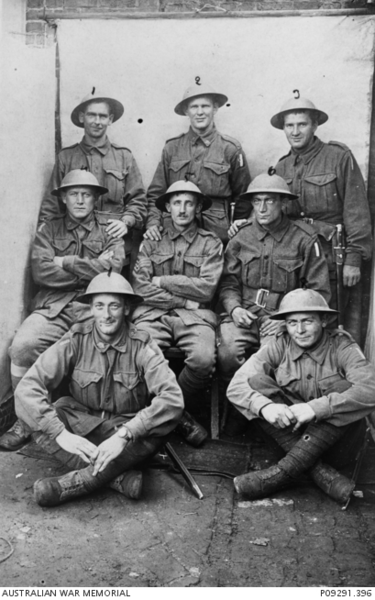
Castle remained with this battalion until the 20th of January 1918, where he took leave to England. On the 6th of February, 1918, Castle returned to the 32nd Battalion in the field. Until April the battalion remained in reserve. In April, the 32nd Battalion took a defensive position near Corbie as a part of the battle of Somme. They also took part in some minor advances near the Bray-Corbie road.
On the 25th of June 1918, Castle was positioned on the front line trenches of Rivery, Amiens, France. The unit diaries stated "Enemy at K19a.12.12 retired without fighting, result 3 prisoners and 1 machine gun captured. […] Our casualties: 2 wounded (including Lieut. C. Emerson, wounded in arm and shoulder, not serious)." Castle was one of these casualties, sustaining a wound the right arm and gas poisoning. On the 26th, he was admitted to the 4th field ambulance, for his injuries. Following this he was transferred to 2nd General Hospital on the 28th. After, on the 29th, Castle was transferred to the 47th Casualty Clearing Station.
On the 4th of July 1918, Castle was transferred to England, via the Guildford Castle, a hospital ship. On the following day, he was invalided from service in France, as he was declared unfit. This suggests that his injury was severe. Upon his arrival, he was admitted to St Andrew's Hospital, in Dollis Hill. Following, on the 6th, Castle was transferred to the Royal Victoria Hospital, in Netley. On the 11th of October 1918, he was transferred to the 3rd Auxiliary Hospital, in Dartford.
Due to his injuries on the 20th of November 1918, Castle returned to Australia on the ship Suevic and disembarked in Adelaide at the beginning of January. He was formally discharged from the AIF 6th April 1919.
On the 7th of June 1924, Castle married Margret Lois Martin, under the Chalmers Church. They went on to have, two children Berkley St Clair (1925-1957) and Ross (1929-1996). During the 1930's the family lived in Western Australia before returning to Adelaide. On 23rd of March 1945, Castle died suddenly at his residence of 191 Melbourne Street, North Adelaide. His wife Margaret lived until 1985.
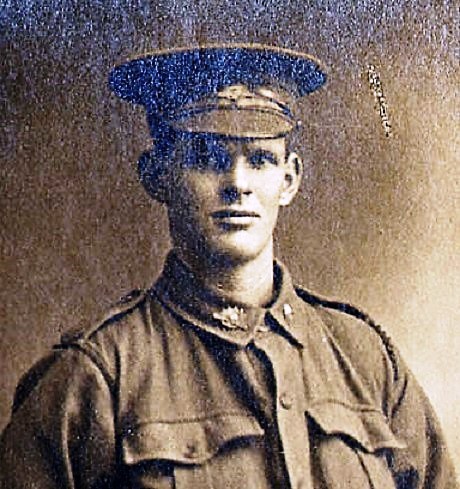
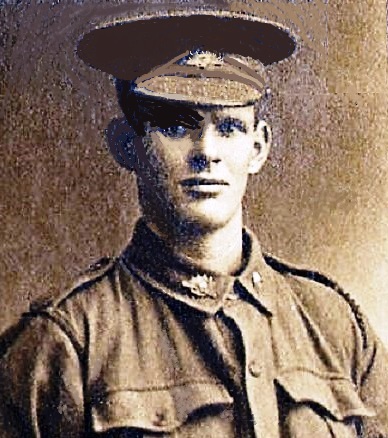
Click images to start slideshow.