







TUBMAN, Oliver Garnet Patrick
| Service Number: | 18578 |
|---|---|
| Enlisted: | 9 November 1915 |
| Last Rank: | Warrant Officer Class 2 |
| Last Unit: | Australian Army Medical Corps WW1 |
| Born: | Dunedin, New Zealand, January 1883 |
| Home Town: | St Kilda, Port Phillip, Victoria |
| Schooling: | Not yet discovered |
| Occupation: | Chemist |
| Died: | Lobar pneumonia and bronchiectasis, St Martin’s Hospital, Brisbane, Queensland, Australia, 12 December 1938 |
| Cemetery: |
Lutwyche Cemetery, Brisbane, Qld Monumental Church of England Portion 3, Lutwyche Cemetery, Brisbane. |
| Memorials: |
World War 1 Service
| 9 Nov 1915: | Enlisted AIF WW1, Staff Sergeant, 18578, Staff Sergeant Dispensers | |
|---|---|---|
| 29 Aug 1917: | Involvement 18578, Staff Sergeant Dispensers, --- :embarkation_roll: roll_number: '24' embarkation_place: Melbourne embarkation_ship: HMAT Persic embarkation_ship_number: A34 public_note: '' | |
| 29 Aug 1917: | Embarked 18578, Staff Sergeant Dispensers, HMAT Persic, Melbourne | |
| 3 Jul 1919: | Discharged AIF WW1, Warrant Officer Class 2, 18578, Australian Army Medical Corps WW1, 3rd MD |
Help us honour Oliver Garnet Patrick Tubman's service by contributing information, stories, and images so that they can be preserved for future generations.
Add my storyBiography contributed by Evan Evans
From Australian Remembrance Army
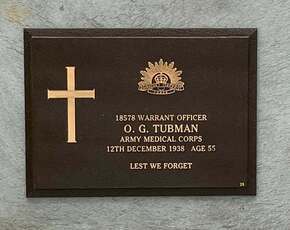
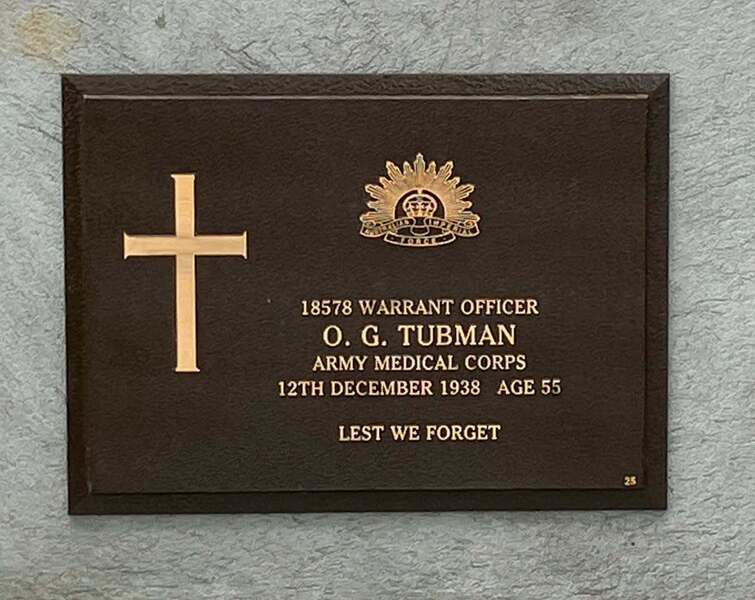
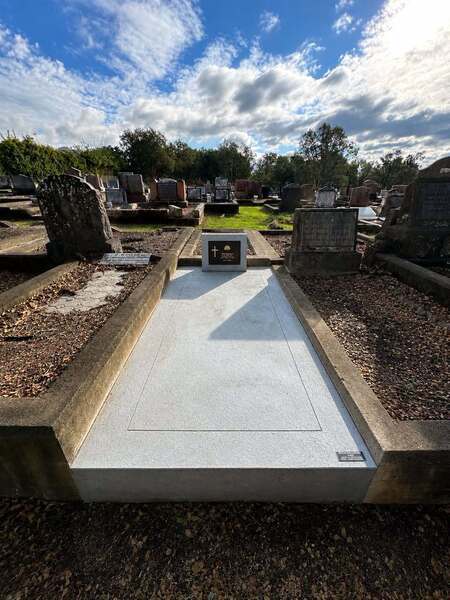
Australian First World War veteran Warrant Officer Oliver Garnet “Paddy” Tubman, Service No. 18578, is one of the previously unmarked WWI veterans buried at Lutwyche Cemetery who has now been accepted for official commemoration by the Office of Australian War Graves.
We unveiled his plaque in Lutwyche Cemetery on 16 May 2026, along with a further 185 plaques on the previously unmarked graves of Australian World War One veterans:
See Australian Remembrance Army Facebook page
OAWG Official Commemoration: https://connect.dva.gov.au/.../viewCommemoration.html...
Oliver Tubman was born in Dunedin, New Zealand, in 1883, the son of Francis Tubman and Sarah Tubman, née Dick. His birth was registered in New Zealand as Oliver Grant Tubman, registration number 1883/16991.
In later Australian records, however, he appears as Oliver Garnet Patrick Tubman. His place of birth is also recorded inconsistently: while his New Zealand birth registration and death certificate identify Dunedin as his birthplace, his First World War enlistment papers record Belfast, Ireland, and his marriage registration records Dublin, Ireland.
Despite these variations in name and birthplace, the records can be linked through his parents, Francis Tubman and Sarah Dick, confirming that they refer to the same man later known as Oliver Garnet “Paddy” Tubman.
By occupation, Oliver was a pharmaceutical chemist. In 1910, he married Rose Gladys Head in Sydney, New South Wales.
Oliver enlisted in the Australian Imperial Force at Melbourne on 9 November 1915. He named his wife, Rose, then living at St Kilda, Melbourne, as his next of kin. His civilian occupation as a chemist made him well suited to service with the Australian Army Medical Corps, where he served as a dispenser.
On 29 August 1917, Oliver embarked from Melbourne aboard HMAT Persic as a Staff Sergeant Dispenser. He served with the Australian Army Medical Corps and later held the rank of Warrant Officer.
During the First World War, Australian medical personnel served not only in Europe and the Middle East, but also in India, where military hospitals received and treated troops moving through the imperial medical system. Oliver’s casualty forms show that after embarking from Melbourne, he travelled via Durban and Bombay before serving in India, including at Deolali and Calcutta. As a chemist and Australian Army Medical Corps dispenser, he was attached to hospital work connected with facilities such as the 34th Welsh General Hospital at Deolali and the Presidency General Hospital in Calcutta.
While serving overseas, Oliver’s records later noted illness, including rheumatism and lumbago. He was returned to Australia from Bombay aboard S.S. Themistocles in January 1919 and was discharged on 3 July 1919.
In 1924, Oliver and Rose were living in South Melbourne, where Oliver was working as a chemist. Between 1925 and 1928, they were living in Brisbane, where Oliver was recorded as working as a commercial traveller. By 1931, Oliver was living at Goondiwindi and had returned to work as a chemist. Between 1934 and 1936, he was recorded at Annerley, Brisbane, still working as a chemist.
Oliver’s health became a continuing concern. His records include references to rheumatism, and later repatriation documents show that he sought assistance for neurasthenia with effort syndrome, a wartime diagnosis associated with nervous and physical exhaustion. The condition combined symptoms of profound fatigue, anxiety and poor concentration with exertion-related complaints such as rapid heartbeat, chest pain and shortness of breath, despite no clear underlying heart disease.
In 1935, while living at York House, Melbourne Street, South Brisbane, an appeal was lodged on his behalf by the R.S.S.I.L.A. after the condition was not accepted as attributable to his war service. The Repatriation Commission considered the matter but rejected the application, determining that the condition was not due to war service.
Oliver died at St Martin’s Hospital, Brisbane, on 12 December 1938, aged 55, and was buried the following day in Monumental Church of England Portion 3, Lutwyche Cemetery, Brisbane. His death certificate records his cause of death as lobar pneumonia and bronchiectasis. His wife, Rose, was the informant on his death certificate, giving her address as Hotel Queensland, Brisbane.
In 2024, 86 years after his death, we received notification that our application had been accepted for War Graves purposes. Oliver’s grave is now formally recognised, ensuring that his service with the Australian Imperial Force is permanently commemorated and that his grave will be maintained in perpetuity by the Office of Australian War Graves.
His identity and dignity have now been restored.
Lest We Forget
Notes from Australian Remembrance Army
Over the past six years we have submitted the service records and causes of death of hundreds of veterans to the Office of Australian War Graves for assessment for official commemoration. To date, more than 100 of these veterans interred at Lutwyche Cemetery have been accepted as Official Commemorations, and their graves are now being formally marked and will be maintained in perpetuity by the Office of Australian War Graves.
Click images to start slideshow.