







BACKHOUSE, John Richard
| Service Number: | 429903 |
|---|---|
| Enlisted: | 10 October 1942 |
| Last Rank: | Warrant Officer |
| Last Unit: | Aircrew Holding Units |
| Born: | Prospect, South Australia, 27 April 1924 |
| Home Town: | Prospect (SA), Prospect, South Australia |
| Schooling: | Not yet discovered |
| Occupation: | Compositor The Advertiser Newspapers |
| Died: | Adelaide, South Australia, 16 February 1981, aged 56 years, cause of death not yet discovered |
| Cemetery: | Not yet discovered |
| Memorials: | South Australian Garden of Remembrance |
World War 2 Service
| 10 Oct 1942: | Involvement Warrant Officer, 429903 | |
|---|---|---|
| 10 Oct 1942: | Enlisted Royal Australian Air Force, Warrant Officer, 429903 | |
| 10 Oct 1942: | Enlisted Adelaide | |
| 30 Jan 1943: | Promoted Royal Australian Air Force, Leading Aircraftman | |
| 9 Dec 1943: | Promoted Royal Australian Air Force, Sergeant | |
| 9 Aug 1944: | Promoted Royal Australian Air Force, Flight Sergeant | |
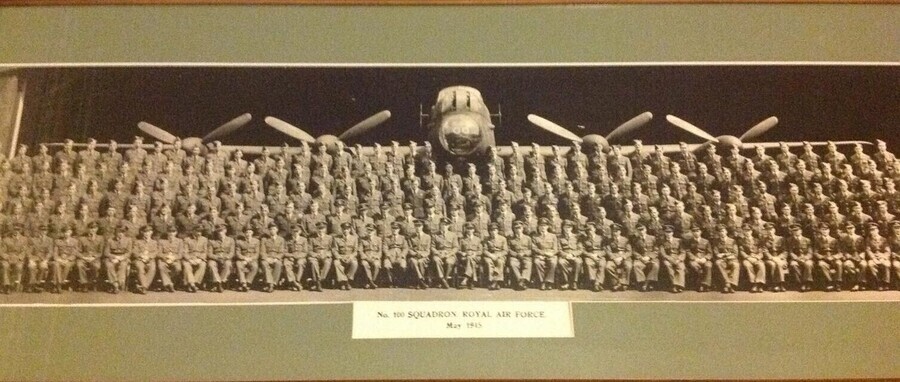
| 13 May 1945: | Transferred Royal Australian Air Force, Warrant Officer, No. 100 Squadron (RAAF) | |
| 9 Aug 1945: | Promoted Royal Australian Air Force, Warrant Officer | |
| 5 Dec 1945: | Discharged Royal Australian Air Force, Warrant Officer, 429903, Aircrew Holding Units | |
| 5 Dec 1945: | Discharged |
John Richard Backhouse – “The Beautiful Airman”
John Richard Backhouse served Australia through the Royal Australian Air Force during the Second World War, joining the many young Australians who stepped forward in defence of freedom during one of history’s darkest chapters.
Backhouse’s service took him to England, where Australian airmen trained and served alongside personnel from across the Commonwealth and Allied nations. For many, Britain was both a place of opportunity and hardship — the centre of the air war, marked by long hours, strict discipline, blackout nights and constant operational pressure.
During his training, Backhouse earned a memorable nickname from his fellow crew members: “The Beautiful Airman.” Like many wartime nicknames, it reflected the camaraderie and humour that helped servicemen endure the stresses of military life. Whether inspired by his appearance, polished uniform, confidence, or simply the affectionate banter of mates, the name suggests he was well-liked and memorable among those who served beside him. (Personal Diary , 1940-45)
Such nicknames mattered. In the close confines of training schools, barracks and air stations, friendships were forged quickly and often deeply. Humour became a shield against fear, homesickness and uncertainty. That Backhouse carried this nickname speaks to the regard in which he was held by his peers.
As with many RAAF personnel posted overseas, Backhouse’s journey likely included several stages of preparation and movement:
-Initial Training School (Australia) – military induction, drill, discipline and basic air force training.
-Embarkation Depot – preparation for overseas service.
-Sea Voyage to Britain – often lengthy and dangerous in wartime convoy conditions.
-Reception Centre in England – allocation to training or operational units.
-Advanced Training Schools / RAF Stations – specialist training depending on mustering or aircrew role.
-Operational or Support Posting in England – contributing to the Allied air campaign. (NAA, 2025)
Many Australians passed through major wartime centres such as Brighton, Bournemouth and numerous RAF stations across Lincolnshire, Yorkshire and southern England. (VWMA, 2026)
Backhouse rose to the rank of Warrant Officer, a senior and respected rank that reflected leadership, competence and trust. Men who attained this level were often relied upon to steady younger servicemen and maintain standards during demanding times. (NAA, 2025)
Yet his wartime story also carried hardship. While serving, he contracted tuberculosis (TB), a serious illness in the pre-antibiotic era. For many veterans, sacrifice did not always come through combat wounds. Illness acquired during service could shape the remainder of life long after the war had ended. (NAA, 2026)
John Richard Backhouse’s story is one of duty, humour, mateship and resilience. He served far from home, earned the respect of his crew, and carried himself in a way that left a lasting impression.
Today, we remember John Richard Backhouse — “The Beautiful Airman” — not only for his rank or service record, but for the human qualities that made him unforgettable to those who knew him.
Submitted 29 April 2026 by Adam Luscombe



Click images to start slideshow.