


HUNT, John Alexander Richard
| Service Number: | 407364 |
|---|---|
| Enlisted: | 14 September 1940 |
| Last Rank: | Flight Sergeant |
| Last Unit: | No. 55 Squadron (RAF) |
| Born: | Mount Barker, South Australia, Australia , 23 April 1915 |
| Home Town: | Mount Barker, Adelaide Hills, South Australia |
| Schooling: | Mount Barker High School, South Australia |
| Occupation: | Livestock Dealer and farm labourer |
| Died: | Flying Battle, Middle East, 2 April 1943, aged 27 years |
| Cemetery: |
Sfax War Cemetery, Tunisia |
| Memorials: | Adelaide WW2 Wall of Remembrance, Australian War Memorial Roll of Honour, Mount Barker War Memorial |
World War 2 Service
| 14 Sep 1940: | Enlisted Royal Australian Air Force, Flight Sergeant, 407364 | |
|---|---|---|
| 14 Sep 1940: | Involvement Flight Sergeant, 407364 | |
| 14 Sep 1940: | Enlisted Adelaide | |
| 16 Jun 1941: | Embarked Royal Air Force , Embarked from Sydney for the Middle east | |
| 3 Oct 1941: | Promoted Royal Air Force , Flight Sergeant, Promoted to Flight Sargeant | |
| 11 Feb 1942: | Transferred No. 14 Squadron (RAF), Joined the 14 Squadron and shortly afterward went missing in the desert for 10 days | |
| 27 May 1942: | Transferred No. 55 Squadron (RAF), The trio joined the 55 Squadron | |
| Date unknown: | Involvement |
Help us honour John Alexander Richard Hunt's service by contributing information, stories, and images so that they can be preserved for future generations.
Add my storyBiography contributed by Clare Dorey
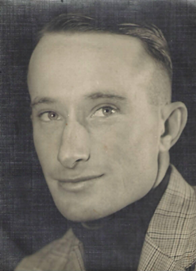
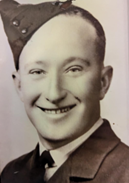
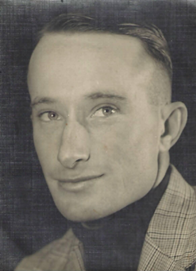
John Hunt was born, raised and educated in Mount Barker. He became a Flight Sergeant and served as a Wireless Air Gunner. He survived a few near misses and a ten-day desert trek in 1942, but died after being shot down in North Africa.
John was born on 23 April 1915, just days before the dawn landing at Gallipoli. His parents were Earl Alexander Hunt and Emily May Fiddock (who are buried in Mount Barker Cemetery.) They married in 1913, had a daughter Earl May Molly and a younger son Douglas Alfred Sydney.
John attended Mount Barker’s Public and High Schools. He achieved his Qualifying certificate in 1928, passing all his subjects and gaining a first class pass in Arithmetic. When he first left school he became a farm labourer and later worked as a livestock dealer. At 5’’9” he also rode horses, enjoyed shotgun sports and served as an instructor of the Mount Barker Boys' Gymnasium Club. John attended several parties that were reported in the newspaper. In 1929 he and his brother attended Tickie Whibley’s 21st, with her brother Gavin. In 1935 his sister Molly had her own coming of age party at the Littlehampton Institute. She dressed in a smart green and white check taffeta to receive over a hundred guests, including Bruce Paech and Gavin Whibley, as well as Jack Monk’s sister Mollie, who John later dated. The evening was hosted by Keith Stevenson and featured dancing, music and conjurer tricks. During the speeches their father announced Molly’s engagement to Dudley Adams. (They had a son, Terry, on 7 April 1939 at Unley Private Hospital, and later a daughter Val.)
In November 1937 John was involved in a car accident when he swerved to avoid a cow at the junction of Mount Barker and Mt Lofty Summit roads. He struck a guard post; one mudguard was damaged and another torn off. He clearly didn’t fix his car promptly, as months later, in February 1938, he was charged with a traffic offense. A faulty rear number plate cost him 15 shillings with another 10 shillings in costs. Interestingly he omits this conviction when enlisting for the RAAF Reserves on 1 April 1940 in Adelaide but later includes it on his enlistment form for the RAAF Citizen Air Force on 14 September.
John completed the Initial Training School at Somers Victoria in September and then his 1WAGS course in Ballarat in October. He had leave for ten days over Christmas. Like many men he went absent without leave for 24 hours - twice - during his training (being fined a day’s pay for the misdemeanours on March 4 and 18.) He attended his 1 BAGS in Evans Head the following April.
May 1941 was an important month for John. He returned to Adelaide and on 6 May he was promoted to Sergeant and started six days of embarkation leave, until May 13. During this time, he got engaged to local nurse Mollie Humble Monks of Littlehampton, whom he had named on his enlistment forms as his next of kin ‘friend’. Their engagement was announced in both the Advertiser and the Chronicle. Shortly after John left Mollie enlisted as a nurse and discovered that her brother Jack had been killed in action in Syria. (See more in the chapters about Jack and Mollie, left.)
After being farewelled with Norman Duffield and Gavin Whibley, John was embarked from Sydney on 16 June 1941. He arrived in Egypt on 31 July at the Middle East Pool (often called the Middle East Puddle as it was poorly run.) On 3 October he was promoted to Flight Sergeant then posted to Kenya a few days later. He disembarked in Mombasa on 7 November, transferring through Nairobi before reaching the RAF base at Gilgil. Here he met navigator Reginald ‘Mick’ Ey, whose post war interviews provide a lot of detail about the adventures they had together (following in italics). During training operations, they were originally crewed with a young pilot Harry. One time Mick witnessed the loss of the leading plane, which blew up after a mid-air collision. Because Johnny, as gunner, was in the turret facing backwards he missed it and Mick only told the pilot afterwards. On the next flight an anxious Harry crashed on landing. Mick described the scene: “I have never seen an aircraft so smashed up … all it was the pilot cockpit with two of us and Johnny in the main spar behind us … we had to get Harry out, his eyes were glazed, his nerves were gone completely … we only had a fortnight’s leave and were on our way again.”
After a few days John and Mick were teamed with another pilot, a RAF squadron leader called Alan Mills. He was a champion athlete from Perth who had joined up in 1930 and served in England, India and the Near East before being posted to Rhodesia, where he met and married a Rhodesian girl from Gwelo. At first, they were nervous to fly with him until he assured them that he had around 1500 hours flying time. Mick explained “I looked at Johnny and said, “Is that enough, Johnny?” and he said, “That’ll do for me.” I turned to this squadron leader and said, “Right, you’ve got yourself a crew.” They continued training and right near the end of the course Millsy approached John and Mick yarning in the mess and suggested some night flying. “Johnny and I, we looked and conferred with our eyes and said, “Yes we’ll be in that.” However, on the take off the starboard tyre suddenly blew, the plane spun and they were completely enveloped by flame. As John was the rear gunner, he was able to get out through the back hatch quickly but the other two only just made it. Johnny said, “Two,” and I said, “We’re pushing our luck, I don’t think we are meant for this world.” We hadn’t even started operations…. Five days later they finished the course and because their flight back to Cairo was delayed, they were given a few days off. They lived like lords in a motel, and the owners even refused to let them pay the bill, because of what they’d already given up in serving.
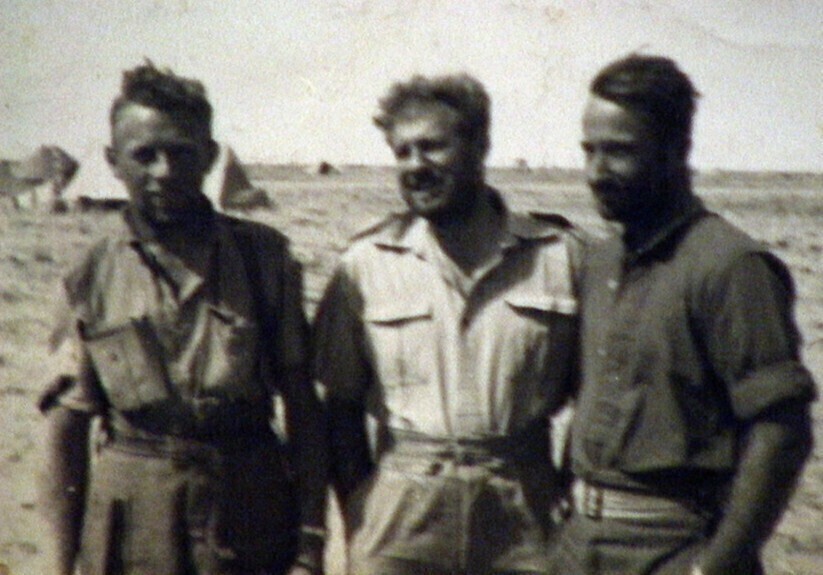
John, Mick and Millsy left for Cairo, transiting through Almaza and being posted to 14 Squadron on 11 February 1942. They spent nine days learning about desert life and squadron requirements and on 16 March the trio took off on their first operation. They flew in a Blenheim (below) with eight similar planes flying in formation. Their job was to fly across the Libyan desert and hit a target in Tripoli. As they were heading back Millsy realised that their engine was leaking oil after 500 miles of flying, and they were forced down. Air Force HQ in Melbourne received the report that they were missing presumed dead; however, they became local heroes after they returned to base two weeks later after trekking across the desert. In April newspapers in Adelaide and Sydney reported that Squadron-Leader Alan Mills (Como WA) and Sergeant-Observer Reginald Norman Ey (Toorak Gardens, SA) and Sergeant Air-gunner John Hunt (Mount Barker) were downed by engine trouble after air raid near Benghazi about 200 miles south of Tobruk, behind enemy lines. They made a bumpy, wheels down landing and survived an 11-day trek through hostile territory. Mick provides detail in his lively interviews (below).
John, Mick and Millsy had an incredible adventure together in the Libyan desert. After leaving a message chalked on the fuselage with their names and “We intend to walk - we are all well - have food and water for five days” they set out with just a compass, a water bottle each and first-aid kit from the plane. In fact, the only food they had was some army biscuits and a tin of peaches left in the bottom of the turret, which they ate on the first rainy night. They burrowed into the sand to sleep in the bitter cold but thereafter started walking at night and trying to sleep when the sun first came up for a few hours. There rarely got any real sleep, but one night they burrowed into a hollow full of lucerne and enjoyed the condensation it provided the next morning. They had no head covering and were wearing their fur lined flying boots, which were not made to walk in, so the marches of over 20 miles per day were challenging. By the fifth day they’d run out of water and were suffering blistered feet, cracked lips, chafed legs, swollen groins and sore eyes, blurred from the glare. On the seventh day they found three Bren gun carriers from an Indian regiment, getting some rusty water from the radiator. They also found tins of curry, which looked beautiful, but they couldn’t risk eating such hot food with so little water. They walked through minefields and saw mirages in the desert. They found a Red Cross pickup, complete with a big roll of cotton wool, which they slept on in the truck, and some gentian violet with which they coated their blistered feet. On their tenth day they discovered a German petrol dump and well, called 'Bir-Tengeddar', which contained crystal clear water. While John was gathering camel thorn, three armoured cars headed their way, with their guns trained on them. Thankfully they were British, and the officer remarked, “Sergeant, I believe they are bloody Australians.” They were impressed with their survival - walking 225 km in 11 days - especially as the Germans had been nearby.
Even after their rescue, there were mishaps on the return trip. Their first meal of dehydrated eggs and black tea challenged their stomach. They saw an old Italian plane shot down nearby and drove through the middle of a minefield. When they arrived back at their camp on 29 March the men were jovially welcomed back as bludgers. The trio were sent for medicals and were given a month’s special sick leave in Cairo to recuperate (from April 2–29). After a few days Mick came down with enteric fever. They had relaxing mornings and later headed out into Cairo to enjoy the nightlife. On their return, they were required for night bombing missions, but Millsy’s eyesight had been affected, and he wasn’t cleared for night flying, so they all joined Squadron 55 on 27 May 1942. John promptly had 7 days leave (between 28/5-4/6/42). A report called him a keen and reliable wireless operator and air gunner who was doing well on operations.
The trio went on another four operations together with Squadron 55, and on the sixth hit trouble again. On 2 September the squadron of 18 had been out bombing the Germans around Alamein when they were caught in a barrage. Mick was hit by shrapnel, which tore his right shoe off and damaged his sole, but missed the bones. The pilot broke formation, John called HQ up on the radio and Reg was sent to hospital in Cairo. He needed two months off strength as his wound wouldn’t heal. John and Millsy were split up and Mick then later joined the 454 Squadron (who served in Iraq and India.) John had a further week’s leave in late September and four days in November. All three were inducted into the Late Arrivals Club – an exclusive group of Allied aircrews who crashed behind enemy lines during the Western Desert campaign and took more than 48 hours to walk to safety.
Unfortunately, John’s luck eventually ran out. On 2 April 1943, he was flying in a Baltimore bomber FA276 when it was shot down over Tunisia. He was the Wireless Air Gunner in the leading aircraft of a formation of 18, dispatched to bomb enemy positions nearby Gabes, when it was hit by anti-aircraft fire at 0820. The crew consisted of the pilot Squadron Leader C.L. Wright (RAF), navigator/bomb aimer Pilot Officer M.O.L. Napier and Air Gunner Flight Lieutenant I. White. A photographer watched it get hit and saw it burst into flames, turn over and hit the ground and explode, with no people or parachutes emerging. They were originally classified as missing, with some believed to have escaped, but this changed a few weeks later when the area fell into Allied hands. Marked graves were discovered by members of their squadron near their plane, near El Merguequ 20 miles north-west of Gabes. The scattered graves bore the date, ‘Inglese’ and even John’s name. The bodies were exhumed and positively identified, and all reinterred in adjacent graves at SFAX cemetery in Tunisia.
Mick later bumped into some of his old squadron in Cairo who told him the bad news about Johnny. They filled in details like the fact that the crew was one short and so he had joined them. They got hit in the nose with an 88 millimetre and they never knew what hit them, they just disintegrated. The wreckage was discovered and they were buried nearby, near the coast amongst some palms. Mick was even sent a photograph of Johnny’s grave adding, “So then I was like a lost soul, no crew, no pilot, no squadron, my best mate had gone.”
John was widely mourned (right) by the RAAF, his family and Mollie, whose daughter said her mother never forgot her first love. A list of his personal effects provides some insight into the many adventures John had in the war. Alongside the usual clothes, stationery, toiletries and photographs were a few gems; a zebra skin, an Egyptian cap, a JH engraved cigarette case, a pipe and his Certificate of the Late Arrivals Club. Correspondence between the Italian Legation and the RAAF in 1957 tells how Mario Melano, who had lived in Australia in the 1920s but was later an officer in the Italian Air Force, had discovered their Blenheim plane, saw their names on the fuselage and hoped they survived. He would be glad to write to them, “within the friendly spirit now happily prevailing between our countries.” After the war he shared the story of their crash and desert trek, which then appeared in an Italian book called “The Story of 10,000 Planes” by F Pagliano.
John’s brother Douglas also enlisted in the RAAF in 1942, mainly serving in the UK and returning home to his wife Rachel and son Robert. His sister Molly died in a car accident in 1959 and is buried in Mt Barker cemetery. Her daughter Val wrote to the RAAF in 1972, asking about whether John should also have a ‘gold boot’ awarded amongst his medals, referring to the survival of Hunt, Ey and Mills in 1942. The reply explained that there was no such official award, but she was likely referring to the unofficial badges like the one at left. In 2020 Mick Ey’s grandson, Jason Ey, along with three of his veteran mates commemorated the bravery of Mick, John and Millsy by running 1100km in 11 days across the Nullarbor. Their brief documentary (below) also raised awareness about veteran mental health and suicide and raised money for Legacy WA.
Click images to start slideshow.