








WEBBER, Hurtle Ray
| Service Numbers: | 3332, 3332A |
|---|---|
| Enlisted: | 2 March 1916, at Kadina |
| Last Rank: | Private |
| Last Unit: | 32nd Infantry Battalion |
| Born: | Brinkworth, South Australia, 11 February 1895 |
| Home Town: | Brinkworth, Wakefield, South Australia |
| Schooling: | Brinkworth Public School, South Australia |
| Occupation: | Butcher |
| Died: | Drowning, Near Amiens, France, 8 June 1918, aged 23 years |
| Cemetery: |
St Pierre Cemetery, Amiens, France |
| Memorials: | Australian War Memorial Roll of Honour, The South Australian National War Memorial |
World War 1 Service
| 2 Mar 1916: | Enlisted AIF WW1, Private, 3332, 32nd Infantry Battalion, at Kadina | |
|---|---|---|
| 12 Aug 1916: | Involvement Private, 3332, 32nd Infantry Battalion, --- :embarkation_roll: roll_number: '17' embarkation_place: Adelaide embarkation_ship: HMAT Ballarat embarkation_ship_number: A70 public_note: '' | |
| 12 Aug 1916: | Embarked Private, 3332, 32nd Infantry Battalion, HMAT Ballarat, Adelaide | |
| 8 Jun 1918: | Involvement Private, 3332A, 32nd Infantry Battalion, --- :awm_ww1_roll_of_honour_import: awm_service_number: 3332A awm_unit: 32nd Australian Infantry Battalion awm_rank: Private awm_died_date: 1918-06-08 |
Help us honour Hurtle Ray Webber's service by contributing information, stories, and images so that they can be preserved for future generations.
Add my storyBiography contributed by Adelaide Botanic High School
Webber Hurtle Ray was born in 1895 as the son of George and C. J. Webber in Brinkworth, South Australia. Webber was a Methodist and was single before his enlistment. After finishing his education at Brinkworth Public School, South Australia, he worked as a butcher until his enlistment for the Australian Imperial Force on the 2nd of March, 1916.
He embarked from Adelaide, South Australia as a part of the 32nd Battalion, 8th Reinforcement on the 12th of August, 1916 onboard HMAT A70 Ballarat. Webber fought at the Western Front with the AIF. After this, he accidently drowned at the age of 23 on the 8th of June 1918, when his unit went swimming near Amiens, either in the Somme or in a canal. Webber Hurtle Ray is buried at St Pierre Cemetery, Amiens, France to this current day.
Biography contributed by Evan Evans
From Francois Somme
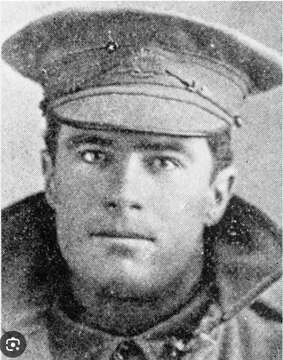
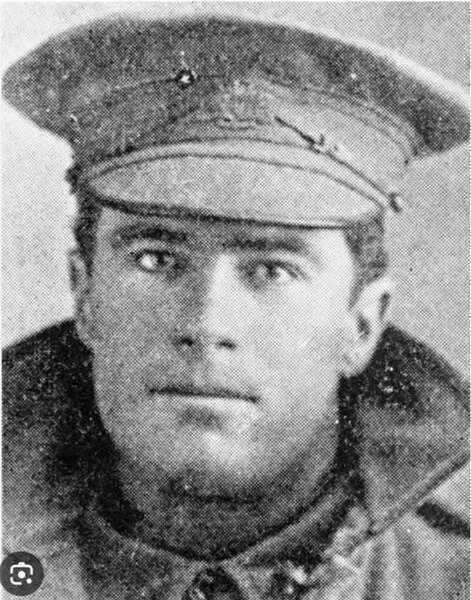
Pte 3332A Hurtle Ray Webber,
32nd Australian Infantry battalion,
A Company, 3rd Platoon,
8th Brigade, 5th Australian Division, AIF
On this day, the fields of the Somme are slowly waking up under the rays of a spring sun whose warmth touches the poppies which, at the beginning of June, are beginning to bloom again. Eternal symbols of remembrance, they are the silent witnesses of the blood that was shed more than a hundred years ago on these sacred grounds by thousands of young men who, far from home, alongside their friends and brothers fought here in the name of peace and freedom.In the trenches, in the mud of northern France, through the barbed wire they sacrificed their youth and gave their all in the name of values that brought them together and that were for them, in the darkness of war, the light that guided them and pushed them forward in courageous charges with bayonets forward but under the bullets, under the poison gas, under the shells and in terrible hand-to-hand combat, so many of them then in the prime of their lives, collapsed in waves next to each other in the strong and eternal bond of brotherhood that bound them and in which they did their duty with bravery and honor so that today we can live.
They were Australians, strong and proud men who thought they were ordinary but who for each of us, did the extraordinary and who, for humanity, for the hope of a better world, paid the supreme sacrifice. For me who lives here, surrounded by these old battlefields still dotted with the scars of shell holes, I do not only see names and service numbers as I walk slowly past the endless rows of white graves, I see the faces of heroes, of young and innocent boys to whom I feel deeply grateful, I see the smiles and outstretched hands of sons, fathers, brothers who still stand by each other. I see the young Diggers, the sons of France who will always be remembered with gratitude and over whom I will always watch with respect and love so that they will never be forgotten, so that in the light and in our hearts they can live forever.
Today, it is with the utmost respect and with the deepest feeling of gratitude that I would like to honor the memory of one of these young men, one of my boys of the Somme who, for Australia and for France, for our tomorrow, gave his life. I would like to pay a very respectful tribute to Private number 3332A Hurtle Ray Webber who fought in the 32nd Australian Infantry battalion, A Company,3rd Platoon, 8th Brigade, 5th Australian Division of the Australian Imperial Force and who died accidentally 108 years ago, on 8th June 1918 at the age of 23 on the Somme front.
Hurtle Ray Webber was born on 17 February 1895 in Brinkworth, South Australia, and was the son of George Webber (1868-1911) and Clara Jane Nottle (née Chapman, 1871-1950) who married on 18 November 1891 in Lochiel, South Australia and then lived in Brinkworth. He had a brother, Gilbert George Webber (1893-1963) and a sister, Ethel Maude Grace Webber (1899-1965). Hurtle was educated at Brinkworth Public School and later had his first military experience serving for 11 months in the 24th Battalion, Australian Light Horse and then worked as a butcher until the outbreak of the war.
Raised in a loving family where love of country was very important, Hurtle answered the call of duty and enlisted on 2 March 1916 at Kadina, South Australia, in the 32nd Australian Infantry Battalion, A Company, 8th Reinforcement. The 32nd was raised at Mitcham, on the outskirts of Adelaide, on 9 August 1915 and was under the command of Lieutenant Colonel Donald Coghill, a citizen soldier without any combat experience who was formerly the Headmaster of Woodville High School. A and B companies were raised from South Australian enlistees, another two, C and D companies, were formed in Western Australia and joined the battalion at the end of September at Cheltenahm Camp.
Hurtle underwent a period of training of just over five months at Blackboy Hill Training Camp where he learned the rudiments of warfare including musketry and bayonet fighting drills and then embarked with his unit from Adelaide, South Australia, on board HMAT A70 Ballarat on 12 August 1916 and sailed for England, arriving at Devonport on 30 September and joining the 8th Training Battalion on Salisbury Plain where he completed his training and then, ready to join the battlefields of the Western Front, proceeded overseas to France from Folkestone, on board Princess Victoria on 5 December.
On 6 December 1916, after a very short voyage across the peaceful waters of the English Channel, Hurtle arrived in France and was disembarked at Etaples where he joined the 5th Australian Divisional Base Depot. A little over two weeks later, on 21 December, still at Etaples, he was absent from a parade and was forfeited two days field pay. On 29 December, he was allotted regiment number 3332A, marched out to unit, and was taken on strength into the 32nd Battalion on 31 December at Dernancourt, on the Somme where Lieutenant Colonel Charles Davies, a New Zealander who was very close to his men, replaced Lieutenant Colonel Donald Coghill at the head of the battalion.
On 3rd January 1917 Hurtle and his comrades left Dernancourt and moved into billets at Rainneville where they arrived the following day and underwent a period of training including musketry drill described as "very satisfactory" then from 13th January marched through La Neuville, Dernancourt, Fricourt, arrived at Adelaide Camp, Montauban on 16th January then the following day, under the thunder of artillery, joined the front line and entered Needle Trench, near Trones Wood from where they were relieved on 23rd January and moved back to Adelaide Camp where the battalion was mainly engaged in working and fatigue parties until 6th February when the battalion marched to Fricourt Camp, in the village of the same name where an intensive period of training was again conducted which brought Hurtle and the units of the 32nd to a high level of efficiency and professionalism then on 14 February, returned to the front line in the Trones Wood sector and occupied Switch and Needle Trench from where they relieved the 60th Australian Infantry Battalion.
The next day, the men of the 32nd occupied positions further north including Zenith, Monsoon and Rose Trench previously occupied by the 57th Australian Infantry Battalion and suffered from enemy artillery which shelled these positions using gas and high explosive shells but also particularly feared and deadly shrapnel shells (which exploded in the air and sent lead balls over a wide sector) then on 20 February, were relieved by the 30th Australian Infantry Battalion and moved on rest to Trones Wood B Camp where they remained until the end of the month.
On 1 March 1917, the men of the 32nd Battalion, relieving the 30th Australian Infantry Battalion, moved back to the front line they had previously occupied at Trones Wood, A and C Companies into Needle Trench, B and D Companies into Switch Trench.
Hurtle, with the men of his company, were employed in clearing and then improving and consolidating their positions and then on 3 February, were placed between Sunray, Cameron and Zenith Trenches with the support of two companies of machine gunners. Here they were again heavily shelled by the Germans and Hurtle saw several of his friends seriously wounded but despite this, despite sticky mud, despite death, he held the front line bravely before being relieved on 6 March by the 54th Australian Infantry Battalion and moved to Townsville Camp, near Montauban and then from 8 March, were engaged in major operations road works and the construction of railways (called Decauville line) allowing the transport of men and munitions, mainly shells between Longueval, Flers, Gueudecourt and Delville Wood. A few days later, on March 19, they moved to Bernafay G Camp but continued their road works which were carried out in difficult conditions.
On 7th April 1917 Hurtle and the 32nd Battalion left the Somme and marched to Grevillers (Pas-De-Calais) where they were billeted in tents in an orchard and were again employed in heavy roadworks in and around the village. Shortly afterwards the Germans withdrew behind the Hindenburg Line and the 32nd gave chase and on 16th April moved to Haplincourt and relieved the 5th Australian Infantry Battalion on the Beugny-Ytres line and then began digging a series of strong points defended by barbed wire and machine guns but also dug support lines in case of German attack but no action was taken on either side of the front line and on 21st April marched to Darwin Camp for rest followed by a period of training including platoon attack practice, musketry, parades and route marches.
On 8th May 1917 units of the 32nd Battalion left Darwin Camp and marched to Vaulx-Vraucourt and then to Lagnicourt which the Germans captured on 15th May but the following morning at 7:00am a brave and powerful Australian counter-attack was launched led by the 32nd with a force of 1050 men and came face to face with about 300 Germans facing them. Fierce grenade fighting followed by fearsome bayonet fighting took place, the ruined streets of Lagnicourt were flooded with blood but the Germans were repulsed and the town was quickly secured. Despite the violence of the fighting Hurtle had survived and remained here with his unit until 24th May. The following day they moved into billets at Bapaume where each man was given a wash, given new clean uniforms and then had a period of training so that the battalion maintains a very high level of efficiency but also of cohesion.
On 16th June 1917 Hurtle and the 32nd left Lagnicourt behind and moved back to the Somme arriving at W2 Central Camp, Mesnil-Martinsart and continued their routine training including fighting in woods on the edge of the town. Just over a month later on 31st July the battalion was sent to Racquinghem (Pas-De-Calais) where they again underwent a arduous period of training including tactical exercises, gas drills, route march, musketry, bayonet fighting. On 18th September they moved to Wippenhoek, near Poperinge, on the Ypres Salient, Belgium then to Chateau Segard on 25th September and the following day, 26th September, after so much training, were involved in the Battle of Polygon Wood.
The Battle of Polygon Wood was the 1st ANZAC component of a larger British and Dominion operation staged as part of the third battle of Ypres. This operation was the second of the "Plumer battles", a serious of well-planned, limited advances supported by large volumes of artillery, masterminded by the British general Herbert Plumer. He advocated and executed what was described as "Bite and Hold" tactics which were very successful in countering the tendency of British attacks to over-reach and become vulnerable to German counter-attack. The name "Polygon Wood" derived from a young plantation forest that lay along 1st ANZAC's axis of advance, the western extremity of which had been reached in the earlier Battle of Menin Road.
Scheduled to begin on 26 September 1917, the operation was almost derailed by a German attack on the British 10th Corps to the south of 1st ANZAC. A day earlier, Australian troops of the 15th Brigade, preparing for their attack, took part in fending off the Germans; however, their advance the next day began with continuing uncertainty as to the security of their flank.
The British and Dominion advance began on schedule at 5.50 am on the 26th, with the 4th and 5th Divisions, on the left and right respectively, taking the lead in the 1st ANZAC sector. The infantry advanced behind a heavy artillery barrage,the noise of this was compared to a roaring bushfire,and they secured most of their objectives without difficulty. To the south, the 15th Brigade, which after its efforts the previous day had been reinforced by two battalions from the 8th, secured not only its own objectives but those allocated to the neighbouring 98th British Brigade. The Germans launched several counter-attacks but these were thwarted by the heavy defensive artillery barrages used to protect the infantry consolidating on their objectives; this was a feature of the Plumer battles. The battle cost 5,770 Australian casualties.
On 30th September the men of the 32nd Battalion withdrew from Polygon Wood and were relieved by the 9th Battalion, Leicester Regiment. Hurtle survived the battle but many of his friends did not and after this new hell moved to rest at Dickebusch, near Ypres, where they remained until 8th October. The following day the troops of the 32nd moved back to the front line, this time in support of Zonnebeke and immediately set about consolidating their positions under extremely active German artillery fire, usually preceding an attack but which did not come and then on 12th October they could see the enemy massing in front of them in Celtic Wood. Once again Hurtle and his comrades stood ready for an attack which did not come, probably because the Australian artillery which immediately and heavily pounded the sector, prevented any assault from developing against their lines. The following day the 32nd were relieved by the 59th Australian Infantry Battalion and moved back into tents at Chateau Segard and then to Ottawa Camp, Ouderdom. From there, less than a week later, on 18 October, they moved to Zillebeke Camp and then placed in support of the front line at ANZAC Ridge where they fought until 25 October before spending the rest of the month resting at Montreal Camp.
On 1st November 1917 the men of the 32nd moved to Halifax Camp, Ouderdom and then after a few days rest marched into billets at Abeele where after reorganization and reinforcements they underwent a period of training. On 12th November they moved to Locre, Neuve Eglise the next day and joined the front line at Messines on 14th November, a fairly quiet sector but on 19th November a German raid attempted to break through the Australian lines, a raid which was vigorously repulsed, the troops of the 32nd even managing to capture a prisoner. During the following days the sector remained quiet and work to improve the trenches was carried out then from 30th November the enemy artillery shelled heavily the positions held by Hurtle and the units of the 32nd and a new German raid was broken up the same day by deadly machine gun fire.
On 9th December 1917 Hurtle and the entire 32nd Battalion left the trenches of Messines and marched to Wulverghem where they were placed in reserve and given some rest but during the nights had to transport equipment to the front line and then a little less than a week later embarked by train at Kemmel for Devres (Pas-De-Calais). Unfortunately, during the journey, a train accident occurred and 65 men were injured. For those who escaped this incident, including Hurtle, they were taken by motor bus to Desvres, near Boulogne where they celebrated Christmas and enjoyed a concert, games and amusements, which allowed many to forget, for a while, the horrors of war they had endured during the previous months.
On 13th January 1918 Hurtle was granted a well deserved leave which he spent in England but the war was not over by any means and he returned to his unit on 28th January at Desvres and two days later on 31st January he and the 32nd Battalion moved to Neuve Eglise and then joined the front line in the trenches at Gapaard near Warneton, Belgium on 1st February, relieving the men of the 11th Australian Infantry Battalion. In the 32nd's war diary the sector is described as "very quiet. Enemy is almost totally inactive and seemed to be wanting to fraternise" and "two prisoners belonging to the 163rd German Regiment, 17th Reserve Division, worked with us into our lines".
Apart from a few shells enemy activity was inactive and another line states "health and spirits are excellent and food good". During this period of relative calm, the men of the 32nd Battalion were employed to improve their trenches then on February 21, were relieved by the 58th Australian Infantry Battalion and marched to Wulverghem Camp, near Messines. A month later however, the calm gave way to hell and on March 21, the German army unleashed itself and launched its last offensive of the war called "Kaiserschlacht" or "Operation Michael" which had as its main objective to capture the railway junction of the city of Amiens, to break the French and British lines then to rush on Paris before the American troops arrived massively on the Western Front.
The German spring offensive, which began on 21 March 1918, created the biggest crisis of the war for the Allies. General Erich Ludendorff was the driving force in the preparation of this onslaught, despite his position subordinate to the nominal commander, Field Marshal Paul von Hindenburg. Essentially an opportunist, Ludendorff envisaged breaking through the Allied lines in the Somme area, after which he would determine the next move in light of the new situation created. But his general intention was to swing north and roll up the British front. As would become apparent, such an approach was self-defeating because maintaining momentum depended upon logistic support of the advancing forces, which could only be ensured by careful preparations in advance.
In Operation Michael, 60 German divisions from three armies would attack along an 80-km front between St Quentin and Arras. The British lines would be subject to a hurricane bombardment by a huge mass of guns brought up in secret. Then specially trained storm troops would advance, aiming to penetrate the battered defences. These troops, drawn from various units, formed assault divisions, leaving the rest as less capable "trench" divisions, which would follow up.
When the assault began on 21 March, the Third Army’s resolute defence blunted the thrust at Arras. But further south, against the weaker British Fifth Army, the Germans succeeded in dislocating the British front.
The Fifth Army fell back in some disarray, although without collapsing, forcing withdrawals further north.
The German breakthrough had two important effects. First, Ludendorff was drawn away from his main thrust to the sector of what had been a supporting army. He hoped to split the British and French, but his troops were driving into an area that had no targets of vital significance to the Allies. Amiens, a vital communications hub for the British effort, did not at first attract Ludendorff’s attention.
Second, the crisis galvanised the Allies to better coordinate their effort. They agreed to give the French General Ferdinand Foch overall command. The American authorities also placed several of their divisions under temporary British and French command, and two French armies moved forward to help defend the Somme.
The German Army launched four more offensives between April and July. In Flanders, Operation Georgette (9-29 April) pushed the British out of Passchendaele and Messines, territory won at such cost the previous year, but failed to capture the important Hazebrouck rail hub. A further attack on the River Aisne at the end of May (Operation Blücher) netted the Germans another 40 km, but their strategic aims remained beyond their grasp. Each advance only stretched their dwindling resources. German factories, starved of materials by the Allied naval blockade, struggled to replace the weapons and equipment that had been lost. Between March and July, the German Army lost a million men killed or wounded, including many irreplaceable experienced and elite soldiers. In desperation, the German authorities began sending 17-year-old conscripts to the front.
The Allies were also close to exhausting their available manpower, but had the reassurance of growing American support as the US presence on the front expanded. Unlike the Germans, they were also able to keep increasing the firepower of their artillery and infantry. Artillerymen now accounted for more than a third of the BEF’s total strength on the ground. Infantry units’ striking power grew as mortars, machine guns and grenades flowed to the front in ever-increasing numbers. The British Tank Corps, formed in July 1917, continued to expand, as did the Royal Air Force (formed by amalgamating the previous air services in April 1918) and the French Aéronautique Militaire. The Germans could not match this combination of forces.
The last German offensives (Operations Gneisenau and Marneshutz-Reims) in June-July failed. The latter, later dubbed the Second Battle of the Marne, was notable for a devastating counter-attack by the French Tenth Army, supported by American and British forces, which threw the Germans off-balance. Godley’s 22nd Corps, redeployed to the Champagne region, took part in these operations attached to the French Fifth Army. New Zealand cyclists distinguished themselves by capturing the village of Marfaux on 22 July. This Allied counter-thrust indicated that Ludendorff had lost the initiative, a perception that would soon be confirmed in dramatic fashion.
On 8 August, the British Fourth Army struck a powerful blow (the Battle of Amiens). A carefully prepared attack by Australian and Canadian troops, with British support, won a stunning victory, capturing 50,000 Germans and 500 field guns. These huge losses prompted Ludendorff to label the first day of the battle the "Black Day of the German Army".
On 28 March 1918, Hurtle and the 32nd Battalion were rushed to the Somme to halt the German offensive and arrived at Doullens then marched into billets at Vauchelles-lès-Domart. On 1 April, they moved to Louvencourt then marched through Daours, Bois De Gentelles, Blangy-Tronville and joined the front line on 10 April at Hamelet where they relieved the 60th Australian Infantry Battalion then on 23 April, were placed in reserve at Corbie where they remained until 1 June.
On 2nd June 1918, the men of the 32nd Battalion moved to Rivery, near Amiens where unfortunately, less than a week later, on 8th June 1918, Hurtle met his fate and whilst swimming in the Somme with the men of his unit, the depth and strength of the current of which they were unaware, Hurtle went into the water and drowned. Everything was tried to save him and his comrades dove in to find him and brought him back to the banks of the River Somme but it was already too late, life had left him.He was 23 years old.
The circumstances leading to Hurtle's death are described as follows in his military file, now available on the Australian National Archives website:
"On the 8th day of June 1918,I was in charge of the company bathing parade at 2.30pm. We marched to a lagoon (river Somme). Before entering the water men swimming were warned by me of the waters depth.Serjeant Gordon and Corporal Growden were on the bank watching the bathers. At about 3.15pm Corporal Growden called to me that Private Webber had gone down while attempting to cross the stream. Private Blott who was standing by, at once dived in and found Private Webber on the bottom of the river,but could not bring him to the surface. I immediately sent for the regimental Medical Officer.Several men dived for Webber and after about 15 minutes Private Callaway, 14th Australian Machine Gun Company,succeeded in tying a rope to Webber's wrist.Webber was then pulled out of the water. The Regimental Medical Officer arrived about 2 minutes after Webber had been pulled out of the water, and on examination pronounced life to be extinct." (Second Lieutenant David Hughes Kingsley Bottrill,32nd Australian Infantry Battalion).
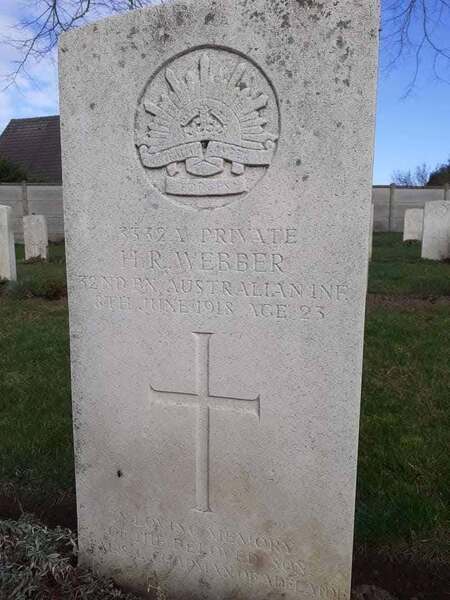
Today, Hurtle Ray Webber rests in peace alongside his friends, comrades and brothers in arms a few minutes from my house, at St Pierre Cemetery, Amiens, Somme, and his grave bears the following inscription: "In loving memory of the beloved son of Mrs C. Chapman of Adelaide."
Hurtle, it was with the greatest bravery and devotion that more than a hundred years ago, your life ended after having fought and done your duty proudly and loyally alongside your brothers in arms on the battlefields of the Great War where, in the north of France, in the Somme, the young Australian soldiers, alongside their French brothers, did their duty with bravery and conviction by watching over each other in the trenches and beyond the sandbag parapets to go and face their destinies, to charge through the fire and bullets that spat out in hurricanes of lead, in infernal crackles, thousands of machine guns thirsting for the flesh and blood of a whole generation of men who, on no man's land, in waves, like an ocean, collapsed one after the other in the fury of murderous battles that transformed ancient valleys and poppy fields through which birds flew and horses stood peacefully into execution fields, into slaughterhouses on which tons and tons of shells rained down and which, in terrible explosions, made so many young boys disappear.
In this madness, brothers and fathers, friends sacrificed their youth and lost their innocence in a turmoil that plunged the world into darkness and who, day and night, heard the heart-rending howls of men waiting for death in shell craters, the howls of agony of wounded mules, overcome, who, under the weight of the ammunition they were carrying, slowly drowned in a mud red with blood and haunted by the death that waited lurking and sly in the shadows, a horrible death that was the invisible companion of men who, knees sunk deep in the mud, had to live often at the feet of their dead comrades whose empty gaze gave a glimpse of all the horror they could never imagine, of a hell never seen before and torn by hunger, paralyzed by fear, waited again and again for the time to go over the top and stood ready with bayonets fixed, waiting for the signal, the fateful whistle that would soon break the silence to unleash the fury and often the futility of assaults most of which ended in bloodbaths, with catastrophic losses, with the silence of lifeless bodies that joined the sad list of names forever engraved on the wooden crosses of cemeteries above which, without respite, deafening and fatally, were heard the endless roars of the artillery whose goal, at an industrial and relentless pace, was to send ever more men into death.
This nightmare, this brutality, this carnage, is what the young Diggers endured with such bravery who, in Pozieres, Flers, Gueudecourt, Villers-Bretonneux, Amiens, fought with incredible determination like lions who never bowed their backs, who never retreated despite the apocalypse into which they were thrown and for us, for the French people, for our children, always went forward in the most beautiful spirit of courage which was born through the ANZAC spirit of which they wrote the history and the legend through their actions, their camaraderie, their efforts, their solidarity, their perseverance but also through the tears, the sweat and the blood which they shed on these sacred grounds on which their voices are still heard, the voices of heroes who humbly ask us not to forget.Young forever, they are still here, walking beside us, standing solemnly behind the rows of their immaculate graves, walking silently where they fought and fell placing their memory on the red petals of the eternal poppies that grow season after season and remind us every day of what we owe to these boys of Australia now sons of France over whom I will always watch with the utmost respect because for me, there is no greater pride than to give them the time of my life so that theirs are never forgotten, so that their stories and their names live forever. Thank you so much Hurtle, for all that you and your comrades did for us who will never forget.
Our love, our gratitude and respect will belong to you forever. At the going down of the sun and in the morning,we will remember him, we will remember them.
Click images to start slideshow.