







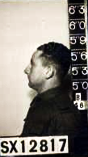
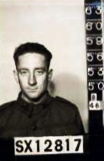
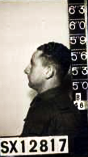
GAPPER, George Leslie
| Service Number: | SX12817 |
|---|---|
| Enlisted: | 17 May 1941, Wayville, SA |
| Last Rank: | Sergeant |
| Last Unit: | 2nd/48th Infantry Battalion |
| Born: | Broken Hill, New South Wales, Australia , 15 November 1918 |
| Home Town: | Bordertown, Tatiara, South Australia |
| Schooling: | Not yet discovered |
| Occupation: | Shearer, labourer |
| Died: | 15 September 1974, aged 55 years, cause of death not yet discovered, place of death not yet discovered |
| Cemetery: |
Karrakatta Cemetery & Crematorium, Western Australia Ecology Section Garden 2-0037. |
| Memorials: | Mundalla Soldiers Memorial Honour Roll |
World War 2 Service
| 17 May 1941: | Involvement Sergeant, SX12817 | |
|---|---|---|
| 17 May 1941: | Enlisted Wayville, SA | |
| 17 May 1941: | Enlisted Australian Military Forces (WW2) , Sergeant, SX12817 | |
| 17 May 1941: | Enlisted Australian Military Forces (WW2) , 2nd/48th Infantry Battalion | |
| 12 May 1945: | Discharged | |
| 12 May 1945: | Discharged Australian Military Forces (WW2) , Sergeant, SX12817 |
Gifted Footballer and Cricketer.
Born in Broken Hill on the 15th November 1918, George Austin named his younger son, George Leslie Austin.
George Jnr moved to live at Bordertown where he worked as a shearer and labourer. He became a Corporal in the 3rd Light Horse Regiment, leadership skills that would later also be utilised during WWII. One story that featured in the Advertiser in December ’39 reported that a Bennett and Fisher representative collected an abnormally long Merino fleece of18 inches, (almost 46 cm) piece, representing five years' growth. There was no break in the strong, even wool, of 60's count. The wether had been living in the scrub and repeatedly missed the muster and therefore shearing. It finally shorn by gun shearer, George Gapper, of Mundalla.
George became renown as an outstanding footballer and cricketer. In December ’37, he was promoted from the B team of South Mundulla in the Tatiara Association, and was the opening batter in the A grade, scoring a creditable 79 in humid conditions. This was the best recorded score for that season. Just a few months later, he played for the Country Colts in the S.A.C.A. against the City Colts and was second in the batting averages and aggregates with 411 runs at 51.3 an innings, including one century score. Over the 38-39 final George and Horrie Scown dominated the opening with a massive 402 runs. George’s contribution was 15 fours and one six.
George played on some ‘quirky’ pitches, including a visit to Casterton where the earthen pitch was covered with coconut matting, but George still managed a creditable 46 runs. By the start of the ’39 season George was also adding bowling to his repertoire securing 9/38 off 12 overs, with three maidens, in a brilliant and destructive burst of bowling at Mundalla and then compiling a skilful 168 (12 fours and one six). The South-East Country team continued to dominate in the Country Carnival, becoming the ’39 Premiers. The Border Chronicle’s summary was that ‘George Gapper, brilliant young Mundalla opening batsman, proved the outstanding performer with the willow, failing only twice in ten hands to reach double figures. He played in every game and scored a total 377.’His skills were regularly lauded; ‘Gapper stood as a colossus with 146, including 25 fours and one six. It was a faultless display by this young batsman who also captured 6/43in a January ’40 match.
In winter, George’s football skills as a rover were also outstanding. He as described as ‘roving tirelessly and worrying his opponents with his dash and elusiveness’. The outbreak of WWII decimated country sports and certainly curtailed the careers of promising players at the peak of their skills. Mundulla was affected with team mates George and George Weise in Adelaide for medical assessment to enlist in the army. Teams borrowed heavily from adjoining competitions, drew on younger players or did not submit teams. Country sport was particularly affected.
Aged 22, George enlisted in Mt Gambier with two other locals, Stan Murch and Geoff Weise on the 17th May, ’41. They were given successive numbers, George SX12817, Stan SX12818 and Geoff SX12819. All were eventually placed in the newly formed 2/48th Battalion, having initially been allocated to the 2/43rd Reinforcements. By the 18th September, all three embarked for the Middle East, arriving on the 20th October. Not unexpectedly, George was quickly promoted to Acting Corporal in February the following year. Illness of a high temperature and heat exhaustion caused him to revert to the rank of Private while being treated. In quick succession, George then received two promotions, from Corporal then Lance Sergeant in August. Stan wrote home in August ’42 from Palestine sharing that they were all O.K. in his unit apart from George Gapper, who was in hospital' suffering from the effects of sandfly fever. The temperature had reached as high as 118 degrees, he said, and they had all seen enough of hills, being camped in mountainous country. The "Wogs' " apricots and plums were ripe (and had been suffering at the hands of the Australians) and a kind of cucumber, which they ate skin and all.
Attending a Mortar Course, George qualified with Distinction. Finally, at the start of February ‘43 George and the 2/48th Battalion were finally able to return to Australia via Melbourne. Almost immediately George took a full day of unofficial leave but was fortunate to just receive a reprimand.. George, Stan and Geoff Wiese were amongst the eleven locals who returned home on leave in March. In a packed Bordertown Hall a musical feast was presented to the men in a proud day for the town. A year’s membership in the RSL was also made to each, and a membership badge presented to the new generation of Diggers.
In May ’43 George displaced his right meniscus while training in Queensland, preparing to acclimatise to the tropical conditions they would face against a very different enemy in the heat and humidity of New Guinea. He eventually arrived in Port Moresby in late October ’43, but within two months was diagnosed with appendicitis and returned to Brisbane.
With his knee continuing to be problematic, George’s medical status was reclassified, and he returned home in February, ’44 where a hearty welcome was extended to 2nd AIF Diggers who have recently returned from New Guinea. Most were from George’s 2/48th Battalion, including SX7613 Jack Champion, SX13769 Len Neate, SX13725 Jack O’Donoghe and SX17159 Charles Hyde. All were congratulated on the great services they were rendering Australia. Just days later, George announced his engagement to Muriel Smith of Paradise. Muriel had been on the Bordertown Memorial Hospital staff and was well-known in the district. The Border Chronicle added ‘Sgt Gapper is a well-known Mundalla sportsman and served with the AIF in the Middle East and New Guinea.’
George reverted to Corporal, returning to Queensland before sailing to Tarakan in October ’44 and further promotions, eventually to Sergeant in February ’45. He then returned to South Australia in March ’45 before eventually being discharged on the 12th May ’45.
Muriel and George married at the Pirie Street Methodist Church on July 20th the following year, with the young couple returning to Mundalla to live. The week prior to his wedding, George was nominated as best on ground in football. The team was still decimated and ‘rusty skilled’ reliant on colts to fill vacant positions that July ’45. However, George was nominated as one of two best players for his team and shared a 10/- prize for his efforts. His silky skills were evident as the season progressed, his efforts being described as playing a truly phenomenal game considering the congestion of the play and velocity of the wind; and Geoge being here, there, and everywhere.’ In the first round of finals a record crowd saw Mundalla more than double Bordertown’s score with the ‘irrepressible and elusive Mundalla rover, George Gapper’. Again, George shared the donated money prize as best on ground. His polished display of skills continued to be mentioned in followings seasons.
As other servicemen returned, further welcomes were made, despite it being the height of the shearing season. Singing and welcomes from many groups accompanied thanks for their service, with added good wishes for their speedy rehabilitation into civil life and hope they would long enjoy the peace and happiness they so richly deserved. Each man was given a generous a £5-note. They thanked their community for their continued news from home and especially the much-appreciated Red Cross parcels.
George’s pre-war success continued in cricket as he continued to lead in both batting and bowling in the ’45 season and as runner-up in both batting and bowling at the end of the ’46 season. He was also chosen to represent the South-East in the Country Cricket carnival in Adelaide at the start of ’48. He scored the only century, hit six sixes and 12 fours in his 101 for South-Eastern. George topped this in the opening of the ’49 season, making 183 runs and taking 6/62 wickets, before scoring his second century of 122 in November with 10 fours and four sixes. Mundalla took out the premiership that year.
Muriel and George welcomed their son in July ’49 and daughter in November the following year.
Aged 55, George died on the 15th September 1974 and was buried in the Karrakatta Cemetery, Nedlands, Western Australia. 85-year-old Muriel died in February 2010 and was buried with George in the Ecology Section Garden 2-0037.
Researched and written by Kaye Lee daughter of Bryan Holmes, SX8133, 2/48th Battalion.
Submitted 9 June 2026 by Kaye Lee
Click images to start slideshow.