








MONKS, Jack Percival
| Service Number: | SX3111 |
|---|---|
| Enlisted: | 21 May 1940, Adelaide, SA |
| Last Rank: | Lance Corporal |
| Last Unit: | 2nd/27th Infantry Battalion |
| Born: | Nairne, South Australia, Australia , 15 December 1918 |
| Home Town: | Littlehampton, Mount Barker, South Australia |
| Schooling: | Littlehampton, South Australia, Australia |
| Occupation: | Bacon Curer |
| Died: | Killed in Action, Syria, 11 June 1941, aged 22 years |
| Cemetery: |
Sidon War Cemetery |
| Memorials: | Adelaide WW2 Wall of Remembrance, Australian War Memorial Roll of Honour, Littlehampton Honour Roll, Mount Barker War Memorial |
World War 2 Service
| 21 May 1940: | Involvement Private, SX3111, 27th Infantry Battalion | |
|---|---|---|
| 21 May 1940: | Enlisted Adelaide, SA | |
| 21 May 1940: | Enlisted Australian Military Forces (WW2) , Private, SX3111, 2nd/27th Infantry Battalion | |
| 15 Oct 1940: | Embarked Australian Military Forces (WW2) , Lance Corporal, SX3111, Embarked aboard the Mauritania for Egypt | |
| 8 Jun 1941: | Involvement Crossed the Syrian border to fight the Vichy French. | |
| Date unknown: | Involvement |
Help us honour Jack Percival Monks's service by contributing information, stories, and images so that they can be preserved for future generations.
Add my storyBiography contributed by Clare Dorey
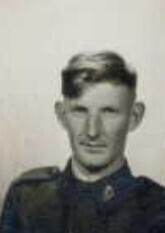
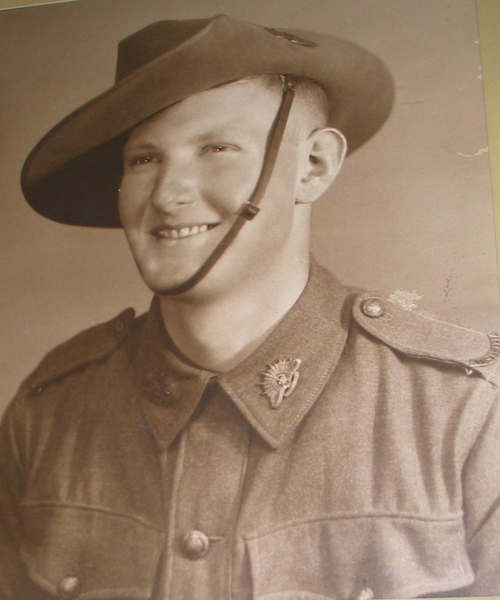
Jack was born on 15 December 1918. His family had a long and significant association with Littlehampton. He served with the 2/27th Battalion in Egypt and died in the brief but victorious campaign against the Vichy French in Syria. His death was the prompt for the Littlehampton Honour Board to be inaugurated.
Jack is directly descended from John Monks and Priscilla Appleton, who arrived on the ship Delhi in 1839 and founded the Shady Grove Unitarian church. Their son Henry Appleton Monks was educated at the old Blakiston schoolhouse and the Hahndorf Academy, before establishing the Monks of Old Bacon curing factory in Littlehampton in the 1880s. Henry was active on the Mount Barker council and as the proprietor of the Great Eastern Hotel. He had eight children, including Jack’s father Percival, who went on to have nine of his own children with two wives. He married Cordelia Jane Crago in 1899, and they had five children together over 10 years - Ida, Roy, Lancelot and twin daughters Mona and Doris. Cordelia died in 1909 aged 26, just 2 weeks after her twins were born and was buried in the small graveyard at Shady Grove with her infant son Roy (who tragically drowned aged three.) Percival then married Hilda Reynolds in 1914, and they had twins Mollie and Marjery in 1915, Jack in 1918 and Alan in 1927.
Jack was born in Nurse Thomas’ private hospital in Nairne, which was unusual at the time, as most women gave birth at home. Perhaps as Hilda had previously had twins, and given what happened to Cordelia, this might have been considered prudent. During the flu epidemic in 1918, an empty house belonging to Thomas Paltridge was used as a makeshift hospital, which later became the Mount Barker Soldiers' Memorial Hospital. This was established thanks to a large donation from Mrs Barr-Smith and furnishings from Miss Thomas' hospital after she retired in 1919.
Jack led a social life attending Littlehampton school (left, Jack is fourth from the right in the front row), fetes, sport and parties. He worked with his half-brother Lancelot as a factory hand and bacon curer at the family business, which was sold to Foggitt Jones in 1926 (right, Jack is second from the right in the front row). The family became part of the Church of England, following his mother’s religion, rather than the Unitarian faith. Jack played tennis, had brown hair and blue eyes and a scar on his knee.
Jack enlisted in the army on 21 May 1940, and joined the 2/27th Battalion, which was a well-supported one. The Premier Thomas Playford had been in the original 27th in World War I and ensured that they were equipped with binoculars at no expense to the country. The 2/27 Women’s Club worked tirelessly to support their men – they fundraised, made garments, visited the sick and helped morale. “Many of us will readily agree that the war efforts of our wives and mothers far exceeded in value our own contributions towards the maintenance of freedom.” (Burns p19)
The 2/27th trained at Woodside and Jack had pre-embarkation leave from 24-30 September. He was farewelled by the Cheerio Committee, along with Bert Luck, Cyril Daniels, Eric Flavel, Bruce Kavanagh and Dick Fisher. (Bruce and Dick were also part of the 2/27th. Article in Fisher’s story.) He was appointed Lance Corporal before marching to Oakbank Station, catching the train to Port Melbourne and boarding the Mauritania on 15 October 1940. Many enjoyed the novelty of shipboard life, but they also had a program of physical training, boxing, bayonet fighting, map reading and lectures. They stopped in Perth for a few days, where some visited friends and relatives, met old classmates, made new friends or phoned loved ones. They travelled to Bombay and despite instructions in the Indian mode of life, were still said to be as naive as children in a novelty shop. They spent five days in a camp at Deolali, 120 miles from Bombay, where the privates enjoyed the luxury of having servants for shaving and cleaning their boots, as well as the cheap beer and fortune tellers. Before they embarked from Bombay on the HMT Takliwa on 10 November, they had a few hours leave for sightseeing and drinking. (They had to leave Bruce Kavanagh behind in Bombay hospital; he rejoined the unit in February but did have many other hospital visits during the war.) Jack disembarked on the 24th at Kantara, on the Suez Canal in Egypt, and took a long train ride across the Sinai desert into the Hebron Hills in Palestine. They detrained at Al Majdal (near the ruins of biblical Ashkalon) then caught a bus 10 miles to Julius camp. Here they trained hard (left) for the next five months to become a thoroughly well-trained fighting force, with long route marches, weapons training and advanced specialist training for some of the officers.
Life in Palestine was fascinating to the Aussies, especially as many had never travelled before. While the focus was on training, they also had the pleasure of day trips to Tel Aviv and Jerusalem. Many liked the local population of Arabs and Jews, even if their descriptions of them appear rather colonial. They were treated well on their first Christmas away from home, with a Church parade, splendid dinner, mail from home and hampers from the Comforts Fund. They were occasionally paraded for important visitors, including Prime Minister Robert Menzies on 4 February and AIF photographer Captain Frank Hurley on 7 April 1941. The men also appreciated the finer things in life, such as the Kidna-area villages built of good white stone, surrounded by magnificent wildflowers in full bloom; “even a tough-fibred soldier appreciated the sight of little flowers.” (Burns p31)
In April Jack and his battalion were recalled to Mersa Matruh in Egypt, travelling by train to Ikingi Maryut, a filthy and unpleasant staging camp 15 miles east of Alexandria. On 15 April 1941, they were moved to defend Bagush Box, climbing escarpments and digging in, only to be recalled five hours later and returned to Mersa Matruh. They spent weeks improving defences before handing it over to the South Africans. They then returned to Palestine in May, to prepare for the Syrian campaign. They were allocated to form the backbone of the Allied advance - with 18,000 AIF troops to 9,000 British, plus 7000 Indian and Free French forces - into Lebanon and Syria to defeat the Vichy French, who were now collaborating with the Germans. This campaign, known as Operation Exporter, was prompted by Free French leader Charles de Gaulle, who demanded that the Allies liberate French Syria. It is not well known, due to its short duration and the fact that the French forces were divided.
The Unit diaries offer insights into the final fortnight of Jack’s life. He and his mates enjoyed Jewish hospitality and tap water in Kfar Yehezqel. There were days of training, three hour long route marches, lectures and ‘hardening up’, but there were also dances, concerts, picture shows, soccer games and even high tea with the villagers. Some of his battalion even had ice cream during a march in late May (left.) They were farewelled with folk dancing until 21:30 before departing on 6 June. It was back to business!
On 8 June 2/27 Battalion crossed the Syrian border and moved along the coast road, while being shelled by two Vichy French destroyers making a hit and run along the coast. They safely reached a position south of Tyre, taken the day before by the 2/16. On 9 June they crossed the Litani River and took over 400 prisoners (a total never to be repeated by the 2/27.) They were told of the plan for a full battalion attack for midnight on 10 June. Despite the men being tired and hungry they were ready. While they waited for the attack to start, they sucked the juice of green tomatoes from nearby gardens, which they regretted the next day! Following the artillery barrage, both B&C companies entered the town of Marjayoun but faced a strong Vichy counterattack. They quickly came under severe fire at extremely close range, as the French held positions on either side of the road. Jack’s B Company was 200 yards south of a building when the barrage lifted and a trip wire blew it up, illuminating the whole area and exposing the advancing B&C companies to Vichy snipers and machine gunners. Outbuildings and haystacks burned and bullets flew everywhere. Despite the bravery of their wounded Captain McPhee, his B company suffered heavily in reaching their objective. Jack Monks died on 11 June 1941, alongside 3 others and 6 were wounded (one later dying of his wounds.) They did reach their objective though and Burns claimed, “Never had a company been subjected to a more nerve-wracking introduction to night warfare.” (Burns, p47) The 2/27th continued to fight in Syria until the ceasefire on 12 July 1941 and the armistice of Saint Jean d’Acre was signed on 14 July, ending Operation Exporter (see commemorative badge above). For the aftermath of the battle and their eventual victory see Richard Fisher’s story.
Jack was buried by Padre Wherat, who personally buried every man killed in action, by the side of the main road, near the burnt-out farmhouse which aided in his death. He was later moved to Damascus British Cemetery, but is now buried in Sidon War Cemetery, South Lebanon. After Jack’s death the ladies of Littlehampton collected money and purchased the board for an Honour Roll. This was especially important as there was no board yet for the WWI veterans, so they decided to combine the two lists. At its unveiling at the Institute on 3 August the Chairman Mr Clegget spoke regretfully for the necessity for such a roll and hoped it would remain without further additions. He mourned Jack Monks' loss, unveiled a photo of him and they all observed a two-minute silence. It is apt that Jack appears on the Honour Board alongside his uncle (from WWI, but who also served in WWII in the Battalion Volunteer Defence Corps), his brother Alan (who served in the navy, but hated it), his sister Mollie (see final chapter), Bruce Kavanagh from the 2/27th (who survived the war despite many illnesses) and Richard Fisher and Jack Mossop (see their chapters), as well as many of his work mates and class mates who were fortunate to return from war.
Click images to start slideshow.