








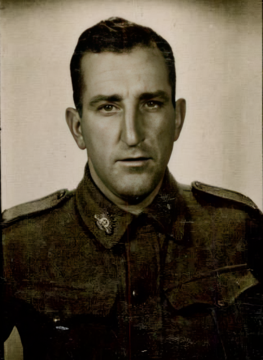
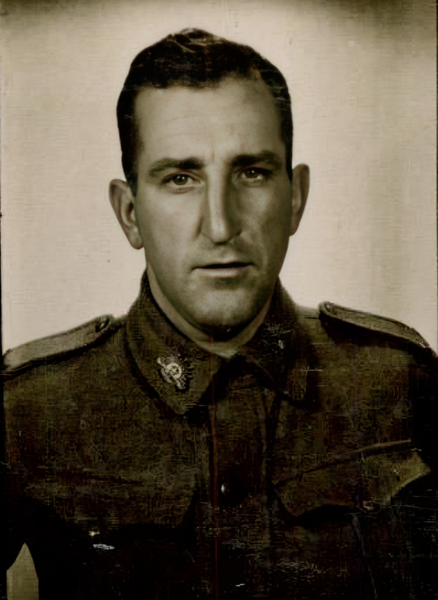
DRAKE, John Montague
| Service Number: | VX9796 |
|---|---|
| Enlisted: | 30 December 1939 |
| Last Rank: | Lance Bombardier |
| Last Unit: | Not yet discovered |
| Born: | Perth, Western Australia, 15 March 1905 |
| Home Town: | Hawthorn, Boroondara, Victoria |
| Schooling: | Xavier College, Victoria, Australia |
| Occupation: | Law clerk |
| Died: | Died of wounds, Greece, 23 April 1941, aged 36 years |
| Cemetery: |
Phaleron War Cemetery, Athens, Greece |
| Memorials: | Australian War Memorial Roll of Honour |
World War 2 Service
| 3 Sep 1939: | Involvement VX9796 | |
|---|---|---|
| 30 Dec 1939: | Enlisted Australian Military Forces (WW2) , Lance Bombardier, VX9796 |
Help us honour John Montague Drake's service by contributing information, stories, and images so that they can be preserved for future generations.
Add my storyBiography contributed by Rod Hutchings
He shifts his weight on the narrow stone ledge. Dust from the German barrage coats his law clerk’s hands.
Lance Bombardier John Montague Drake was 36 years old. A law student from Hawthorn and a former centre half-back for the Mayblooms, he was crouched on a cliff face at Brallos Pass on 23 April 1941. His 2/2 Field Regiment crew had orders to keep a destroyed bridge broken to protect two retreating Australian infantry brigades.
Before the uniform, people knew Jack as the "excellent worker" from Lisson Grove who possessed a lawyer’s focus and a footballer’s frame. He had debuted for Hawthorn at the Brunswick Street Oval in 1926, and though injury limited his VFL career to three games, he remained the "best clubman" for the Old Xaverians.
Even in the dust of Palestine, his letters home were anchored in the game; he wrote of an injured elbow from a camp football match and the "tons of stones and rubbish" he helped clear to build a makeshift pitch. To Jack, the game was the thread that kept home close.
His inspiration was drawn from a quiet, family memory of loss. He grew up in a house where his father, Frederick, lived with the empty chair of Jack's older brother, Frank, who died of wounds in France in 1918. When war returned in 1939, Jack did not wait for his law degree to be conferred. He put aside his articled clerkship at Upton, Ettelson and Owen and enlisted in the final days of December. He understood exactly what his family had already paid, and he chose to step into that same shadow.
Lieutenant Colonel Cremor remembered Jack as a man who "could never be rattled". At Brallos Pass, that composure was the only thing holding the rearguard together. For thirty-one hours, under fire from twelve German medium guns, the crew stayed with their gun to buy time for thousands of infantrymen to reach safety. When a shell finally struck the ledge, taking both of Jack’s legs, he did not call for a doctor. Gunner Belyer recorded that Jack stayed conscious for ten minutes, using his final breaths to ask if the rest of the boys were safe and if the gun was still firing.
Jack never returned to the city to finish his law course. His father followed him later that year, a man who had finally seen too much war. Today, Jack’s name is etched in gold on the honour board at Glenferrie Oval. He is remembered as one of the twenty Hawthorn men who stayed teammates to the end. He was a law clerk, a footballer, and a son of Hawthorn who stayed at his post because he knew his mates were counting on him.
Rod Hutchings
Director, Virtual War Memorial Australia
Source Crediting: Information derived from Virtual War Memorial Australia profile for John Montague Drake, National Archives of Australia Service Record VX9796, Fallen: The Ultimate Heroes by Jim Main and David Allen (2002) and Hawthorn Football Club Honour Board records.
Click images to start slideshow.