





GIFFORD, Beverley Hudson
| Service Number: | 415520 |
|---|---|
| Enlisted: | 9 November 1941 |
| Last Rank: | Flying Officer |
| Last Unit: | Not yet discovered |
| Born: | Beverley, Western Australia, Australia, 1 June 1916 |
| Home Town: | Como, South Perth, Western Australia |
| Schooling: | Sacred Heart Convent, Beverley, Western Australia, Australia |
| Occupation: | Company Accountant |
| Died: | Flying Battle, France, 19 July 1944, aged 28 years |
| Cemetery: |
Choloy War Cemetery, France Coll. grave 3. E. 1-7. |
| Memorials: | Australian War Memorial Roll of Honour, International Bomber Command Centre Memorial, Kings Park Western Australia State War Memorial |
World War 2 Service
| 3 Sep 1939: | Involvement Flying Officer, 415520 | |
|---|---|---|
| 9 Nov 1941: | Enlisted Royal Australian Air Force, Flying Officer, 415520 |
Help us honour Beverley Hudson Gifford's service by contributing information, stories, and images so that they can be preserved for future generations.
Add my storyBiography contributed by Rod Hutchings
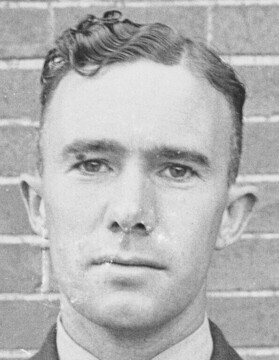
Beverley Hudson Gifford was born on 1 June 1916 at Beverley, Western Australia, the wheatbelt town whose name he carried. He was one of five children of Henry Joseph and Olive Lillian Gifford, with brother Bob and sisters Florence, Betty and Mary. He attended the state school and the Sacred Heart convent at Beverley, then moved to Perth, where he studied economics and worked as a company accountant. The family later settled at 4 Comer Street, Como.
Gifford was already in uniform before the RAAF took him. He served two years with the Australian Army Service Corps from October 1939, rising to corporal, and took his discharge in October 1941 to enlist as aircrew. He was accepted at No. 4 Recruiting Centre, Perth, on 9 November 1941, aged 25.
Selected for pilot training, he passed through No. 5 Initial Training School at Pearce, learned to fly Tiger Moths at No. 9 Elementary Flying Training School, Cunderdin, and converted to Ansons at No. 4 Service Flying Training School, Geraldton, where he was awarded his flying badge on 30 October 1942 and promoted sergeant. He embarked from Melbourne in January 1943, one of almost 27,500 Australians who served with Bomber Command under the Empire Air Training Scheme, and reached the United Kingdom in March. He advanced through No. 20 (Pilot) Advanced Flying Unit on Oxfords and No. 27 Operational Training Unit at Lichfield on Wellingtons, flying under night conditions. He was commissioned pilot officer in January 1944 and promoted flying officer with effect from 17 July 1944.
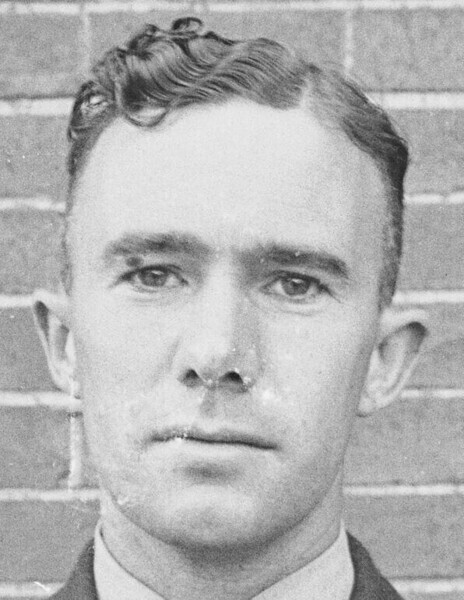
On 29 June 1944 Gifford was posted to No. 463 Squadron RAAF at Waddington, Lincolnshire, in command of a crew of seven. The envelope holding his photographs in his service file is marked with the single word SKIPPER.
On the night of 18/19 July 1944, No. 463 Squadron despatched eight Lancasters against the railway junction at Revigny, France, part of a force of 110 aircraft of No. 5 Group. The German defences read the RAF’s diversionary raid correctly and the Luftwaffe’s night fighter strength met the bomber stream over the target. Gifford’s Lancaster, LM551, took off at 2253 hours carrying eleven 1,000 lb and three 500 lb bombs. Nothing was heard from the aircraft after take-off. Post-war investigation established that a night fighter shot it down near Revigny and it crashed into the canal. Twenty-four of the 110 bombers failed to return. The raid cut the junction; only one line through Revigny remained open.
All seven of the crew were killed: Flying Officer Beverley Gifford, Warrant Officer Raymond Shipway, Flight Sergeants John Boydell, Alan Fripp, Philip Pearce and Frank Spencer, all RAAF, and Sergeant Harold Newell, RAF, the crew’s flight engineer. Gifford was 28, and had held his final rank for two days.
The crew could not be individually identified. They were buried together at Revigny and after the war reinterred at Choloy War Cemetery, Meurthe-et-Moselle, where they lie in collective grave 3. E. 1-7. His family’s inscription reads, “Always unselfish and kind. A beautiful memory.”
On 18 July 1946, two years to the day after the raid, his sister Betty placed an In Memoriam notice in The West Australian. Frank Spencer’s family placed theirs in the same column.
His name is on the Roll of Honour at Narrogin, the State War Memorial and Honour Avenues at Kings Park, the International Bomber Command Centre Memorial, and Panel 109 of the Australian War Memorial Roll of Honour.
Rod Hutchings
OIC Media and Communications
History and Heritage Branch - Air Force
Sources: NAA: A9300, GIFFORD B H; NAA: A705, 166/15/285; Australian War Memorial, Roll of Honour (RAAF Casualty Information compiled by Alan Storr); Commonwealth War Graves Commission; DVA WWII Nominal Roll; Herington, Air War Over Europe 1944-1945, pp. 236-7; The West Australian, 18 July 1946 and 12 August 1946, Family Notices; Kings Park Honour Avenues plaque L255A; Aviation Heritage Museum WA, AFC/RAAF Roll.
Click images to start slideshow.