






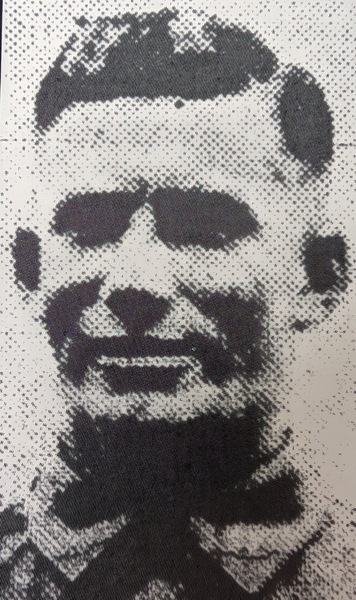
YOUNG, Leo
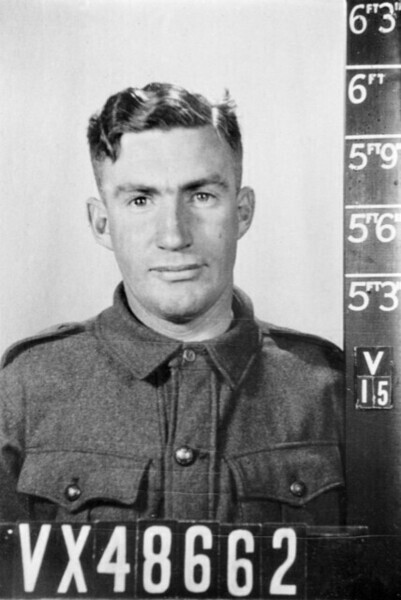
| Service Number: | VX48662 |
|---|---|
| Enlisted: | 1 August 1940, Enlisted at Caulfield, Victoria |
| Last Rank: | Bombardier |
| Last Unit: | Not yet discovered |
| Born: | Heyfield, Victoria, Australia, 18 May 1915 |
| Home Town: | Maffra, Wellington, Victoria |
| Schooling: | St Patrick's College, Sale, Victoria, Australia |
| Occupation: | Butcher’s clerk and professional footballer (Hawthorn) |
| Died: | Killed in Action, At sea (Middle East), 29 May 1941, aged 26 years |
| Cemetery: |
No known grave - "Known Unto God" Face 10, Athens Memorial, Athens, Greece |
| Memorials: | Australian War Memorial Roll of Honour, Maffra War Memorial, Newtown Geelong College WW2 Roll of Honour |
World War 2 Service
| 3 Sep 1939: | Involvement Bombardier, VX48662 | |
|---|---|---|
| 1 Aug 1940: | Enlisted Bombardier, VX48662, Enlisted at Caulfield, Victoria | |
| 1 Aug 1940: | Enlisted Australian Military Forces (WW2) , Bombardier, VX48662 |
Help us honour Leo Young's service by contributing information, stories, and images so that they can be preserved for future generations.
Add my storyBiography contributed by Rod Hutchings
The Butcher from Maffra: From Glenferrie Oval to the Cretan Coast
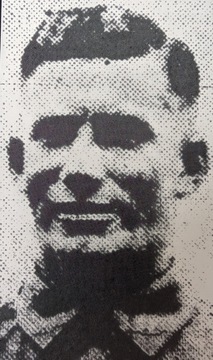
The winter air at Glenferrie Oval is sharp. He settles his boots into the turf, waiting for the bounce. Bombardier Leo "Gus" Young is 25 years old. A butcher from Maffra who played 10 games for Hawthorn, he is now a gunner in the 3rd Light Anti-Aircraft Regiment.
Born in Heyfield on 18 May 1915, Young was the youngest of seven children born to Henry James and Margaret Young. He was educated at St Patrick’s College, Sale, where he attended as a boarder. While a note from a classmate in the Sale Patrician suggested he "ought to give up cricket and go in for a duck farm," his talent for football was undeniable.
Standing 183 cm (6 feet) tall and weighing nearly 13 stone, Young was a utility player with a "sound knowledge of position play". In the tough Gippsland competition of the 1930s, he became a local hero for the Maffra Football Club, helping the team secure premierships in 1935 and 1938.
In 1939, Young was cleared to join Hawthorn. He debuted on 22 July 1939 against Geelong at the Corio Oval, playing on the half-forward flank. Press reports at the time praised his "quick-thinking actions". His final VFL match was against Collingwood on 6 July 1940; he entered the game as the 19th man, replacing an injured teammate.
Nineteen days later, he was at the Caulfield enlistment centre.
Young’s civilian trade as a butcher’s clerk required manual dexterity and physical strength, qualities that translated to his military posting in the Royal Australian Artillery. He was trained to operate the 40mm Bofors gun, a weapon capable of firing 120 rounds per minute. His ability to anticipate the flight path of a ball on the football field was a skill now repurposed for tracking enemy aircraft.
Young embarked for the Middle East aboard the HMT Mauretania on 29 December 1940. By April 1941, the 7th Battery of the 3rd LAA was diverted to Crete, specifically to provide air defence for the strategic airfield at Heraklion.
The Battle of Crete commenced on 20 May 1941. Young’s gun crew lived under constant bombardment, firing their Bofors directly into the doors of low-flying Junkers transport planes as German paratroopers jumped. Despite holding the perimeter for nine days, the Allied position on the island collapsed. On 28 May, the order was given to evacuate the garrison by sea.
29 May 1941: The Sinking of HMS Hereward
In the early hours of 29 May, approximately 450 troops were embarked on the destroyer HMS Hereward. At 06:25, German Stuka dive bombers intercepted the fleet off Cape Sideros.
A bomb struck the Hereward just forward of her funnel, slowing the ship to a crawl. Concerned for the thousands of troops on the nearby cruisers Orion and Dido, the Admiral made the decision to leave the crippled destroyer behind. Isolated and stationary, the ship was hit again, rolled to port, and sank rapidly.
While most survivors were rescued by Italian vessels and taken to prisoner of war camps, 48 Australians were lost in the sinking. The record is silent on Leo Young's final actions in the water.
Initially reported as "missing," it was not until 21 December 1942 that his status was formally updated to "Drowned result of enemy action". His father, Henry, passed away in May 1943, shortly after the administrative details of his son's death were finalised.
Bombardier Leo Young has no known grave. His name is commemorated on:
Face 10 of the Athens Memorial, Greece.
Panel 21 of the Australian War Memorial, Canberra.
The Hawthorn Football Club Honour Board.
The Maffra War Memorial.
Lest we forget
Rod Hutchings
Director, Virtual War Memorial Australia
Click images to start slideshow.