







MONAGHAN, Thomas
| Service Number: | 9462 |
|---|---|
| Enlisted: | 5 January 1916, Brisbane, Qld. |
| Last Rank: | Shoeing-Smith |
| Last Unit: | 11th Field Company Engineers |
| Born: | Silkstone, Queensland, Australia, 6 March 1894 |
| Home Town: | Brisbane, Queensland |
| Schooling: | Not yet discovered |
| Occupation: | Blacksmith |
| Died: | Brisbane, Queensland, Australia, 19 September 1961, aged 67 years, cause of death not yet discovered |
| Cemetery: |
Lutwyche Cemetery, Brisbane, Qld Anzac Portion 9 |
| Memorials: | Booval War Memorial |
World War 1 Service
| 5 Jan 1916: | Enlisted AIF WW1, Driver, 9462, 11th Field Company Engineers, Brisbane, Qld. | |
|---|---|---|
| 31 May 1916: | Involvement Driver, 9462, 11th Field Company Engineers, --- :embarkation_roll: roll_number: '5' embarkation_place: Adelaide embarkation_ship: HMAT Suevic embarkation_ship_number: A29 public_note: '' | |
| 31 May 1916: | Embarked Driver, 9462, 11th Field Company Engineers, HMAT Suevic, Adelaide | |
| 3 Nov 1919: | Discharged AIF WW1, Shoeing-Smith, 9462, 11th Field Company Engineers, 1st MD |
Help us honour Thomas Monaghan's service by contributing information, stories, and images so that they can be preserved for future generations.
Add my storyBiography contributed
Son of Patrick MONAGHAN and Margaret MONAGHAN nee FLANAGAN
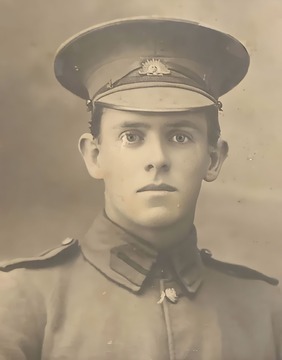
Thomas Joseph Monaghan was born 6 March 1894 at Silkstone, Queensland, Australia. Prior to military service he was employed as a blacksmith, a skilled trade that aligned with the practical and mechanical demands of engineering units.
He enlisted in the Australian Imperial Force at Brisbane, Queensland, on 5 January 1916 aged 21, and was posted as a Driver with the 11th Field Company, Australian Engineers. On 31 May 1916 he embarked for overseas service from Adelaide aboard HMAT A29 Suevic. After training in England, he proceeded overseas to France via Southampton in late November 1916, where he served on the Western Front in an engineering support role involving construction, transport, and maintenance under active service conditions.
During his service in France, Monaghan experienced recurring periods of illness that required hospitalization, particularly in December 1917. He was admitted to hospital on several occasions, rejoining his unit after recovery each time. These interruptions indicate ongoing physical strain rather than a single acute injury. Despite these difficulties, he remained on active service until late 1918.
In December 1918 he was formally assessed under an Australian Military Forces Medical Report on an Invalid. The report recorded that he suffered from overlapping toes, a condition that caused difficulty with marching and was assessed as aggravated by military service and overseas duty. At the time of examination, he was 24 years old. Medical officers noted that his condition had improved but remained troublesome during prolonged marching, and no operative treatment was recommended. He was declared permanently unfit for general military service.
Monaghan was invalided to England on 6 December 1918 and subsequently returned to Australia and discharged from the Australian Imperial Force in April 1919. His total period of service encompassed more than three years, including active service in France during World War I.
Thomas married Mary Leslie on 13 September 1919 at St Mary’s Catholic Church in Ipswich, Qld. Their son, William Thomas Monaghan, was born on 25 December 1919 at Booval, Queensland, but died there on 16 January 1921 at the age of one. Sometime after the death of their son, Thomas and Mary Monaghan separated. In 1925, he was living at Ipswich Qld and working as a blacksmith.
Shoeing Smith Thomas Joseph Monaghan died on 19 September 1961, aged 67, and was buried in Anzac Portion 9, Lutwyche Cemetery, Brisbane. Correspondence from the Public Curator of Queensland confirms his service details and records that he made a will while serving as a member of the armed forces. The Central Army Records Office in Melbourne confirmed the existence of this wartime will and forwarded it to the Public Curator.
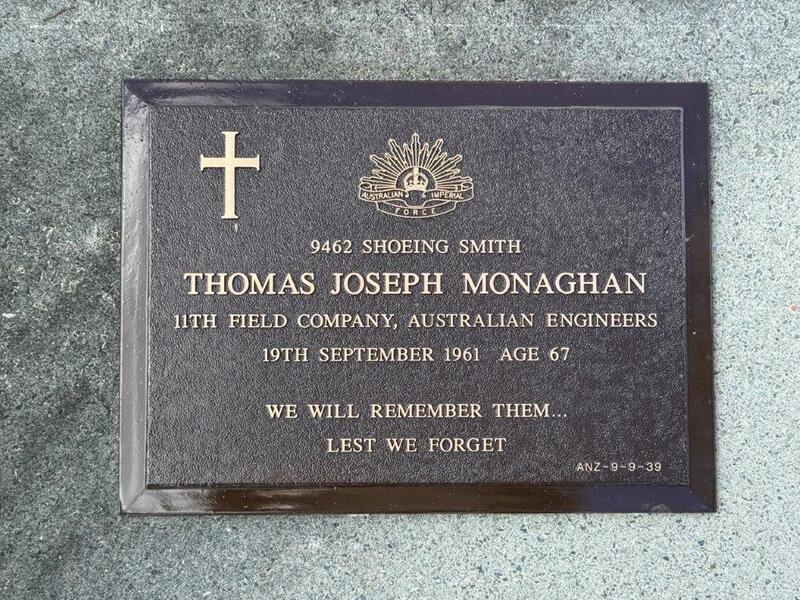
After decades without recognition at his place of burial, his grave now bears a plaque commemorating his service to Australia — ensuring his name endures among those remembered for their duty and sacrifice. His identity and dignity have now been restored.
Biography contributed by Evan Evans
From Australian Remembrance Army
Shoeing Smith Thomas Joseph Monaghan (Service No. 9462), an Australian World War One veteran, is among almost 800 previously unmarked WWI veterans’ graves in Lutwyche Cemetery we have now marked with a plaque recognising their service for Australia.
We unveiled his plaque in Lutwyche Cemetery on 20 September 2025, along with a further 161 plaques on the previously unmarked graves of Australian World War One veterans:
See Australian Remembrance Army Facebook page
Thomas Joseph Monaghan was born 6 March 1894 at Silkstone, Queensland, Australia. Prior to military service he was employed as a blacksmith, a skilled trade that aligned with the practical and mechanical demands of engineering units.
He enlisted in the Australian Imperial Force at Brisbane, Queensland, on 5 January 1916 aged 21, and was posted as a Driver with the 11th Field Company, Australian Engineers. On 31 May 1916 he embarked for overseas service from Adelaide aboard HMAT A29 Suevic. After training in England, he proceeded overseas to France via Southampton in late November 1916, where he served on the Western Front in an engineering support role involving construction, transport, and maintenance under active service conditions.
During his service in France, Monaghan experienced recurring periods of illness that required hospitalization, particularly in December 1917. He was admitted to hospital on several occasions, rejoining his unit after recovery each time. These interruptions indicate ongoing physical strain rather than a single acute injury. Despite these difficulties, he remained on active service until late 1918.
In December 1918 he was formally assessed under an Australian Military Forces Medical Report on an Invalid. The report recorded that he suffered from overlapping toes, a condition that caused difficulty with marching and was assessed as aggravated by military service and overseas duty. At the time of examination, he was 24 years old. Medical officers noted that his condition had improved but remained troublesome during prolonged marching, and no operative treatment was recommended. He was declared permanently unfit for general military service.
Monaghan was invalided to England on 6 December 1918 and subsequently returned to Australia and discharged from the Australian Imperial Force in April 1919. His total period of service encompassed more than three years, including active service in France during World War I.
Thomas married Mary Leslie on 13 September 1919 at St Mary’s Catholic Church in Ipswich, Qld. Their son, William Thomas Monaghan, was born on 25 December 1919 at Booval, Queensland, but died there on 16 January 1921 at the age of one. Sometime after the death of their son, Thomas and Mary Monaghan separated. In 1925, he was living at Ipswich Qld and working as a blacksmith.
Shoeing Smith Thomas Joseph Monaghan died on 19 September 1961, aged 67, and was buried in Anzac Portion 9, Lutwyche Cemetery, Brisbane.
Correspondence from the Public Curator of Queensland confirms his service details and records that he made a will while serving as a member of the armed forces. The Central Army Records Office in Melbourne confirmed the existence of this wartime will and forwarded it to the Public Curator.
After decades without recognition at his place of burial, his grave now bears a plaque commemorating his service to Australia — ensuring his name endures among those remembered for their duty and sacrifice. His identity and dignity have now been restored.
We have remembered him.
Lest we forget.
Click images to start slideshow.