







CORKILL, David Samuel
| Service Number: | 3041 |
|---|---|
| Enlisted: | 4 September 1915 |
| Last Rank: | Second Corporal |
| Last Unit: | Army Pay Corps (AIF) |
| Born: | Duaringa, Queensland, Australia, 2 February 1893 |
| Home Town: | Duaringa, Central Highlands, Queensland |
| Schooling: | Not yet discovered |
| Occupation: | Grocer |
| Died: | Fracture of the skull and injury to the brain, the result of an accidental motor car collision, Brisbane Hospital, Queensland, Australia, 2 January 1936, aged 42 years |
| Cemetery: |
Lutwyche Cemetery, Brisbane, Qld Monumental General Portion 5 |
| Memorials: |
World War 1 Service
| 4 Sep 1915: | Enlisted AIF WW1, Private, 3041, 41st Infantry Battalion | |
|---|---|---|
| 7 Feb 1917: | Involvement Private, 3041, 41st Infantry Battalion, --- :embarkation_roll: roll_number: '18' embarkation_place: Sydney embarkation_ship: HMAT Wiltshire embarkation_ship_number: A18 public_note: '' | |
| 7 Feb 1917: | Embarked Private, 3041, 41st Infantry Battalion, HMAT Wiltshire, Sydney | |
| 12 Jun 1920: | Discharged AIF WW1, Second Corporal, 3041, Army Pay Corps (AIF), 1st MD |
Help us honour David Samuel Corkill's service by contributing information, stories, and images so that they can be preserved for future generations.
Add my storyBiography contributed by Evan Evans
From Australian Remembrance Army
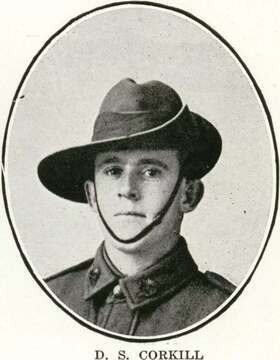
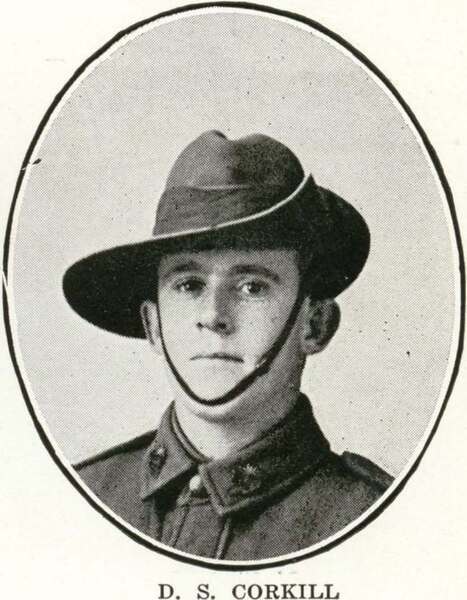
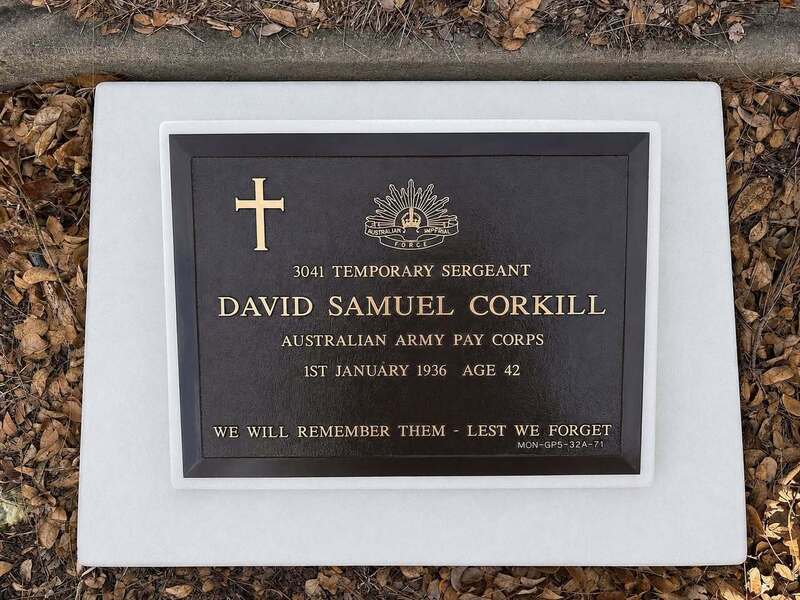
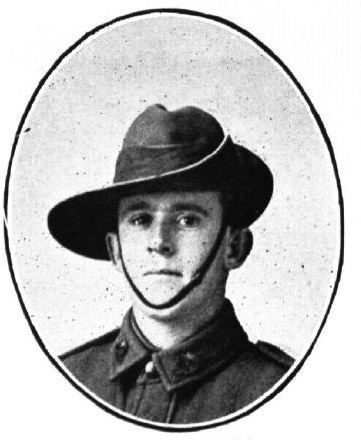
Australian World War One veteran Temporary Sergeant David Samuel Corkill (Service No. 3041), is among almost 800 previously unmarked WWI veterans’ graves in Lutwyche Cemetery we have now marked with plaques in recognition of their service for Australia.
We unveiled his plaque in Lutwyche Cemetery on 16 May 2026, along with a further 185 plaques on the previously unmarked graves of Australian World War One veterans:
See Australian Remembrance Army Facebook page
David Samuel Corkill was born on 2 February 1893 at Duaringa, Central Queensland, to Louis Corkill and Harriet Corkill, née Draper.
Before the war, David worked as a grocer at Duaringa. On 4 September 1916, he enlisted in the Australian Imperial Force at Brisbane, aged 23 years, and single. His mother, Mrs Harriet Corkill of Duaringa, Rockhampton, Queensland, was named as his next of kin. He embarked for overseas service from Sydney, New South Wales, on 7 February 1917 aboard HMAT Wiltshire.
After arriving overseas, David passed through the A.I.F. training and depot system in Britain.
Although David had originally enlisted and embarked as an infantry reinforcement for the 41st Battalion, his later service took a different direction. His records show that he became connected with the Australian Army Pay Corps. The Pay Corps handled soldiers’ pay, allowances, accounts, records, transfers, and financial administration, particularly important during the long process of demobilisation after the war ended.
In 1918, while overseas, David married Beatrice Ann Stevenson in Grantham, Lincolnshire, England. Together they later had four children: David, Mavis, Noel, and Patricia.
David remained overseas after the Armistice of 11 November 1918 and was not discharged until 12 June 1920, which indicates that his service continued through the post-war demobilisation period. Men serving in administrative roles such as the Pay Corps were often required after the fighting had ended, as the A.I.F. still had to manage the pay, records, movements, and return of thousands of soldiers to Australia.
After returning to civilian life, David continued working as a grocer and was later recorded as a Master Grocer. By 1936, he and his family were living at Inglis Street, Wilston, Queensland.
Tragically, David’s life ended suddenly on New Year’s Day 1936. He was knocked down by a motor car on Bowen Bridge Road and was taken to Brisbane Hospital, where he died, aged 42 years. His death certificate recorded the cause of death as fracture of the skull and injury to the brain, the result of an accidental motor car collision.
David Samuel Corkill was buried on 2 January 1936 at Monumental General Portion 5, Lutwyche Cemetery, Brisbane, Queensland.
After 90 years without recognition at his place of burial, his grave now bears a plaque commemorating his service to Australia — ensuring his name endures among those remembered for their duty and sacrifice. His identity and dignity have now been restored.
We have remembered him.
Lest We Forget
Click images to start slideshow.