







CUPITT, Sidney Charles Crisford
| Service Number: | QX9586 |
|---|---|
| Enlisted: | 20 June 1940 |
| Last Rank: | Sergeant |
| Last Unit: | Not yet discovered |
| Born: | Brisbane, Queensland, Australia, 25 May 1910 |
| Home Town: | Dugandan, Scenic Rim, Queensland |
| Schooling: | Not yet discovered |
| Occupation: | Banana Plantation Manager |
| Died: | Fatal Car Accident, Amberley, Queensland, Australia, 13 August 1955, aged 45 years |
| Cemetery: |
Ipswich General Cemetery, Qld Columbarium Wall, Ipswich General Cemetery |
| Memorials: | Ballarat Australian Ex-Prisoners of War Memorial, Ipswich Soldier's Memorial Hall WW2 Honour Roll |
World War 2 Service
| 20 Jun 1940: | Involvement QX9586 | |
|---|---|---|
| 20 Jun 1940: | Enlisted | |
| 20 Jun 1940: | Enlisted Australian Military Forces (WW2) , Sergeant, QX9586 | |
| 14 Dec 1945: | Discharged | |
| 14 Dec 1945: | Discharged Australian Military Forces (WW2) , Sergeant, QX9586 |
Help us honour Sidney Charles Crisford Cupitt's service by contributing information, stories, and images so that they can be preserved for future generations.
Add my storyBiography contributed by Tanya Jen
Sidney Charles Crisford Cupitt was born in 1910, when his parents—Andrew Augustus Cupitt and Lilly Frances (née Crisford)—were living in Thomas Street, Albion, Queensland. The family later moved to Dugandan (date unknown), where Sid spent much of his childhood. During his teenage years he became a member of the Light Horse Infantry in Boonah, marking the beginning of a lifelong association with discipline, service, and rural work.
One of Sid’s earliest jobs was at a sawmill in Boonah. He later moved to the Sunshine Coast region where he worked in sawmills near the Glass House Mountains, in the small country town of Kin Kin. While living in the area he also began working on banana plantations, eventually relocating to Upper Currumbin (now Currumbin Valley). There he purchased a parcel of land and established his own banana farm. Sid sold this property around 1933 and subsequently became manager of Dr Spence’s 108‑acre banana plantation. After marrying Lillian Isabel Gillis on 1 June 1935, Sid and Lillian lived on the plantation for the next four years.
With the outbreak of the Second World War in 1939, Sid made the decision to enlist. On 17 June 1940 he received a formal Notice to Attend for Enlistment from the Australian Military Forces, advising that he had been accepted into the 2nd Australian Imperial Force. He was required to present for attestation at 8:30 a.m. on 20 June 1940. Enlisted men were instructed to bring personal items if they possessed them.
On 7 March 1941, Sid sent a telegram to Lillian from Belmont, Western Australia, where she was staying in Limestone Street. He informed her that he would be arriving in Brisbane the following Thursday. Sid was later transferred to the Perth Regiment, where he served as an instructor for new recruits.
By 1942, uncertainty clouded Lillian’s world. A letter from P. D. Jones, Officer in Charge of Major Records at the Warwick Office of the Australian Military Forces, advised that no definite information was available concerning the whereabouts or fate of Sergeant Sidney Charles Crisford Cupitt. A subsequent letter dated 17 June 1942 confirmed that Sid “must now be posted as Missing.”
In reality, Sid had been captured and became a prisoner of war. He spent three and a half years at Changi and worked on the notorious Burma–Thai Railway under brutal conditions. Throughout 1942–1945, Lillian received sporadic correspondence from both Sid and the Australian Military, often delayed, censored, or incomplete.
Sid was finally liberated in 1945 and returned home aboard the R.M.S. Arawa, a 14,500‑ton ship of the Shaw Savill Line. His Prisoner of War Pass, issued by the Brisbane City Council Transport Department on 13 December 1945, listed his address as 41 Smith Street, North Ipswich and remained valid until 12 June 1946.
After the war he undertook training as a PMG Linesman and worked at the South Street Depot in Ipswich. Sid became a member of the Returned Soldiers League in Nicholas Street and frequently visited fellow Changi ex‑prisoners of war in hospital, maintaining strong bonds forged through shared hardship.
Having survived the war and years of captivity, Sid’s life was tragically cut short. He died on 13 August 1955 at the age of 45 in a car crash at Amberley.
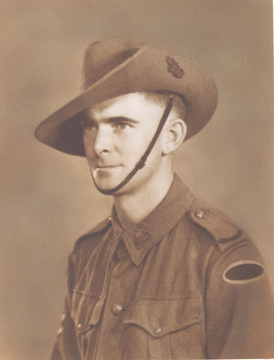
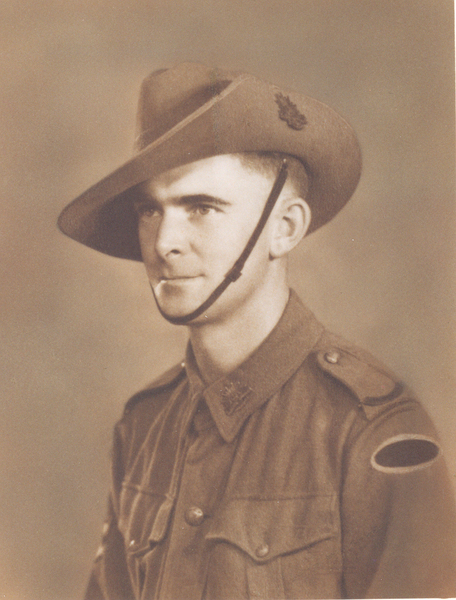
Click images to start slideshow.