





11903
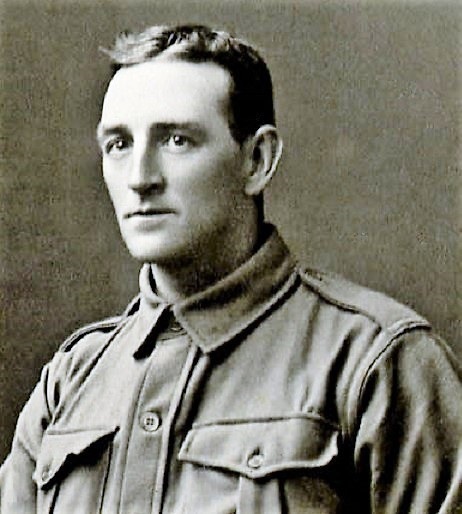
FOOT, Francis Herbert
| Service Number: | 1917 |
|---|---|
| Enlisted: | 7 April 1916 |
| Last Rank: | Sergeant |
| Last Unit: | 4th Machine Gun Battalion |
| Born: | Melrose, South Australia, 23 March 1884 |
| Home Town: | Melrose, Mount Remarkable, South Australia |
| Schooling: | Not yet discovered |
| Occupation: | Blacksmith |
| Died: | Illness, Booleroo Center Hospital, 31 October 1941, aged 57 years |
| Cemetery: |
Melrose Cemetery, South Australia Melrose, District Council of Mount Remarkable, South Australia, Australia |
| Memorials: | Adelaide Grand Masonic Lodge WW1 Honour Board (1), Melrose Memorial Institute Honour Roll, Melrose School Roll of Honour |
World War 1 Service
| 7 Apr 1916: | Enlisted | |
|---|---|---|
| 13 Jul 1916: | Involvement Private, 1917, 48th Infantry Battalion, --- :embarkation_roll: roll_number: '19' embarkation_place: Adelaide embarkation_ship: HMAT Seang Bee embarkation_ship_number: A48 public_note: '' | |
| 13 Jul 1916: | Embarked Private, 1917, 48th Infantry Battalion, HMAT Seang Bee, Adelaide | |
| 14 Apr 1917: | Transferred Private, 12th Machine Gun Company, Transferred to the 12th Machine Gun Company | |
| 12 May 1919: | Involvement AIF WW1, Sergeant, 4th Machine Gun Battalion | |
| 13 Aug 1919: | Discharged AIF WW1, Sergeant, Discharged from the AIF |
Help us honour Francis Herbert Foot's service by contributing information, stories, and images so that they can be preserved for future generations.
Add my storyBiography contributed by Adelaide Botanic High School
Francis Herbert Foot was born on the 23rd of March 1884 in Melrose, South Australia. Foot lived in Melrose, Mount Remarkable, South Australia. His parents names were, Mary Jane and Walter Foot. He attended Melrose Public School. Foot was a Christian of the Church of England. He was 5 feet 8 inches tall. Before he decided to serve in the war, he was working as a Blacksmith. Foot enlisted in the A.I.F on the 7th of April 1916 in Adelaide, at the age of 31 and 11 months.
Private Foot embarked from H.M.A.T. Seang Bee at Outer Harbour, South Australia, on the 13th of July 1916. He disembarked on the 9th of September at Plymouth, England. Foot was then taken on strength in Folkestone, England, on the 20th of November 1916. Foot marched into Etaples from England on the 21st of November 1916, where he was taken on strength with the 48th Battalion.
Foot was transferred to the 12th Brigade Machine Gun Company in France on the 14th of April 1917. Three days later, on the 17th of April 1917, Foot was taken on strength to battle in the First Battle of Scarpe, where he fought on the field in Arras, France. Four days later, on the 21st of April, Foot was appointed to the position of Shoeing Smith, where he assisted the 12th Brigade by making and fitting horseshoes. Foot most likely was appointed to this position due to his previous occupation as a Blacksmith.
Around a year later, on the 1st of April 1918, Foot’s designation was changed to “4th Machine Gun Battalion”. Foot took leave, in the UK from 29 September 1918 - 15th October 1918 and returned to France.
On the 30th of March 1919, where he marched out to an Australian Base Depot (A.B.D.) to do duties on base. On the 8th of April 1919, Foot was transferred to Le Havre, France. In France, Foot returned to the brigade headquarters. Foot returned to Australian from Port Napier leaving on the 12th of May 1919. He was discharged 13th Aguust 1919.
Foot returned to Melrose, South Australia, at the age of 35. He married to Beatrice Mary Yates Foot, who was born on the 16th of August 1899. Foot played cricket in the northern areas of South Australia and according to an obituary published in the The Advertiser was “One of the best cricketers in the northern area.”. Foot died at the age of 57 and 7 months due to a short illness. He passed away at Booleroo Centre Hospital on the 31st of October 1941. Foot was buried at Melrose Cemetery, Melrose, South Australia. Beatrice Mary Yates died on the 9th of June 1980 at the age of 80 years old and was buried at Enfield Memorial Park.


Click images to start slideshow.