




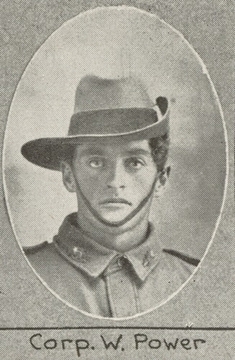
POWER, William James
| Service Numbers: | 488, Q119172 |
|---|---|
| Enlisted: | 6 October 1914, 2 years Army Service Corps Brisbane |
| Last Rank: | Private |
| Last Unit: | 1 Garrison Battalion (QLD) |
| Born: | Stanthorpe, Queensland, Australia, 10 December 1889 |
| Home Town: | Brisbane, Queensland |
| Schooling: | Not yet discovered |
| Occupation: | Saddler |
| Died: | Brisbane, Queensland, Australia, 6 May 1956, aged 66 years, cause of death not yet discovered |
| Cemetery: |
Lutwyche Cemetery, Brisbane, Qld Anzac Portion 8 |
| Memorials: |
World War 1 Service
| 6 Oct 1914: | Enlisted AIF WW1, Corporal, 488, 2nd Light Horse Field Ambulance , 2 years Army Service Corps Brisbane | |
|---|---|---|
| 15 Apr 1919: | Discharged AIF WW1, Lance Sergeant, 488, 2nd Light Horse Regiment, 1st MD |
World War 2 Service
| 12 Sep 1941: | Involvement Private, Q119172 | |
|---|---|---|
| 12 Sep 1941: | Enlisted Australian Military Forces (WW2) , Private, Q119172, 1 Garrison Battalion (QLD) | |
| 12 Sep 1941: | Enlisted | |
| 19 Nov 1945: | Discharged Australian Military Forces (WW2) , Private, Q119172, 1 Garrison Battalion (QLD) | |
| 19 Nov 1945: | Discharged |
Help us honour William James Power's service by contributing information, stories, and images so that they can be preserved for future generations.
Add my storyBiography contributed by Evan Evans
From Australian Remembrance Army
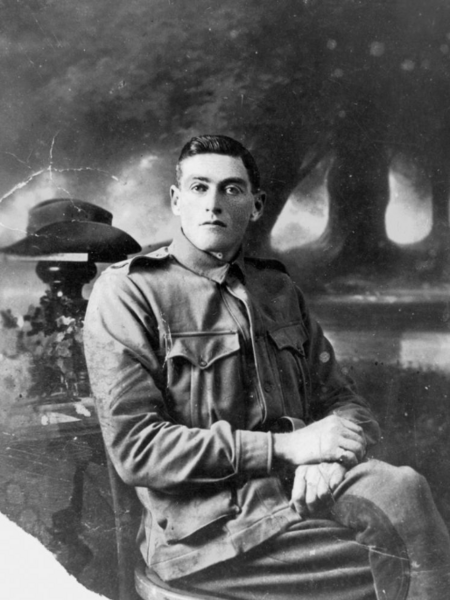
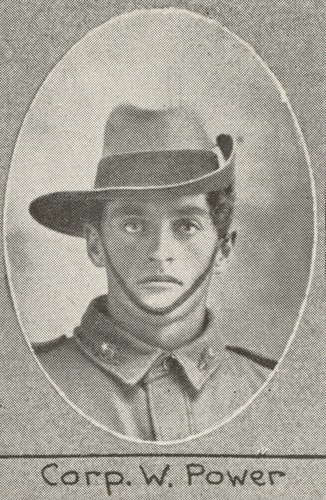
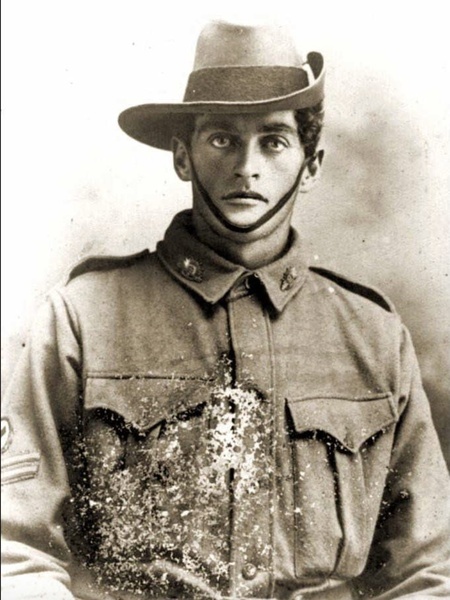
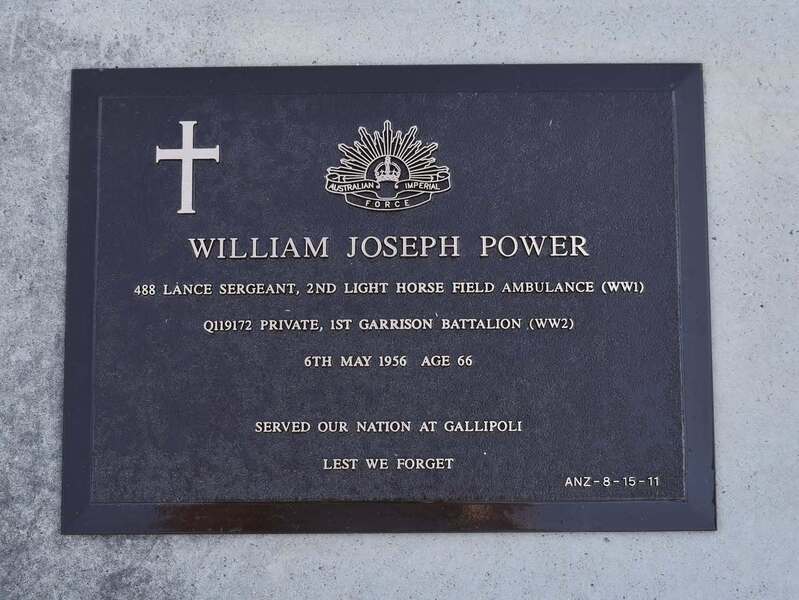
William Joseph Power, an Australian veteran of both World Wars who served our nation at Gallipoli during WWI, is among almost 800 previously unmarked WWI veterans’ graves in Lutwyche Cemetery we have now marked with a plaque recognising their service for Australia.
We unveiled his plaque in Lutwyche Cemetery on 23 September 2023, along with a further 300 plaques on the previously unmarked graves of Australian World War One veterans located in Anzac Portion 8, Lutwyche Cemetery, Brisbane:
See Australian Remembrance Army Facebook page
William Joseph Power was born on 9 December 1889 at Stanthorpe, Queensland, to William Power and Mary Power (nee Comerford). He enlisted in the Australian Imperial Force at Brisbane on 6 October 1914, stating his occupation as a labourer. He declared that he was 24 years of age and was posted to the 2nd Light Horse Field Ambulance. His overseas service during the First World War was marked by prolonged illness. Between 1915 and 1917, he experienced repeated hospital admissions for influenza, tonsillitis, typhoid fever and gastro-enteritis, resulting in frequent transfers between medical units in Egypt, including treatment at Cairo and Port Said, and extended periods on the seriously ill list. After returning to Australia and undergoing post-war medical processing, William Joseph Power was formally discharged from the 1st Australian Imperial Force on 15 April 1919.
Following his return to Australia, he is recorded as living in Tingalpa Brisbane with his occupation recorded as farmer.
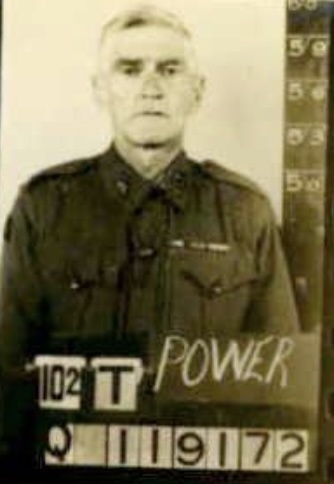
During the Second World War, William enlisted in the Australian Military Forces in September 1941, aged 51, recorded as single and employed as a labourer. He served in Australia with the 1st Australian Garrison Battalion, a home-defence unit responsible for static security duties, including the guarding of strategic installations and military facilities, and for releasing younger, medically fit soldiers for active overseas service.
After completing his WWII military service, William resumed farming at Tingalpa Brisbane. He was found deceased at his residence on 6 May 1956, aged 66, and was believed to have died intestate. His death was formally notified to the Central Army Records Office by his solicitor acting on behalf of his sister, Mrs Elizabeth Mary Griffith of Kedron Brisbane. The correspondence confirmed Power’s service in the 2nd Light Horse Field Ambulance during the First World War and the 1st Australian Garrison Battalion during the Second World War, and subsequent Army Records checks confirmed that no will had been lodged during his military service.
William Joseph Power died 6th May 1956 and was buried in Anzac Portion 8, Lutwyche Cemetery, Brisbane. He was a single man who never married and had no known children.
After decades without recognition at his place of burial, his grave now bears a plaque commemorating his service to Australia — ensuring his name endures among those remembered for their duty and sacrifice. His identity and dignity have now been restored.
We have remembered him.
Lest We Forget.
Click images to start slideshow.