







TAYLOR, Herbert James Cox
| Other Name: | COX-TAYLOR, Herbert James |
|---|---|
| Service Numbers: | Not yet discovered |
| Enlisted: | Not yet discovered |
| Last Rank: | Captain |
| Last Unit: | 2nd Divisional Ammunition Column |
| Born: | Parramatta, New South Wales, Australia, 22 November 1872 |
| Home Town: | Not yet discovered |
| Schooling: | Not yet discovered |
| Occupation: | Soldier |
| Died: | Campbell Town, Tasmania, Australia, 5 February 1936, aged 63 years, cause of death not yet discovered |
| Cemetery: |
Cornelian Bay Cemetery and Crematorium, Tasmania Church Of England, Aa, Number 27 |
| Memorials: |
Boer War Service
| 1 Oct 1899: | Involvement Lieutenant, A Battery, Royal Australian Artillery | |
|---|---|---|
| 1 Oct 1899: | Involvement Captain, 1st Battalion, Australian Commonwealth Horse |
World War 1 Service
| 16 Nov 1915: | Embarked 2nd Divisional Ammunition Column, HMAT Port Macquarie, Melbourne | |
|---|---|---|
| 16 Nov 1915: | Involvement 2nd Divisional Ammunition Column, --- :embarkation_roll: roll_number: '22' embarkation_place: Melbourne embarkation_ship: HMAT Port Macquarie embarkation_ship_number: A39 public_note: '' |
Help us honour Herbert James Cox Taylor's service by contributing information, stories, and images so that they can be preserved for future generations.
Add my storyBiography contributed by Faithe Jones
Son of Charles TYALOR and Mary Ann TAYLOR nee McEACHERN
OBITUARY.
COLONEL H. J. COX-TAYLOR.
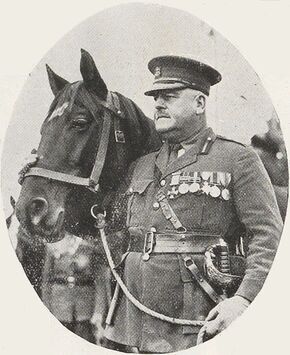
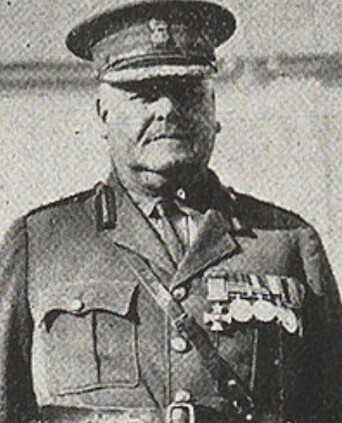
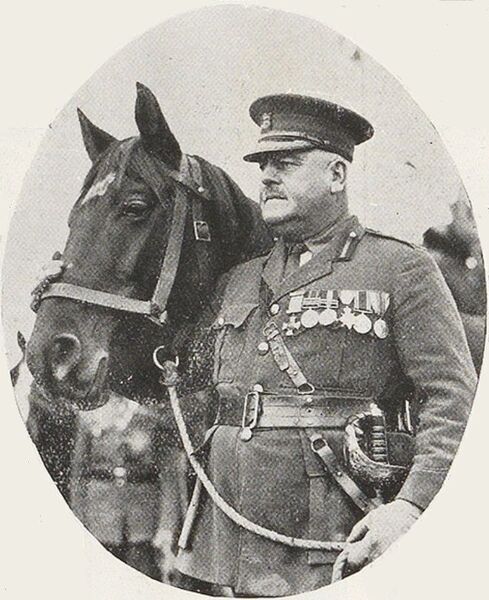
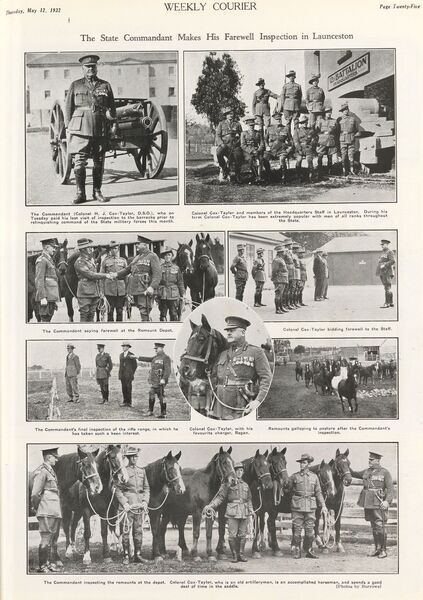
Colonel Herbert James Cox-Taylor, who died at Campbell Town, Tasmania, following an operation for appendicitis on Wednesday, served in the permanent military forces for 41 years. He saw service in the Boer War and the Great War. He joined the New South Wales Permanent Artillery at Victoria Barracks as a junior sub lieutenant, at the age of 18 years, in 1891, and served in the Boer War with "A" Battery. He came back to Australia with A battery, but left again for further service as captain and adjutant of the first Commonwealth Light Horse Brigade to leave Australia. Before the brigade left, he designed the "Rising Sun" badge, which has been a feature of the Australian army uniform ever since. Upon his return he was posted as chief instructor, School of Gunnery, South Head, after taking a gunnery staff course in England. He vacated this position to command the R.A.A. at Thursday Island, and later at Queenscliff, Victoria. In 1915 he went to Egypt, and in 1916 there formed and trained the 5th Divisional Field Artillery Brigade. For three months in the desert just east of Ferry Post, on the Suez Canal, Colonel Cox-Taylor, a splendid instructor, developed from new reinforcements, stiffened by a few Gallipoli veterans, a splendidly trained and efficient brigade. Colonel Cox-Taylor left with the brigade for France in June, 1916, and commanded it in the memorable battle of Fromelles. He was invalided home in 1917, and was then attached to the Liverpool camp. He was awarded the D.S.O. and was four times mentioned in despatches for gallantry.
In 1927 he became military commandant in Tasmania, from which position he retired in 1932. Colonel Cox-Taylor had a distinctly inventive brain, and on a number of occasions was responsible for suggestion to improve equipment as well as for innovations. These inventions were reviewed by the War Office with favourable comment. He is survived by Mrs Cox-Taylor, two daughters, and a son.
“The Sydney Morning Herald, 7 February 1936, Page 15”
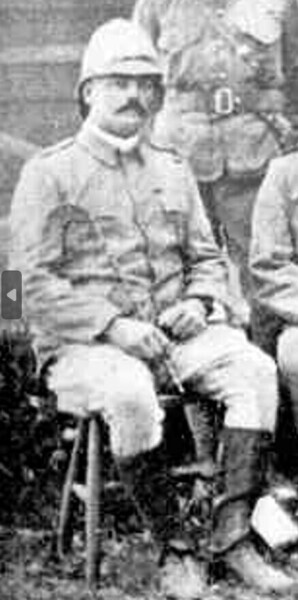
Click images to start slideshow.