



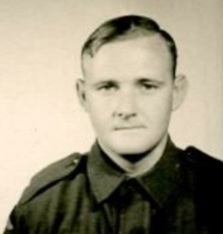
NUGENT, Francis Joseph
| Service Numbers: | QX9437, 404256 |
|---|---|
| Enlisted: | 18 June 1940 |
| Last Rank: | Flight Lieutenant |
| Last Unit: | 3 Personnel Depot |
| Born: | Maryborough Queensland Australia , 16 July 1916 |
| Home Town: | Kedron, Brisbane, Queensland |
| Schooling: | St Laurence's College, Brisbane, Queensland, Australia |
| Occupation: | Clerk |
| Died: | Queensland Australia , 5 January 1979, aged 62 years, cause of death not yet discovered |
| Cemetery: |
Mount Gravatt Cemetery & Crematorium, Brisbane |
| Memorials: |
World War 2 Service
| 18 Jun 1940: | Involvement QX9437, enlisted RAAF 404256 | |
|---|---|---|
| 18 Jun 1940: | Enlisted Australian Military Forces (WW2) , Private, QX9437 | |
| 18 Jun 1940: | Enlisted | |
| 18 Jul 1940: | Discharged Australian Military Forces (WW2) , Private, QX9437 | |
| 18 Jul 1940: | Discharged | |
| 19 Jul 1940: | Enlisted Royal Australian Air Force, Aircraftman 2 (WW2), 404256, No. 2 Initial Training School Bradfield Park | |
| 19 Jul 1940: | Enlisted Royal Australian Air Force, Flight Lieutenant, 404256 | |
| 19 Aug 1940: | Promoted Royal Australian Air Force, Leading Aircraftman | |
| 31 Oct 1940: | Embarked Royal Australian Air Force, Leading Aircraftman, 404256, Emb. Sydney Australia for Canada | |
| 30 Mar 1941: | Promoted Royal Australian Air Force, Sergeant | |
| 30 Sep 1941: | Promoted Royal Australian Air Force, Flight Sergeant | |
| 3 Dec 1941: | Involvement Royal Australian Air Force, Flight Sergeant, 404256, No. 460 Squadron (RAAF), Air War NW Europe 1939-45 | |
| 30 Mar 1942: | Promoted Royal Australian Air Force, Warrant Officer | |
| 16 Jul 1943: | Promoted Royal Australian Air Force, Pilot Officer | |
| 8 Dec 1943: | Involvement Royal Australian Air Force, Pilot Officer, 404256, No. 467 Squadron (RAAF), Air War NW Europe 1939-45 | |
| 16 Jan 1944: | Promoted Royal Australian Air Force, Flying Officer | |
| 23 Apr 1944: | Involvement Royal Australian Air Force, Flying Officer, 404256, No. 61 Squadron (RAF), Air War NW Europe 1939-45 | |
| 30 Jun 1944: | Honoured Distinguished Flying Cross, Air War NW Europe 1939-45 | |
| 16 Jul 1944: | Promoted Royal Australian Air Force, Flight Lieutenant | |
| 26 Mar 1946: | Discharged Royal Australian Air Force, Flight Lieutenant, 404256 | |
| 26 Mar 1946: | Discharged Royal Australian Air Force, Flight Lieutenant, 404256, 3 Personnel Depot | |
| Date unknown: | Involvement Flight Lieutenant, 404256, Operational Training Units (RAF) |
Help us honour Francis Joseph Nugent's service by contributing information, stories, and images so that they can be preserved for future generations.
Add my storyBiography contributed by Graham Padget
ROYAL AUSTRALIAN AIR FORCE
HONOURS AND AWARDS.
DISTINGUISHED FLYING CROSS
FLYING OFFICER FRANCIS JOSEPH NUGENT (404256)
CITATION.
Flying Officer NUGENT has completed many successful operations against the enemy in which he has displayed high skill, fortitude and devotion to duty.
[Transcribed from NAA Service Record]
Biography contributed by John Dinnen
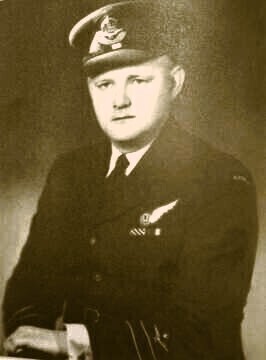
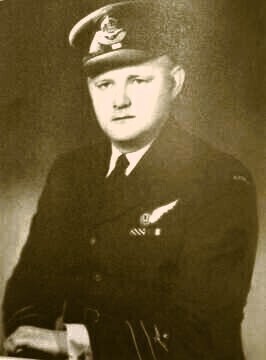
On a warm, late January morning circa 1930, at East Brisbane, a smart and athletic young man dressed himself in his new school uniform, he mastered his first ever neck tie of black and gold, he bade farewell to his parents, Lillian and Frank (Snr), a former RAN Lieutenant Commander.
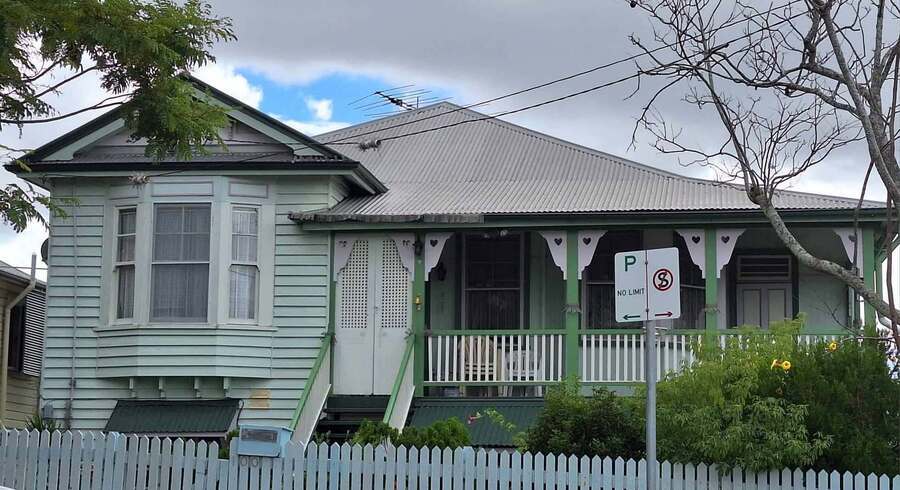
He then began to make his way from his family home at 100 Mowbray Terrace, through the hustle and bustle of the Woollongabba fiveways, with it’s busy railway crossing, and trucks making their way to the South Brisbane docks, through the general civilian vehicular traffic and policeman on point duty, to his new school at South Brisbane, St. Laurence's College.
This was to be the first of many exercises of navigation undertaken by this young man as he matured, and this journey would eventually see him volunteering for the most dangerous duties, in the most dangerous allied unit of World War 2. This combination of circumstances led to his name being added to Winston Churchill’s “few” when he triumphantly proclaimed to the British Parliament and the world:
“Never in the field of human endeavour, has so much been owed by so many, to so few.”
Francis (Frank) Joseph Nugent was to receive the Distinguished Flying Cross, and was Mentioned in despatches on two occasions, his name is honoured on the SLC Cadet Under Officer Trophy, the F J Nugent Trophy.
Frank was born in Maryborough, Queensland on the 24th of July, 1917 (records also indicate 1916). His years at St. Laurence’s College revealed him to be a young man of substantial intellect as well as possessing a high level of physical prowess, he was not one to be intimidated and during his school years he showed that spirit in abundance.
Frank excelled in Rugby League at Lauries, which in the 1930’s was the only code of Rugby football played at the College, and he represented the A teams throughout his schooling. He also represented the Queensland Schoolboys in Wrestling and Handball, as well as excelling in the sport of Boxing, Cricket, Tennis and Swimming. He was one of those blokes who did nothing half-heartedly, and that spirit of determination served him well when he most needed it.
As mentioned, Frank was not just a physically talented student, as he went on to obtain his Senior Certificate at Lauries in the class of 1934 and gained strong results in Maths A, Maths B, Physics and Economics.
After completing his Junior and Senior University level studies at Lauries he took up a position at the Queensland State Tax Office, embarking on a career amongst the “cash book and the journal”, but as was to be expected, Frank’s physical prowess didn’t fit well with a life of sitting at a desk.
He much preferred playing Cricket and Swimming for the Department, whilst outside of his workplace circles he played A grade Rugby Union and League for the two Brisbane Brothers Clubs, and later becoming the Honorary Secretary of Past Brothers Rugby League Club, Brisbane.
With the passage of time it abundantly clear to him that he personally harboured more than a mere “doubt he’d suit the office” in George Street, Frank’s dream was for an office in the air.
Opportunities often come in unexpected ways, and Adolph Hitler’s invasion of Poland on the 1st of September, 1939 was the catalyst for Frank to fulfil his dreams.
When Frank came to the realisation that this war was to become a major, ongoing struggle against the forces of European facism, he wasted little time. After some deep thinking over the Easter break of 1940, on Tuesday the 26th of March, Frank quietly departed his George Street office at mid-morning and made his way to Gona Barracks, at Kelvin Grove where he signed up initially as an Infantryman in the Australian Imperial Forces (AIF), a career which lasted four weeks in total.
It’s sometimes said amongst our military folk, actually infantry soldiers, that “The army sleeps under the stars, the navy navigates by the stars, and the air force sleeps five stars.” But this was a half-truth, as the duties that Frank experienced in the night time in the skies over Germany could only be executed by the staunch of mind and body.
Frank Nugent was a noted hard-nosed and intelligent individual who knew that in pushing himself to be his best, he would serve the cause of freedom to the best of his ability. Accordingly, on the 25th of July, 1940 Francis Joseph Nugent was discharged from the Army in order to enlist in the RAAF.
The urgency of the war effort was exemplified by Frank’s movements thereafter. After RAAF Basic Training and within one month of signing up, he was sent to Bradfield Park in Sydney where he underwent air crew training for three months and then on the 31st of October, 1940 he was sent by sea to Edmonton, Canada to take part in the Empire Air Training Scheme (EATS).
EATS was an endurance test for the crews, whether they be pilots, navigators, or general crew, it was a period of seven months during which their mettle was tested to the extreme, as the saying goes “to see what they were made of”.
Having pushed through the best that the EATS could throw at him, Frank was sent to Lichfield, England on the 19th of May, 1941 where he took up a position with RAF 142 Squadron, RAF Bomber Command. After a further three months of aircraft specific training in the Wellington heavy bomber, Frank took up his position as a Sergeant Observer in an operational crew with 460 Squadron.
The reality of Bomber Command duty:
Flying a World War 2 Wellington or Lancaster bomber was an assault on the senses, in so many ways. The fact that the aircraft were not pressurised meant that the ear-splitting thunder of the four Rolls Royce Merlin piston engines each driving four metre long propellers was unfiltered and a constant challenge to radio communications and concentration on the tasks at hand.
Furthermore, flying at altitude, particularly in the winter, created almost freezing temperatures in the small cabin space, the conditions were very cramped and movement within the aircraft was severely restricted.
To take these duties from merely challenging to outright treacherous, flying over enemy occupied territory meant avoiding anti-aircraft cannon fire, the constant presence of flak gun fire, exploding at altitude and sending exploding shrapnel bursting through the walls of the aircraft and in many cases injuring or killing air crew.
Then there was the ever present, terror-inducing Messerschmitt ME 109’s, the Luftwaffe’s deadly fast attack aircraft, was faster than the British equivalent and equipped with two cannons and two machine guns. It was the bane of Bomber Command and was responsible for destroying more heavy bombers than any other German weapon deployed against Bomber Command.
The pilots must also ensure that they avoid the many hundreds of other RAF bombers on the sortie, as well as the aircrew from stricken bombers, who had abandoned stricken aircraft and were forced to parachute through the oncoming squadrons of allied bombers, anti-aircraft fire from the ground and the ever present Messerschmitts.
Finally of course, there is the core duty, to remain completely focussed on locating the target and delivering the ordnance effectively over the target.
There were a couple of further complications, the pilot must ensure that he drops his payload of 1000, 4000 and 8000 pound bombs, whilst avoiding civilian targets.
Then finally, the close formation flying meant each aircraft would only get one pass over the target, otherwise suffer the indignity of a failed mission.
Frank’s first mission:
So, on 10th of October, 1941 Frank commenced his first tour of duty with RAF Bomber Command and he was assigned as Sergeant Observer a raid upon the German occupied town of Ostend, Belgium.
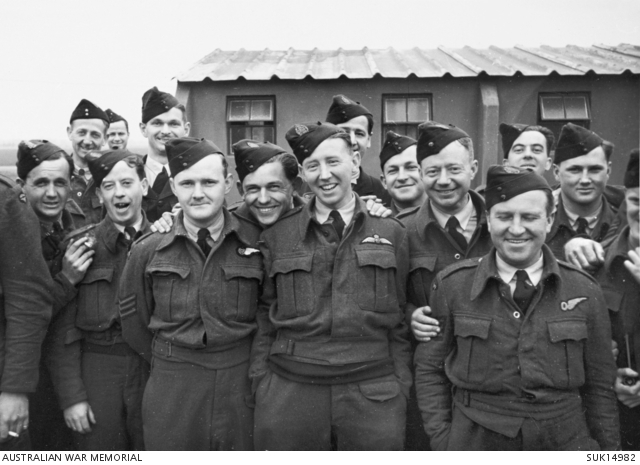
Frank would go on to become a fully operational pilot, flying the Wellington and Lancaster bombers during his two tours of duty in which he flew with Squadrons 142, 460, 467, and 61. He flew in 53 sorties over occupied territory for a total of 310 operational air hours. Some of his more notable operations included:
The only three 1000 bomber raids ever conducted by RAF Bomber Command in World War 2 upon:-
Cologne on 30/5/42;
Esen on 1/6/42; and
Bremen on 25/6/42.
He was also entrusted with leading the 94 Lancaster bomber daylight raid on St. Cyr in France where they attacked and successfully destroyed the German airfields and communications installations. These German installations were critical to the success of the Axis forces' aerial attacks against the allied D-day forces. (View the attached film of the raid)
Daylight attacks were inherently dangerous for Bomber Command aircrew, but the night-time raid upon Nuremberg on the 30th of March, 1944 made them look like a picnic.
The Nuremberg Raid:
In late March, 1944 the long winter bombing campaign was nearing an end, and Nuremberg was marked for the last raid of the campaign which involved 34 major raids on Germany between November 1943 and March 1944.
The night of March 30th was the final opportunity to take advantage of the longer nights and the correct phase of the moon to strike an important long range target in Germany, the chosen target was Nuremberg.
There were two major reasons for Nuremberg being chosen, firstly it was the home of the German heavy weapons industry. Secondly, Nuremberg was the scene of the 1930’s Nazi rallies and the ongoing annual Nazi rallies, plus the infamous Nazi racial laws, the Nuremberg laws, were signed into effect in that city in 1935. Nuremberg was synonymous with Nazism.
The Nuremberg Catastrophe:
Bomber Command crews knew all about the gamble of life, every mission was a virtual game of two-up for them, with deadly consequences.
On this night the moon was a half-moon and it was not due to set until the early hours of the 31st. This meant that the bombers would be illuminated by the bright moonlight as they entered the skies above Nuremberg, whilst the predicted high cloud, which was key to the operation being given the ‘go-ahead, began to break up as the bomber stream crossed the coastline into Belgium.
Consequently, from that point onwards, and under clear skies, the bombers navigated for 103 minutes to target, passing multiple nightfighter beacons (light and radio beacons used to guide German night fighters).
Another crucial complication came about due to the atmospheric conditions, the contrails left for kilometres in the wake of the aircraft, providing German fighters a clear trail to follow to begin systematically destroying the allied bombers.
Then there were thousands of flairs dropped from above on Bomber Command ensured they were sitting ducks.
The chaos was summarised by Flight Sergeant Basil Oxtaby of No. 467 Squadron RAAF, “It was common to see four or five Lancasters or Halifaxes going down in flames, sometimes three of the four engines were on fire, exploding on the ground. That made it even worse because when the aircraft exploded, there was a pool of light for hundreds of yards and the fighters above could see the bombers silhouetted against that light.”
For Bomber Command, the raid of 30 March 1944 was the worst night of the war. Of the 795 bombers despatched, 96 were lost, there were 723 casualties and 595 airmen were killed.
Nuremberg marked the final raid in a campaign lasting from November 1943 to March 1944, in which Bomber Command had lost over 1,128 aircraft: more than its average front-line strength.
Bomber Command Legacy:
The men of Bomber Command held a collective aim, and that was to destroy the German heavy industries which drove the Axis forces’ war effort and thereby demorailse the workforce.
In achieving this so effectively, the Bomber Command aircrews drew the almost undivided attention of the Nazi command to the degree that Reichmarschall Herman Goering took direct command of the fight against Bomber Command. Goering withdrew an immense amount of heavy weaponry from the land based battle fronts in order to protect the industrial towns of Germany.
In achieving their aim, the men of RAF Bomber Command placed themselves at heightened danger, whilst reducing the danger faced by the men at the battle fronts on the ground. That in itself was an incredible act of self sacrifice and extreme courage.
Sadly, of the 125,000 Bomber Command crew, 55,000 were killed in action.
Post-war Frank Nugent:
After the war, Frank became an Air Traffic Controller at the Brisbane airport, he died in January 1979 and is buried in the Anzac Section of the Mt. Gravatt Lawn Cemetery.
The last words of this dedication are from the British Prime Minister, Winston Churchill to the men of Bomber Command:
“Now that Nazi Germany is defeated, I wish to express to you on behalf of His Majesty’s Government the deep sense of gratitude which is felt by all the Nation for the glorious part which has been played by Bomber Command in forging the Victory.
For over two years, Bomber Command alone carried the war to the heart of Germany, bringing hope to the peoples of occupied Europe, and to the enemy a foretaste of the mighty power which was rising against him.
As the Command expanded, in partnership with the Air Forces of our American ally, the weight of the attacks was increased, dealing destruction on an unparalleled scale to the German Military, Industrial and Economic System.
Your Command also gave powerful support to the allied armies in Europe and made a vital contribution to the war at sea. You destroyed or damaged many of the enemy’s ships of war and much of his U-Boat organization.
By a prolonged series of mining operations you sank or damaged large quantities of his merchant shipping.
All your operations were planned with great care and skill; they were executed in the face of desperate opposition and appalling hazards; they made a decisive contribution to Germany’s final defeat.
The conduct of these operations demonstrated the fiery gallant spirit which animated your aircrews and the high sense of duty of all ranks under your Command.”
Winston Churchill
15th May, 1945

Click images to start slideshow.