







About This Unit
The 2nd/3rd Australian General Hospital
Milford, Surrey, England
1940–41
Janet Scarfe
2025
Among Australia’s overseas medical units in WW2, the 2/3 Australian General Hospital (AGH) is little known. It functioned in England between June 1940 and March 1941, in Milford, a small town in Surrey around 50 kilometres south west of London.
Origins
In May 1940, thousands of Australian and New Zealand troops left Australia aboard a convoy of ocean liners and escorts code named US3. Most of the convoy left Sydney on 5 May, and one ship followed a fortnight later. The intended destinations were Palestine via the Suez Canal, and France via the Mediterranean Sea. Besides fighting men, there were medical officers (MOs) for a special hospital (3ASH for sexually transmitted diseases) and members of the Australian Army Nursing Service (AANS) who were reinforcements at the 2/2AGH then in Palestine.
While the ships were at sea the war situation worsened dramatically for Britain and the Allies. In late May and early June France fell forcing British, French and Belgian troops to withdraw via Dunkirk to survive. On 10 June Italy entered the conflict on the side of Germany, making the Mediterranean Sea dangerous of Allied shipping. The entire convoy was diverted to Britain via Cape Town and Freetown.
Most of the convoy landed in Gourock near Glasgow and the last ship at Liverpool. By mid July there were around 11 000 Australian troops camped on Salisbury Plain, and medical officers and sisters without a hospital to work in or patients to nurse. Several of the MOs set up 3ASH on Salisbury Plain but the sisters were left free to sightsee for an indeterminate time. It was a strange existence. They had enlisted to nurse sick and wounded troops and knew first hand that parts of England were under attack, yet they had nothing to do.
2/3AGH
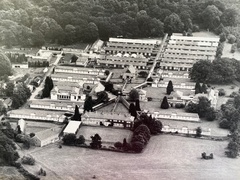
Finally in late July negotiations between British and Australian army medical authorities resulted in the establishment of a new hospital unit, 2/3AGH. It was located in already existing but unused prefabricated wooden buildings in the grounds the King George V Sanatorium at Hydestile near Milford in Surrey.
The personnel consisted of the MOs from 3ASH and two groups of sisters who had arrived separately in July 1940. Troops for non medical roles (e.g. drivers cooks) were recruited from the Other Ranks (ORs) on Salisbury Plain. The hospital had an official establishment of 400 beds, with a crisis establishment of 600. It opened with 200 beds.
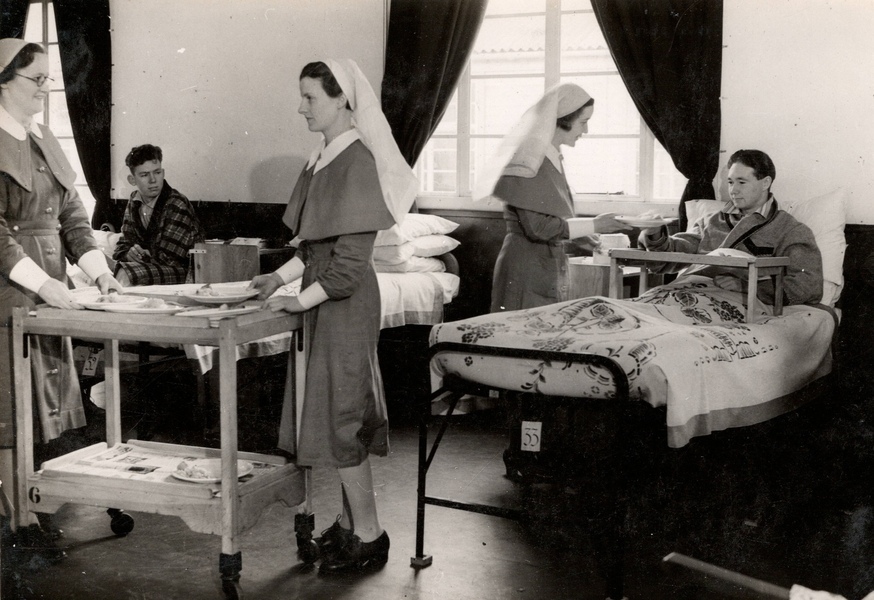
The AANS sisters began duty there on 6 August 1940.
Australian war correspondent in England, Kenneth Slessor, sent glowing communiqués about the hospital to the Australian press. After visiting 2/3AGH he heaped praise on the facilities including the operating theatre and kitchen which were the ‘last word in modernity’. He did not mention the good brisk walk the sisters had from their sleeping quarters to the wards, their chilly mess and dining room, the foul-smelling pig sty next door in the sanatorium grounds or the ‘somewhat primitive’ bathroom facilities.
Numbers fluctuated a little but the hospital had around 107 personnel. Commanding Officer was Lt Col Derby Loudon. The 13 officers included 9 MOs, a pharmacist and the quarter master. There were 70 or so AANS sisters including the matron Edith Butler, and 24 ORs for general duties.
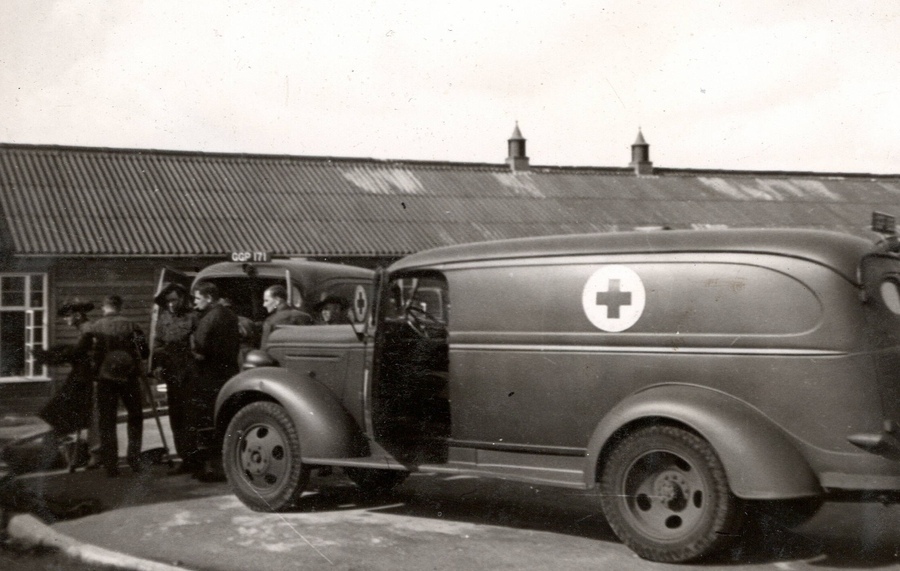
All up, 1699 patients were treated at 2/3AGH and 405 operations performed in the six months the hospital functioned. Most were Australian troops camped on Salisbury Plain, 100 kms away, brought and returned by the hospital’s fleet of ambulances, vans and cars.
There were no battle casualties and relatively few serious cases. One patient died, from peritonitis and pneumonia. ‘We lost our first Australian soldier’, wrote Puss Campbell who had specialled him. Pneumonia affected several AANS sisters. CO Loudon and Matron Butler were both severely unwell for different reasons. A major influenza outbreak over Christmas and New Year (1940–41) increased patient numbers and severely affected MOs and sisters. Generally however, most patients had minor complaints.
The largest number of cases were classified as ‘injuries general and local, followed by infections and intestinal problems, then a range of other illnesses from tonsillitis to skin disorders. They were ‘civilian’. Moreover the calibre and character of patients were such that CO Loudon was glad to see the back of them. Many, he wrote, were a ‘particularly bad type.’ They occupied beds for months on end while their military future – at the front or returned to Australia – was determined. Staff nurse Puss Campbell concurred. She described the men she nursed as ‘mostly chronics which annoyed me … men who were sick when they left home, [who] almost lived in hospital.’
Several MOs expressed concern that the absence of serious medical conditions could affect the sisters’ morale and efficiency.
The war above
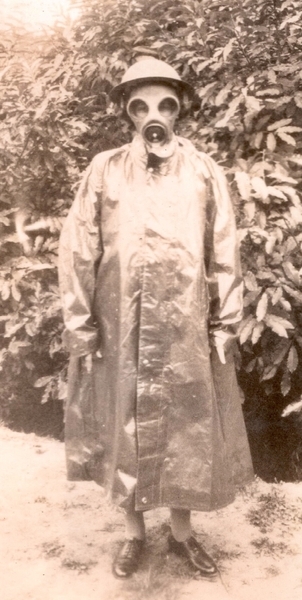
The cases admitted gave few clues that England was at war. However the hospital’s existence coincided almost exactly with the Battle of Britain. From the beginning, passive air defence (PAD) precautions were put in place on the grounds. Gas detectors were installed. Slit trenches were dug near the AANS quarters. All personnel and patients were issued with helmets and respirators and ordered to wear them for specified periods. Some personnel, including nursing staff, were allocated to decontamination and rescue teams in case of emergency. Despite the CO’s repeated pleas fire alarms, hydrants or hoses were only installed as the unit was departing.
Bombs, air raids and dogfights in the skies over the hospital and the surrounding areas were common, at least until the end of November 1940. The hospital’s windows broke during one raid, and rattled in many others. Many nights sleep was disturbed. Von Coghlan, AANS sister, described some nights as ‘rather hectic, Air raids all through the district’ while others were ‘very quiet … only two air raids.’ She welcomed rainy or foggy nights when visibility for ‘Jerry’ was poor. Then nights without raids became disconcerting. ‘Another quiet night,’ she wrote, ‘what is Hitler going to do next? I wonder what he has up his sleeve?’
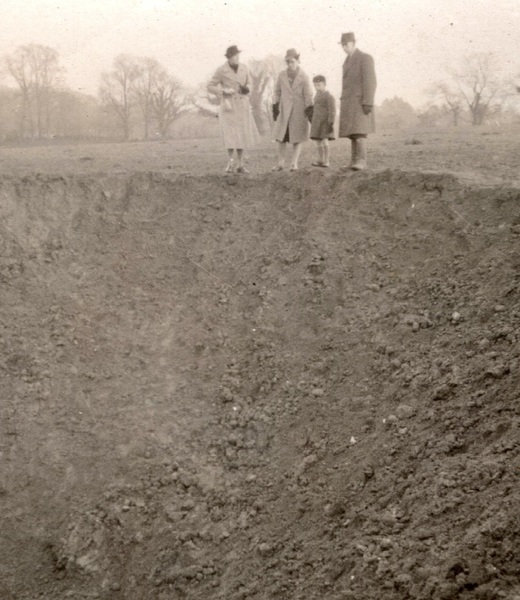
The hospital’s official report on air raids noted that over 200 bombs were dropped in the local area in September and October. The closest fell around 350 metres away. The worst damage to the hospital was a broken pipe that cut off the water supply for two days. The report noted that the bombs ‘caused alarm to certain of the personnel and patients, but were at no time dangerous.’ Puss and other hospital personnel may well have disagreed with the latter point.
Closing down
By the end of 1940, AIF HQ in England was preparing for the move forward to the Middle East of the Australian troops who had arrived in June and July. Most patients were assessed for transfer or return to Australia and left 2/3AGH in January 1941, leaving a small number to await passage home in March. The personnel remained until mid March, packing up the hospital and preparing stores and supplies for
shipping to the next destination, yet to be determined, somewhere in the Middle East.
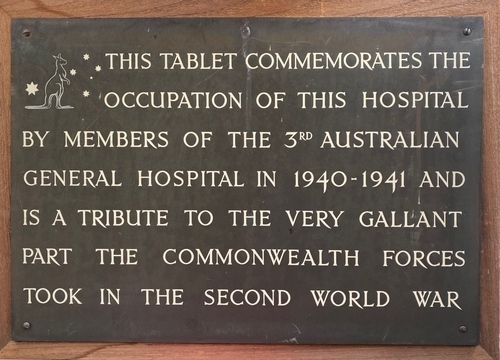
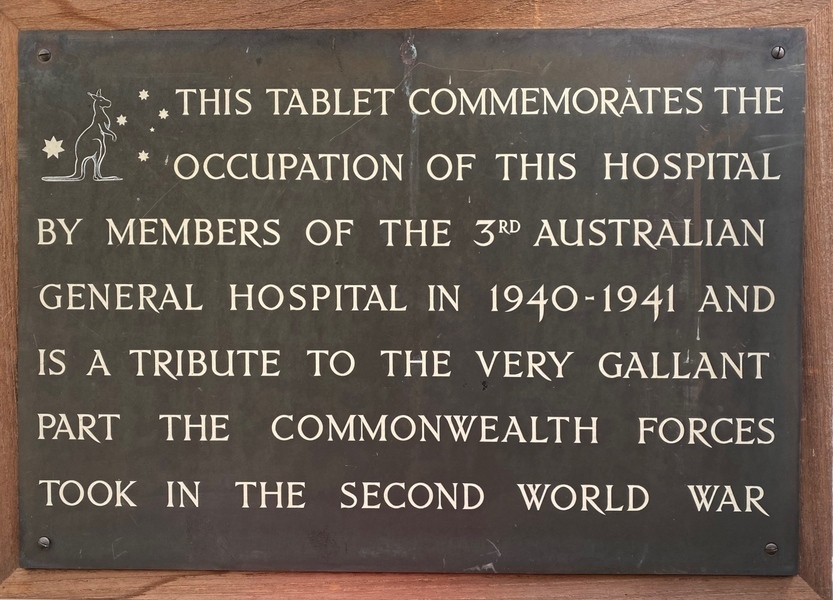
The sisters had already explored as much of England and Scotland as possible but now crammed in even more in their remaining weeks. They visited London as often as possible and some were saluted by the King, George VI. They said farewell to local people who had offered hospitality and friendship in the months 2/3AGH was at Milford. The local people installed a commemorative plaque in recognition of the presence of the hospital. Matron Butler also arranged visits to several hospitals dealing with military and civilian patients.
On the eve of departure the unit paraded for Australian Prime Minister Robert Menzies who made a fleeting visit to the now empty hospital. He shook hands with all personnel, gave a brief address and departed.
The 2/3 unit left the hospital for Glasgow in Scotland where it embarked and sailed for Port Suez in the Middle East via Freetown and Cape Town.
The 2/3AGH did not function again as a unit. Many of the personnel were attached to the newly established 2/11AGH, which began work in Alexandria on 29 May 1941 and later served in Papua New Guinea.
Bibliography
The official war/unit diary of the 2/3 Australian General Hospital is in the Australian War Memorial, AWM52 11/2/3
Janet Scarfe, Her Great Adventure: Dorothy ‘Puss’ Campbell WW2 army nursing sister, Janet Scarfe, 2024
(covers the entire history of the 2/3AGH and has a bibliography).
Rupert Goodman, Our War Nurses: The history of the Royal Australian Army Nursing Corps 1902–1988, Boolarong Publications, 1988
Jan Bassett, Guns and Brooches: Australian Army Nursing from the Boer War to the Gulf War, Oxford University Press, 1992




Click images to start slideshow.