


BYERS, Henry
| Service Number: | 286 |
|---|---|
| Enlisted: | 7 June 1915 |
| Last Rank: | Bombardier |
| Last Unit: | 36th Heavy Artillery Brigade |
| Born: | Tunnack, Tasmania , Australia, 26 December 1891 |
| Home Town: | Thursday Island (War-Ben Island, Waiben Island), Torres Strait, Queensland |
| Schooling: | Tunnack State School, Tasmania , Australia |
| Occupation: | Labourer, Farmer |
| Died: | 3 May 1960, aged 68 years, cause of death not yet discovered, place of death not yet discovered |
| Cemetery: |
St Peter's Anglican Church Cemetery Oatlands |
| Memorials: | Oatlands Soldiers Memorial, Thursday Island Honour Roll |
World War 1 Service
| 7 Jun 1915: | Enlisted AIF WW1, Gunner, 286 | |
|---|---|---|
| 17 Jul 1915: | Involvement Gunner, 286, Siege Artillery Brigade, --- :embarkation_roll: roll_number: '4' embarkation_place: Melbourne embarkation_ship: HMAT Orsova embarkation_ship_number: A67 public_note: '' | |
| 17 Jul 1915: | Embarked Gunner, 286, Siege Artillery Brigade, HMAT Orsova, Melbourne | |
| 23 Jul 1916: | Involvement AIF WW1, Gunner, 286, Siege Artillery Brigade, Battle for Pozières , In the Somme sector, 54th SAB supported attacks where the 1st and 2nd Australian Divisions fought for the Pozieres ridge. Heavy artillery units were engaged in continuous bombardment and counter‑battery fire throughout this period. | |
| 8 Aug 1916: | Involvement AIF WW1, Gunner, 286, Siege Artillery Brigade, Mouquet Farm, During the Mouquet Farm operations, the 54th SAB pushed forward along the Pozieres ridge towards the farm. Heavy artillery maintained sustained bombardment and counter‑battery fire throughout this period, supporting repeated attacks against the German strongpoints and trench systems dominating the approaches to the farm. | |
| 16 Nov 1916: | Involvement AIF WW1, Gunner, 286, Siege Artillery Brigade, 'The Winter Offensive' - Flers/Gueudecourt winter of 1916/17, The 54th SAB remained in the Somme sector, continuing routine bombardments, harassing fire and counter‑battery tasks as the front stabilised in severe weather conditions. | |
| 7 Jun 1917: | Involvement AIF WW1, Gunner, 286, Siege Artillery Brigade, Battle of Messines, The 54th SAB supported II ANZAC operations on the Wytschaete–Messines Ridge, providing sustained bombardment and counter‑battery fire as part of the heavy‑artillery programme that preceded and accompanied the infantry advance. | |
| 31 Jul 1917: | Involvement AIF WW1, Gunner, 286, Siege Artillery Brigade, Third Ypres, During the opening phase of the Third Ypres operations, the 54th SAB operated from positions along the Ypres–Comines Canal, including Voormezeele, Gordon Road, Birr Cross Roads and Verbranden Road, providing sustained heavy‑artillery support as the fighting advanced across the Flanders ridges. | |
| 17 Mar 1918: | Promoted AIF WW1, Bombardier, Siege Artillery Brigade, Promoted to Acting Bombardier in the 1st Aust. Siege Artillery Brigade. Auth DO 17/811 | |
| 18 Jun 1919: | Discharged AIF WW1, Gunner, 286 | |
| 18 Jun 1919: | Discharged AIF WW1, Bombardier, 286, 36th Heavy Artillery Brigade |
Help us honour Henry Byers's service by contributing information, stories, and images so that they can be preserved for future generations.
Add my storyBiography contributed
Completed By St Dominic's Priory College, South Australia
Early life
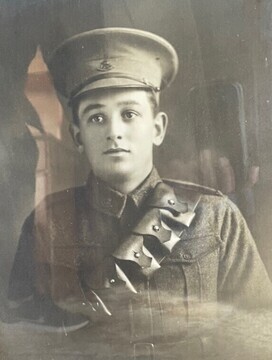
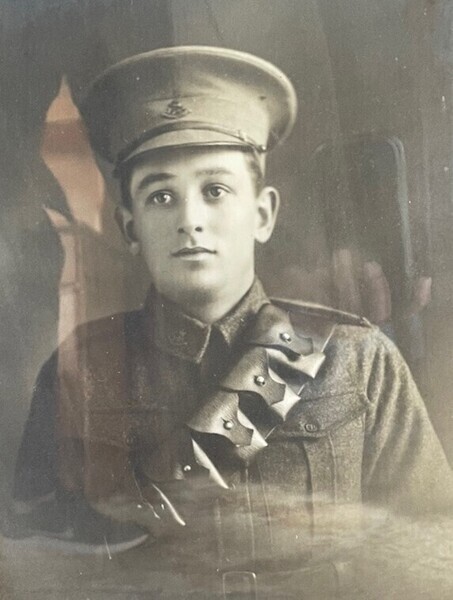
Henry Byers was born on the 26th of December 1891 in Tumack, Tasmania, Australia to William and Margaret Byers. He grew up in a large family including 8 siblings James, Mary, Marion, Edith, Percy, Oswald, Ida, Ralph, Raymond, and Athol. Henry’s religious background was the Church of England. Before Henry enlisted he attended Tunnack State School and worked as a laborer and farmer gaining many practical skills.
Enlistment and Training
On June 7th, 1915, at the age of 23, Henry was enlisted into the Australian Imperial Force as a Gunner. Prior, to leaving Australia, Henry was trained within the Royal Australian Garrison Artillery at the Artillery Barracks in Brisbane, Queensland. His training taught him how to operate heavy artillery, a main component of military operations during World War 1.
Service abroad
Henry embarked from Melbourne, Victoria aboard the HMAT A67 ORSOVA on the 17th of July 1915 for active service. He was part of the Siege Artillery Brigade, which focused on operating large calibre guns such as howitzers and mortars. These weapons were designed to launch heavy projectiles over long distances. They were crucial on the Western Front in France and Belgium, as they provide defensive bombardments and assisted the infantry (soldiers that were on foot).
While he first fought in the Gallipoli campaign, Henry’s unit primarily served on the Western Front. The majority of Australia’s forces from 1916 to 1918 involved trench warfare where soldiers would dig long, narrow ditches lined with sand-bags to protect themselves from enemy gunfire. Soldiers within these conditions would face long periods in muddy trenches, exposure to artillery fire and constant diseases.
Family service
Henry’s two younger brothers, Thomas and William also served in World War 1. They enlisted on the same date – 1st of November 1916 and were placed in the 40th Battalion, 7th Reinforcement. Unlike Henry who served as a Gunner, Thomas fought as a Private which was the entry level for soldiers. William had the highest role as a Corporal which gave him extra responsibility and leadership over a small group of men. They sailed to the Western Front in early 1917 where the conditions were extremely dangerous. Thomas died near Amiens due to wounds on the 28th of March 1918, aged 22. Thomas is buried in Querrieu British Cemetery, Picardie France. His brother William continued to serve and returned later to Australia in 1919.
Challenges and Hospitalizations
During Henry’s service he experienced illness that led to him being hospitalized. On June 17th, 1918, he was admitted to the No. 1 Australian Casualty Clearing Station and was later transferred to 39th General Hospital in France. Henry spent a total of 74 days in hospital and then went on to rejoin his unit on the 22nd of September 1918. A week later he returned to hospital in France due to an accidental leg injury. He with He developed influenza while in hospital and was transferred by hospital ship St Denis to the General Military Hospital in England. Once recovered he was discharged 20th December and was granted furlough until 3rd January 1919
Disciplinary record
Henry encountered a few disciplinary entries, which were common in A.I.F. August 31st, 1915, he was charged with A.W.L (Absent Without Leave). This typically meant a soldier returned late from a break, missed a parade or went away from camp without permission. Later, on the 19th of October 1917, Henry received three days’ C.B. (confined to Barracks) and forfeited one day’s pay. C.B was a minor punishment where a soldier had to remain inside the camp, complete extra duties, or follow a stricter routine. These sorts of penalties were common for the soldiers who were known to sometimes be resistant to the strict British military discipline.
Return to Australia and Later life
Henry departed from England abord the Euripides on March 3, 1919 and later arrived in Hobart, Tasmania, on April 8, 1919. He was officially discharged from the A.I.F on June 18 of that year.
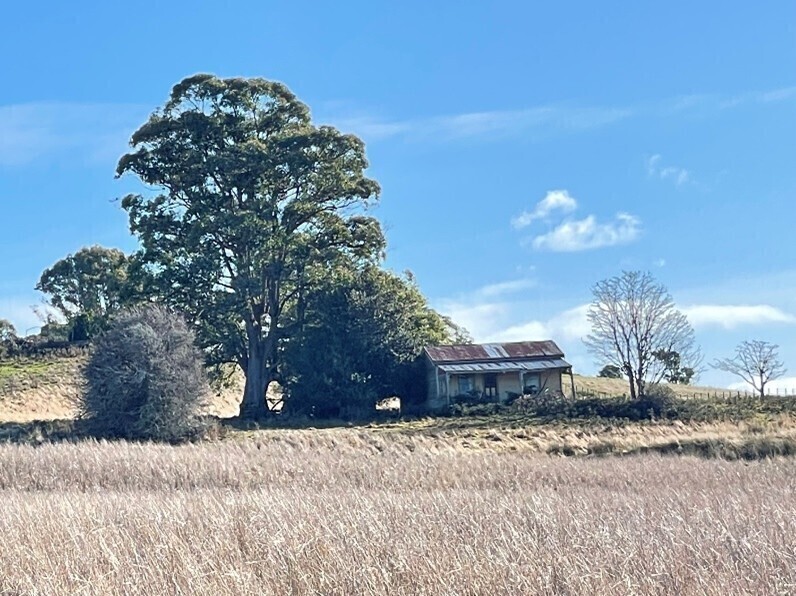
During the time Henry recovered in hospital, he met a nursing sister - Evelyn Magdelene. Evelyn came back to Tasmania 2 months after Henry. They were reunited and got married on October 13, 1919, in Hobart. They went on to have children together. Sources document they only had two children, Una and Mollie but according to reliable family sources they had another child called Marcus. Henry lived the remainder of his life in Tasmania on a farm bought with his war pension. Henry passed away on the May 3, 1960 at the age of 68. He was buried at St Peter’s Anglican churchyard in Oatlands, Tasmania.
Legacy
Henry’s name is recorded on the Australian War Memorial in Canberra, a dedication to his service and sacrifice during World War 1. Henry’s legacy also lives on through the farm he bought with his war pension, the house he built on it and the life he created for his family. He worked hard, overcame challenges he faced in war, and provided a home which has stayed in the family for generations. After his death, the farm was passed down to his daughter Una, then to Una’s son - Henry’s grandson, and will be inherited by his great grandson. Henry is remembered as a dedicated and resilient man whose life inspired those around him.
Bibliography
Adfa.edu.au. (2025). Details. [online] Available at: https://aif.adfa.edu.au/showPerson?pid=42069 [Accessed 24 Nov. 2025].
Findagrave.com. (2015). Henry Byers (1891-1960) - Find a Grave Memorial. [online] Available at: https://www.findagrave.com/memorial/225472248/henry-byers [Accessed 24 Nov. 2025].
Fiona, S. (2025) Personal communication (great-granddaughter of Henry Byers), 24 November.
Flickr. (2025). Brothers - Thomas Ernest BYERS (left) and William BYERS. [online] Available at: https://www.flickr.com/photos/hwmobs/54683192284 [Accessed 24 Nov. 2025].
MyHeritage. (2019). Thomas Byers Family History & Historical Records - MyHeritage. [online] Available at: https://www.myheritage.com/names/thomas_byers [Accessed 26 Nov. 2025].
Paul, H. (2025) Personal communication (grandson of Henry Byers), 24 November.
Stone, P. (2015). Sad news.
Terrace, V. (2025). View digital copy. [online] Naa.gov.au. Available at: https://recordsearch.naa.gov.au/SearchNRetrieve/Interface/ViewImage.aspx?B=3178460 [Accessed 24 Nov. 2025].
Vandemonian.info. (2017). Byers Family Related World War 1 Roll Call | Vandemonian Royalty. [online] Available at: https://vandemonian.info/byers-family-related-world-war-1-roll-call [Accessed 26 Nov. 2025].
Vwma.org.au. (2025). Australian Soldiers, Memorials and Military History. [online] Available at: https://vwma.org.au/explore/projects/202709/edit?t=1763954567173 [Accessed 24 Nov. 2025].
Wikitree.com. (2025). James Byers (1861-1934) | WikiTree FREE Family Tree. [online] Available at: https://www.wikitree.com/wiki/Byers-5212 [Accessed 24 Nov. 2025].
Click images to start slideshow.