







EVANS, William Horace Lionel
| Service Number: | 150 |
|---|---|
| Enlisted: | 19 August 1914 |
| Last Rank: | Warrant Officer Class 2 |
| Last Unit: | 10th Infantry Battalion |
| Born: | Prospect, South Australia, Australia, June 1889 |
| Home Town: | Adelaide, South Australia |
| Schooling: | Not yet discovered |
| Occupation: | Painter |
| Died: | Adelaide, South Australia, 13 January 1959, cause of death not yet discovered |
| Cemetery: |
West Terrace Cemetery (General) RC West Gnd |
| Memorials: | Prospect Roll of Honour A-G WWI Board |
World War 1 Service
| 19 Aug 1914: | Enlisted AIF WW1, Sergeant, 150, 10th Infantry Battalion | |
|---|---|---|
| 20 Oct 1914: | Embarked AIF WW1, Sergeant, 150, 10th Infantry Battalion, HMAT Ascanius, Adelaide | |
| 20 Oct 1914: | Involvement AIF WW1, Sergeant, 150, 10th Infantry Battalion, --- :embarkation_roll: roll_number: '10' embarkation_place: Adelaide embarkation_ship: HMAT Ascanius embarkation_ship_number: A11 public_note: '' | |
| 2 Aug 1915: | Involvement AIF WW1, Sergeant, 150, 10th Infantry Battalion, ANZAC / Gallipoli | |
| 1 Mar 1916: | Promoted AIF WW1, Warrant Officer Class 2, 10th Infantry Battalion, was promoted to Warrant Officer Class 2 | |
| 15 Jun 1916: | Wounded AIF WW1, Warrant Officer Class 2, 150, 10th Infantry Battalion, Wounded in leg when revolver discharged accidentally. | |
| 25 Feb 1917: | Wounded AIF WW1, Warrant Officer Class 2, 150, 10th Infantry Battalion | |
| 31 May 1918: | Discharged AIF WW1, Warrant Officer Class 2, 150, 10th Infantry Battalion |
Help us honour William Horace Lionel Evans's service by contributing information, stories, and images so that they can be preserved for future generations.
Add my storyBiography contributed by KENNETH BRANDLI
The life of William Horace Lionel Evans
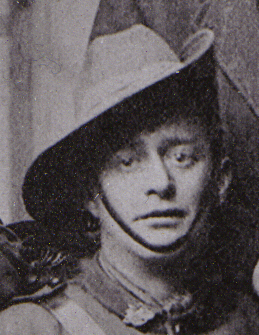
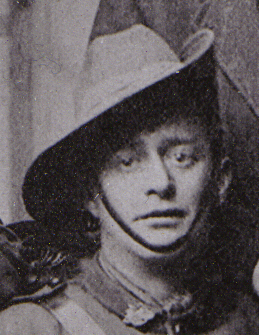
William Horace Lionel (Bill) Evans was born in June 1889 in Prospect South Australia and at the outbreak of World War 1 lived on Whinham street, Ovingham, Adelaide. He was one of the first soldiers enlisted in the 10th Battalion AIF; a military formation mostly consisting of South Australians. He enlisted at Morphettville South Australia on the 19th of August 1914, a mere two days after the Battalion was officially raised. His enlistment papers listed a number of physical characteristics as well as his religion (roman catholic), and his job (painter). Within the battalion he was assigned to G company. He was awarded the rank of Sergeant within two weeks of his enlistment, in recognition of his previous 5 years’ service as a reservist in the 10th Australian Infantry Regiment (the ‘Adelaide Rifles’).
He embarked on 20th of October 1914 on the HMAT (His Majesty’s Australian Troop ship) A11 ‘Ascanius’ from Adelaide, bound for England. On the 29th of October, prior to Ascanius reaching the port of Fremantle in Western Australia, Turkey entered the war and the ANZAC force’s destination was amended to Egypt for training in preparation for the newly formulated plan to land an Allied force on the Gallipoli Peninsula, Turkey. After training in Egypt he saw service in Gallipoli and later on the Western Front in France. Throughout his service he required hospital treatment for chronic eczema (once in Egypt in early April 1914, then on Lemnos in mid-1915 and later in England during 1916 and 1917). Eventually he would be repatriated to Australia in mid-1917 and discharged ‘medically unfit – not due to misconduct’ due to this condition.
During his service he was wounded in action three times. On 30th April 1915, five days after the landings on Gallipoli, he received his first wound; a bayonet wound (severe) to his right knee. He was evacuated to the 17th General Hospital in Alexandria, Egypt, and then 7 days later (on the 8th of May 1915) transferred to the 1st Australian Stationary Hospital on Lemnos, Greece. After convalescence on Lemnos he was sent back to hospital for the treatment of his eczema. On the 2nd of August 1915 he rejoined his battalion on Gallipoli. He fought there until the battalion was evacuated from the Peninsula in November of that year, as part of the general evacuation of the ANZAC troops. After a stint on Lemnos, the battalion was withdrawn to Egypt in December 1915. On the 1st of March 1916, while in Egypt, he was promoted to C.S.M (Company Sergeant Major) with the rank of Warrant Officer 2nd class. The battalion was reorganized along British lines in Egypt (with him being transferred to A Company) and was shipped to France, arriving on the 2nd of April 1916. The battalion was deployed to the front lines at Fleurbaix on the 6th of June 1916. On the 15th of June 1916 he received a gunshot wound to his foot and was repatriated to England. The wound was self-inflicted (shot with his own revolver), but a field Court of Inquiry found that it was not intentional and was the result of faulty operation of the weapon (but he was reprimanded for carelessness). After treatment for this wound, he was again hospitalised in England for treatment of chronic eczema. He re-joined the 10th battalion on the 16th of November 1916 in France and was again wounded, receiving a gunshot wound (GSW) to the
right elbow on the 25th of February 1917. After again being repatriated to England for treatment of this wound, he was kept in England for further treatment of his eczema. He never rejoined his unit in the field; instead being repatriated to Australia in mid-1917 and discharged medically unfit.
In 1922 he married Mary Annie Cullinane. They had three children, Margaret (1923), Phyllis (1924), and William (1926) and built a house at 23 Newbon Street, Prospect South Australia (now called Nailsworth; postcode 5083) in 1925. Like many of his fellow returned soldiers he was known to have suffered from what would today be called PTSD postwar and displayed behavioural and alcohol abuse related issues which put a strain on his marriage. Sadly, physically scarred and mentally troubled returned Servicemen like William Horace received little to no psychological, medical or financial support during this period. On the 24th of September 1937, at the age of 44, Mary Annie passed away, leaving him a single father. He never remarried.
William Horace Lionel Evans passed away in 1959, aged 69.
Throughout his military Service he displayed ANZAC spirit through his loyalty, persistence, courage and mateship. Being one of the first volunteers to enlist in his local AIF battalion was evidence of his patriotism and selflessness.
Click images to start slideshow.