





HARROLD, Frank Elliott
| Service Number: | 2533 |
|---|---|
| Enlisted: | 9 August 1915 |
| Last Rank: | Private |
| Last Unit: | 48th Infantry Battalion |
| Born: | St Peters, South Australia, 24 May 1892 |
| Home Town: | Kalangadoo, Wattle Range, South Australia |
| Schooling: | Not yet discovered |
| Occupation: | Barman |
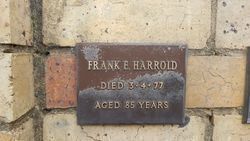
| Died: | Old age, health issues, Woodside, South Australia, Australia, 3 April 1977, aged 84 years |
| Cemetery: | Not yet discovered |
| Memorials: | Penola District WW1 Roll of Honor, Penola Memorial Walk |
World War 1 Service
| 9 Aug 1915: | Enlisted AIF WW1, Private, 2533, 10th Infantry Battalion | |
|---|---|---|
| 1 Mar 1916: | Discharged AIF WW1, Private, 2533, 10th Infantry Battalion, Struck off strength for deserting unit | |
| 1 Jul 1916: | Enlisted AIF WW1, Private, 2533, 10th Infantry Battalion, Returned to strength | |
| 1 Aug 1916: | Transferred AIF WW1, Private, 32nd Infantry Battalion | |
| 28 Aug 1916: | Involvement Private, 2533, 48th Infantry Battalion, --- :embarkation_roll: roll_number: '19' embarkation_place: Adelaide embarkation_ship: HMAT Anchises embarkation_ship_number: A68 public_note: '' | |
| 28 Aug 1916: | Embarked Private, 2533, 48th Infantry Battalion, HMAT Anchises, Adelaide | |
| 28 Aug 1916: | Transferred AIF WW1, Private, 48th Infantry Battalion | |
| 11 Oct 1916: | Transferred AIF WW1, Private, 12th Infantry Battalion | |
| 4 Feb 1917: | Embarked AIF WW1, Private, 2533, 48th Infantry Battalion, Embarked from Britain to France on the SS Victoria, arrived on 9 February 1917 | |
| 4 Feb 1917: | Transferred AIF WW1, Private, 48th Infantry Battalion | |
| 7 Jun 1917: | Involvement AIF WW1, Private, 2533, 48th Infantry Battalion, Battle of Messines | |
| 12 Oct 1917: | Involvement AIF WW1, Private, 2533, 48th Infantry Battalion, 1st Passchendaele | |
| 27 Mar 1918: | Involvement AIF WW1, Private, 2533, 48th Infantry Battalion, Dernancourt/Ancre | |
| 8 Aug 1918: | Involvement AIF WW1, Private, 2533, 48th Infantry Battalion, The Battle of Amiens | |
| 12 May 1919: | Embarked AIF WW1, Private, 2533, 48th Infantry Battalion, Embarked from England to Adelaide on the Port Napier | |
| 6 Aug 1919: | Discharged AIF WW1, 2533, 48th Infantry Battalion | |
| Date unknown: | Honoured British Empire Medal, Awarded in June 1917 |
Help us honour Frank Elliott Harrold's service by contributing information, stories, and images so that they can be preserved for future generations.
Add my storyBiography contributed by St Ignatius' College
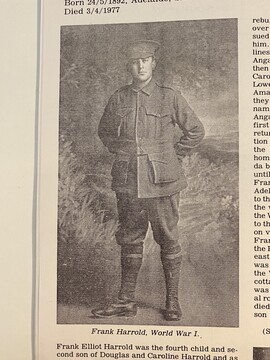
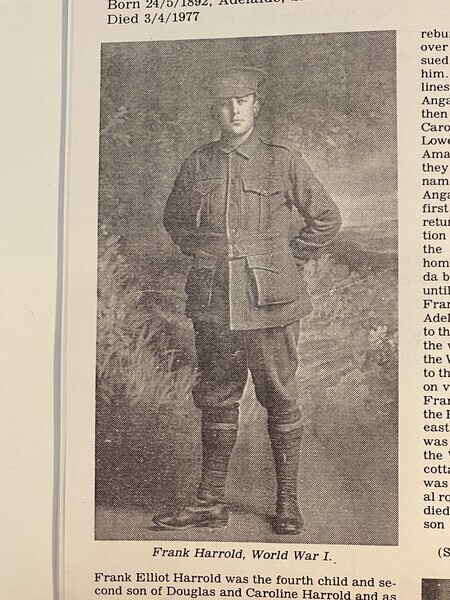
Frank Elliot Harrold was born on the 24th of May 1892 in Evandale, South Australia to Douglas Henry Sr. and Caroline Margaret Louise Harrold (née Kohler). He was their fourth child and grew up with five siblings: Olive Evelyn, Constance Gertrude, Rowland Henry, Daniel Charles and Douglas Henry Jr. Before enlisting in the war, he worked as a barman for his parents at the Lower Light Hotel and was unmarried. In his attestation papers, he is described as fresh with blue eyes and light brown hair, weighing 165lbs (75kgs) and standing at 5’8” (173cm). He had received two vaccines and had 6/6 vision. He enlisted to fight on the 9th of August 1915 at 22 years and 4 months old, and his next of kin was his mother.
Training in the Mitcham Barracks was the beginning of Harrold’s career as a soldier. He trained from the 1st of January 1916 to the 31st of January 1916, after undertaking his oath on the 17th of August 1915. Training in this camp was rigorous, and routine drills included field patrols, bayonet fights, bomb detonation and trench digging. While in Australia, he was a part of the 10th Infantry Battalion as a Private (15th of March 1916 to 1st of August 1916). During this time, he was struck off strength in March 1916 for deserting and was restored to strength in July of 1916. He then left for Plymouth, England on the 1st of August 1916 with this trip lasting until the 11th of October 1916. Upon departure on the 1st, he was transferred to the 32nd Infantry Battalion. He served in this battalion until the 28th of August 1916, when he was transferred to the 48th Infantry Battalion.
At his arrival in Plymouth, Private Harrold was marched into Codford (a major Allied army base) and was transferred to the 12thInfantry Battalion. While in this battalion, he mostly trained, set up camp as well as travelled around England. Most days were quiet. It is recorded that the battalion struggled with supplies and materials. However, Harrold found ways to spend the time. It’s noted that on the 28th of January 1917, Harrold illegally smuggled a New Zealand soldier into the George Hotel as well as used obscene language towards his commanding officer. As punishment, he was awarded twenty-eight days detention. Soon after this on the 4th of February 1917, he was transferred to the 48th Infantry Battalion in France on the S.S. Victoria as part of the fifth reinforcement.
Harrold arrived in France on the 9th of February 1917. While in France, he got frequently sick and spent most of his time in both the 12th and 2nd General Hospital on the Western Front. While his battalion were fighting the Germans as they retreated to the Hindenburg Line, Harrold fought against hernias (20th of February), appendicitis (23rd of February), inflamed tissues (23rd and 29thof March) and various other ailments. At the beginning of April, the Battalion moved into Belgium. On the 17th of April 1917, in between his hospital visits, Harrold was awarded fourteen days detention for failing to return a recreational pass after its lease expired. He was sentenced to Field Punishment No. 1, nicknamed ‘crucifixion’, meaning he may have been handcuffed and shackled to a post. This punishment could also include heavy labour. In June, the battalion participated in the Battle of Messines, resulting in twenty deaths within the battalion including an officer, thirty-nine injuries including three officers, and two soldiers missing. On the 21st of July 1917, he was awarded five days for gambling illegally.
A few months after this, on the 12th of October 1917, the 48th Infantry Battalion participated in the Battle of Passchendaele (Third Battle of Ypres) on the Western Front in Belgium. This battle was one of the most devastating for Allied and Central Powers armies alike and resulted in half a million combined casualties. In Harrold’s battalion, 359 soldiers were killed, wounded or missing, and around ten officers were killed, wounded or missing including the Commanding Officer. This included Harrold, who spent one and a half months wounded in hospital, returning to his unit on the 27th of November 1917.
In the months after this, Harrold was admitted to hospital repeatedly for illnesses such as influenza. While he was in hospital, his unit recouped after the losses at Passchendaele, rotating through rest periods and time in the trenches in Belgium and France. By late March 1918, the Germans launched the Spring Offensive, a final attempt to defeat British and French armies. The 48th Infantry Battalion fought in Dernancourt, in Northern France. The battalion withdrew by May, aligning with Harrold’s ability to rejoin the unit.
The months after this involved no major battles, and his battalion mostly trained. On the 8th of June 1918, Harrold became ill and spent some time in hospital. A few days after this, Harrold was punished for being in Rouelles (an Australian base depot in France) without a pass on the 13th of June, as well as for being AWL (away without leave) for most of the 14th of June. He received ten days detention and was given four days forfeiture (docked pay). From the 20th to the 22nd of June, he was recorded AWL and received twenty-seven days detention and thirty-one days without pay. He was also subject to Field Punishment No. 1. On the 25th he was awarded a further forty-two days’ detention and sixty-three days forfeiture for disobeying a lawful command as well as field punishment one.
Once again, on the 16th of July 1918, he disobeyed another command and was given the same detention sentence. This time however, he was held at Rouen, France: a major British base which included a military prison. Three days later, he was marched back to his unit. On the 28th of July, he was sent to the field punishment compound, where he later got sick on the 1st of August and was brought to the 2nd General Hospital in France. He was marched back into the compound on the 6th. Sometime later, he rejoined his unit which was fighting in the Battle of Amiens. This battle begun on the 8th of August as an Allied attempt to break the German lines. This battle was a major success and led to the eventual victory over the Central Powers.
Harrold became sick on the 26th of August and the 4th of October. He was admitted to the 39th General Hospital for inflamed connective tissues in his leg and foot, and the 2nd General Hospital for other illness. A month after this on the 4th of November 1918, court proceedings were received, most likely related to Harrold’s continued unexplained absences. On the 11th of November 1918, the war had officially come to an end. A few days post-armistice, on the 14th of November, Harrold finally rejoined his unit after over a month of sickness. On the 18th, he was recorded being AWL from the 15th to the 18th of November and was awarded 10 days forfeiture.
While the battalion waited to return to Australia, it is recorded that they often played football matches and visited the surrounding Belgian and French towns. On the 21st of March, Harrold was marched out of his unit, and on the 31st he was marched out to England. On the 1st of April, Harrold arrived in England from France, and on the 12th of May he embarked for Australia on the Port Napier. Harrold was officially discharged on the 6th of August 1919. He was awarded the British War Medal which was awarded to all imperial soldiers in this war as well as the Victory Medal which was given to all Allied soldiers to commemorate their win.
After the war, Harrold married Amanda Mathilda Harrold (née. Schimentz) and fathered three children: Brenda Joyce, Kenneth Frank and Malcolm Elliot. He worked as a farmer in Woodside, South Australia while his wife took care of the children and other domestic duties. He died of old age on the 3rd of April 1977 at 85 years old. He was a proud member of the RSL (Returned & Services League of Australia) and left behind his wife, children, five grandchildren and one great-grandchild. ( infomration from Frank Elliot Harrold's great-granddaughter. )
Biography contributed by St Ignatius' College
Frank Elliot Harrold was born on the 24th of May 1892 in Evandale, South Australia to Douglas Henry Sr. and Caroline Margaret Louise Harrold (née Kohler). He was their fourth child and grew up with five siblings: Olive Evelyn, Constance Gertrude, Rowland Henry, Daniel Charles and Douglas Henry Jr. Before enlisting in the war, he worked as a barman for his parents at the Lower Light Hotel and was unmarried. In his attestation papers, he is described as fresh with blue eyes and light brown hair, weighing 165lbs (75kgs) and standing at 5’8” (173cm). He had received two vaccines and had 6/6 vision. He enlisted to fight on the 9th of August 1915 at 22 years and 4 months old, and his next of kin was his mother.
Training in the Mitcham Barracks was the beginning of Harrold’s career as a soldier. He trained from the 1st of January 1916 to the 31st of January 1916, after undertaking his oath on the 17th of August 1915. Training in this camp was rigorous, and routine drills included field patrols, bayonet fights, bomb detonation and trench digging. While in Australia, he was a part of the 10th Infantry Battalion as a Private (15th of March 1916 to 1st of August 1916). During this time, he was struck off strength in March 1916 for deserting and was restored to strength in July of 1916. He then left for Plymouth, England on the 1st of August 1916 with this trip lasting until the 11th of October 1916. Upon departure on the 1st, he was transferred to the 32nd Infantry Battalion. He served in this battalion until the 28th of August 1916, when he was transferred to the 48th Infantry Battalion.
At his arrival in Plymouth, Private Harrold was marched into Codford (a major Allied army base) and was transferred to the 12thInfantry Battalion. While in this battalion, he mostly trained, set up camp as well as travelled around England. Most days were quiet. It is recorded that the battalion struggled with supplies and materials. However, Harrold found ways to spend the time. It’s noted that on the 28th of January 1917, Harrold illegally smuggled a New Zealand soldier into the George Hotel as well as used obscene language towards his commanding officer. As punishment, he was awarded twenty-eight days detention. Soon after this on the 4th of February 1917, he was transferred to the 48th Infantry Battalion in France on the S.S. Victoria as part of the fifth reinforcement.
Harrold arrived in France on the 9th of February 1917. While in France, he got frequently sick and spent most of his time in both the 12th and 2nd General Hospital on the Western Front. While his battalion were fighting the Germans as they retreated to the Hindenburg Line, Harrold fought against hernias (20th of February), appendicitis (23rd of February), inflamed tissues (23rd and 29thof March) and various other ailments. At the beginning of April, the Battalion moved into Belgium. On the 17th of April 1917, in between his hospital visits, Harrold was awarded fourteen days detention for failing to return a recreational pass after its lease expired. He was sentenced to Field Punishment No. 1, nicknamed ‘crucifixion’, meaning he may have been handcuffed and shackled to a post. This punishment could also include heavy labour. In June, the battalion participated in the Battle of Messines, resulting in twenty deaths within the battalion including an officer, thirty-nine injuries including three officers, and two soldiers missing. On the 21st of July 1917, he was awarded five days for gambling illegally.
A few months after this, on the 12th of October 1917, the 48th Infantry Battalion participated in the Battle of Passchendaele (Third Battle of Ypres) on the Western Front in Belgium. This battle was one of the most devastating for Allied and Central Powers armies alike and resulted in half a million combined casualties. In Harrold’s battalion, 359 soldiers were killed, wounded or missing, and around ten officers were killed, wounded or missing including the Commanding Officer. This included Harrold, who spent one and a half months wounded in hospital, returning to his unit on the 27th of November 1917.
In the months after this, Harrold was admitted to hospital repeatedly for illnesses such as influenza. While he was in hospital, his unit recouped after the losses at Passchendaele, rotating through rest periods and time in the trenches in Belgium and France. By late March 1918, the Germans launched the Spring Offensive, a final attempt to defeat British and French armies. The 48th Infantry Battalion fought in Dernancourt, in Northern France. The battalion withdrew by May, aligning with Harrold’s ability to rejoin the unit.
The months after this involved no major battles, and his battalion mostly trained. On the 8th of June 1918, Harrold became ill and spent some time in hospital. A few days after this, Harrold was punished for being in Rouelles (an Australian base depot in France) without a pass on the 13th of June, as well as for being AWL (away without leave) for most of the 14th of June. He received ten days detention and was given four days forfeiture (docked pay). From the 20th to the 22nd of June, he was recorded AWL and received twenty-seven days detention and thirty-one days without pay. He was also subject to Field Punishment No. 1. On the 25th he was awarded a further forty-two days’ detention and sixty-three days forfeiture for disobeying a lawful command as well as field punishment one.
Once again, on the 16th of July 1918, he disobeyed another command and was given the same detention sentence. This time however, he was held at Rouen, France: a major British base which included a military prison. Three days later, he was marched back to his unit. On the 28th of July, he was sent to the field punishment compound, where he later got sick on the 1st of August and was brought to the 2nd General Hospital in France. He was marched back into the compound on the 6th. Sometime later, he rejoined his unit which was fighting in the Battle of Amiens. This battle begun on the 8th of August as an Allied attempt to break the German lines. This battle was a major success and led to the eventual victory over the Central Powers.
Harrold became sick on the 26th of August and the 4th of October. He was admitted to the 39th General Hospital for inflamed connective tissues in his leg and foot, and the 2nd General Hospital for other illness. A month after this on the 4th of November 1918, court proceedings were received, most likely related to Harrold’s continued unexplained absences. On the 11th of November 1918, the war had officially come to an end. A few days post-armistice, on the 14th of November, Harrold finally rejoined his unit after over a month of sickness. On the 18th, he was recorded being AWL from the 15th to the 18th of November and was awarded 10 days forfeiture.
While the battalion waited to return to Australia, it is recorded that they often played football matches and visited the surrounding Belgian and French towns. On the 21st of March, Harrold was marched out of his unit, and on the 31st he was marched out to England. On the 1st of April, Harrold arrived in England from France, and on the 12th of May he embarked for Australia on the Port Napier. Harrold was officially discharged on the 6th of August 1919. He was awarded the British War Medal which was awarded to all imperial soldiers in this war as well as the Victory Medal which was given to all Allied soldiers to commemorate their win.
After the war, Harrold married Amanda Mathilda Harrold (née. Schimentz) and fathered three children: Brenda Joyce, Kenneth Frank and Malcolm Elliot. He worked as a farmer in Woodside, South Australia while his wife took care of the children and other domestic duties. He died of old age on the 3rd of April 1977 at 85 years old. He was a proud member of the RSL (Returned & Services League of Australia) and left behind his wife, children, five grandchildren and one great-grandchild. ( infomration from Frank Elliot Harrold's great-granddaughter. )
Click images to start slideshow.