







MAXWELL, George Charles
| Service Number: | VX6248 |
|---|---|
| Enlisted: | 23 October 1939 |
| Last Rank: | Private |
| Last Unit: | 2nd/8th Infantry Battalion |
| Born: | MOONEE PONDS, VIC, 6 October 1918 |
| Home Town: | Not yet discovered |
| Schooling: | Not yet discovered |
| Occupation: | Not yet discovered |
| Memorials: |
World War 2 Service
| 23 Oct 1939: | Enlisted Australian Military Forces (WW2) , Private, VX6248, 2nd/8th Infantry Battalion | |
|---|---|---|
| 12 Nov 1945: | Discharged Australian Military Forces (WW2) , Private, VX6248, 2nd/8th Infantry Battalion |
Soldier of the 2/8th AIF, Witness to History, Builder of Modern Australia
George Charles Maxwell belonged to the generation of Australians whose lives were shaped by service, sacrifice and quiet resilience. When the world was engulfed by war, he answered the call of duty, enlisting in the Second Australian Imperial Force as VX6248 and serving with the distinguished 2/8th Australian Infantry Battalion — one of Victoria’s proud wartime battalions.
Raised at the Royal Melbourne Showgrounds on 30 October 1939 before moving to Puckapunyal, the 2/8th Battalion became part of the famed 19th Brigade, 6th Division. Drawn largely from Victorian men, the battalion would go on to serve in some of the most demanding campaigns fought by Australians during the Second World War. (AWM, 2026)
George Maxwell and his comrades sailed for the Middle East in 1940. There the battalion trained in Palestine and Egypt before entering combat against Italian forces in Libya. The 2/8th fought at Bardia, suffered heavily in the assault on Tobruk, and advanced through Benghazi during the Allied victories in North Africa.
In April 1941 the battalion was sent to Greece, where Allied troops attempted to halt the German advance. At Vevi, the 2/8th fought a determined delaying action against superior forces before withdrawing under intense pressure. Many men became separated during the retreat, yet the battalion’s discipline and courage never faltered. (Greek Reporter, 2011)
From Greece, elements of the battalion were evacuated to Crete, where George Maxwell became part of one of the most dramatic campaigns of the war. In May 1941 German paratroopers launched the first major airborne invasion in military history. Amid constant bombing and fierce close-quarter fighting, Australian troops helped defend the island.
Among the defining moments of that campaign was the famous Battle of 42nd Street on 27 May 1941. There, Australian and New Zealand troops — including men of the 2/8th Battalion — launched a sudden bayonet charge that smashed an advancing German force and bought vital time for the Allied withdrawal. It remains one of the most celebrated Anzac actions of the Crete campaign.
The battalion later served in Syria, returned to Australia in 1942, and subsequently undertook home defence duties in the Northern Territory before later fighting in New Guinea during the Aitape–Wewak campaign. Its battle honours included Bardia 1941, Capture of Tobruk, Vevi, Canea, 42nd Street, Wewak, and Mount Shiburangu. (AWM, 2025)
For George Charles Maxwell, these honours were not words on a page but lived experience — the dust of marches, the fear of battle, the burden of separation from home, and the unbreakable bond of mateship forged under fire.
Like many returned servicemen, George came home without seeking recognition. Instead, he helped build the peace he had defended. He went on to work with two iconic Australian enterprises — Ansett Australia and Caterpillar — contributing to the nation’s growth through transport, engineering and industry.
Those who knew him remembered a steady and dependable man: practical, hardworking and modest. His generation often spoke little of war, yet carried its lessons for life.
George Charles Maxwell is survived by his daughter, grandchildren and great-grandsons, including one who continues the family tradition of service as an officer in the Royal Australian Navy.
His story is one of courage in war, service in peace, and legacy through family. George Charles Maxwell represents the thousands of Australians whose names may not be widely known, yet whose sacrifice and labour helped shape the nation. Their memory endures in the freedoms they defended, the communities they strengthened, and the generations who follow in their footsteps.
Submitted 29 April 2026 by Adam Luscombe
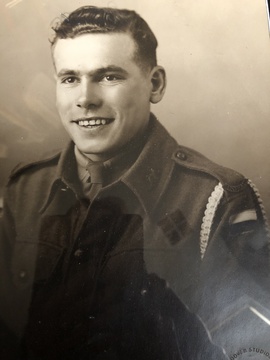
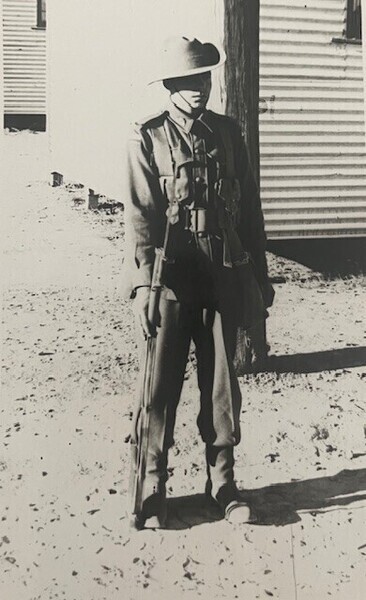
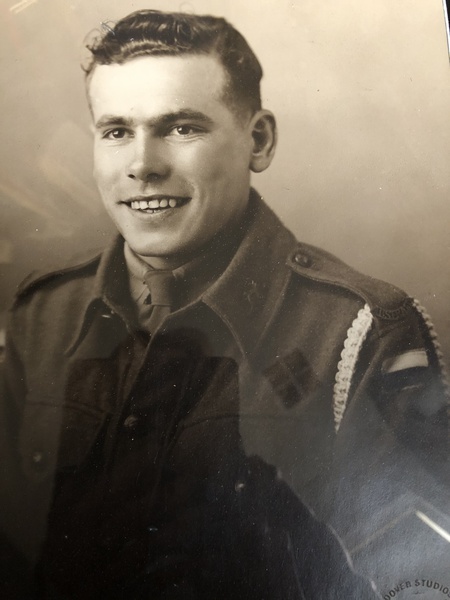
Click images to start slideshow.